For the latest Writing For Pleasure news, why not subscribe to our monthly newsletter! Just enter your email below.
Subscribe to our newsletter
The DfE’s Writing Framework: Our review and implications for practice
August 30th, 2025
Enhancing students’ writing: The power of revision checklist sessions
August 28th, 2025
Why is emotion often the missing piece in our understanding of teaching writing?
August 23rd, 2025
What’s good writing? Well, it depends who you ask
August 23rd, 2025
Understanding what’s at ‘the heart’ of the writing process
August 22nd, 2025
Why Johnny can’t and won’t write
August 17th, 2025
Six discourses, four philosophies, one framework: A critical reading of the DfE’s writing guidance
August 13th, 2025
Write to read, read to write: Reimagining the writing classroom
July 29th, 2025
Composition conceptualised: Why is it important for teachers to have a productive conception of composition?
July 25th, 2025
Children as Writers: Does choice impact motivation in Year 6 writing? by Alice Bidder
July 24th, 2025
Debunking edu-myths: Pupils should write about the wider-curriculum subjects in writing lessons
July 23rd, 2025
How Writing For Pleasure transformed our grammar teaching – and our SATS results by Justin Gisby-Clark
July 22nd, 2025
Debunking edu-myths: “In Reception and Year One, composition is less relevant”
July 21st, 2025
Debunking edu-myths: We must develop children’s motor skills first, and teach writing later
July 19th, 2025
Bringing pleasure to reading lessons through writing
July 18th, 2025
Debunking edu-myths: “Children choosing their own writing topics gets in the way of teaching writing effectively”
July 17th, 2025
Debunking edu-myths: “The best way to teach pupils to write is by teaching them to master sentences”
July 17th, 2025
What do we really mean by “I got my best writing…”?
July 16th, 2025
The rise of ‘elaborate dictation’ and ‘writing-related simulations’ in English schools: Unethical writing teaching
July 16th, 2025
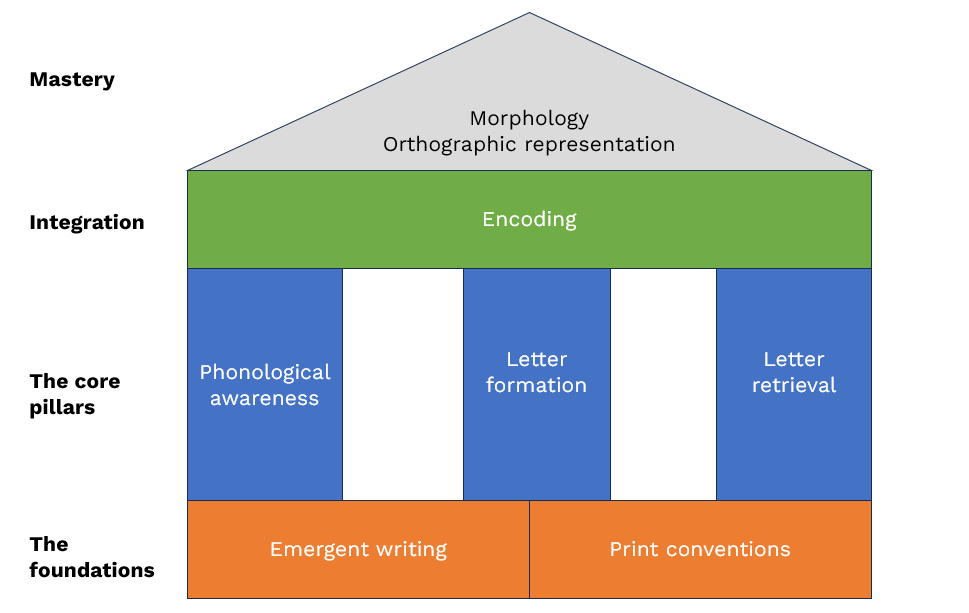
Teaching encoding
July 15th, 2025
Celebrating aspects of the DfE’s Writing Framework: Championing personal writing projects
July 14th, 2025
Debunking edu-myths: ‘Emergent writing’ isn’t necessary before teaching children to write
July 11th, 2025
Celebrating aspects of the DfE’s Writing Framework: We can finally move on from the book-based approach to writing
July 10th, 2025
Celebrating aspects of the DfE’s Writing Framework: An evidence-informed step towards meaningful, motivating writing instruction
July 8th, 2025
Debunking edu-myths: Scope and sequences can’t coexist with responsive writing instruction
July 7th, 2025
Debunking edu-myths: Children must master sentence-level accuracy before they can write whole texts
July 4th, 2025
Debunking edu-myths: Writing errors form bad habits
July 2nd, 2025
Teaching young children to write: The case for ditching extended writing
June 19th, 2025
Enhancing your writing teaching: Insights from a metacognitive model
June 17th, 2025
How to keep students motivated to proofread: Practical strategies for the classroom
June 13th, 2025
The Writing For Pleasure Centre’s Sentence-Level Curriculum
June 9th, 2025
How to teach writing in the EYFS
June 8th, 2025
How to teach writing in Key Stage One
June 7th, 2025
Balancing scripted lessons with teacher autonomy: How Writing For Pleasure Centre units work
May 2nd, 2025
Early writing development and our book-making approach
April 24th, 2025
The relationship between children’s oral language and the quality of their writing
April 4th, 2025
Transcription and oral language are key to children’s early writing development
March 31st, 2025
Identifying and addressing children’s writing needs
March 19th, 2025
What might a high-stakes national ‘writing fluency’ assessment look like and why is it a bad idea?
March 19th, 2025
“I can’t write”: An autistic student’s journey with Writing For Pleasure
March 12th, 2025
The writing map & evidence-informed writing teaching
March 10th, 2025
Visualising the science of writing: The writing map explained
February 27th, 2025
What writing ambitions do schools have for economically underserved pupils?
February 6th, 2025
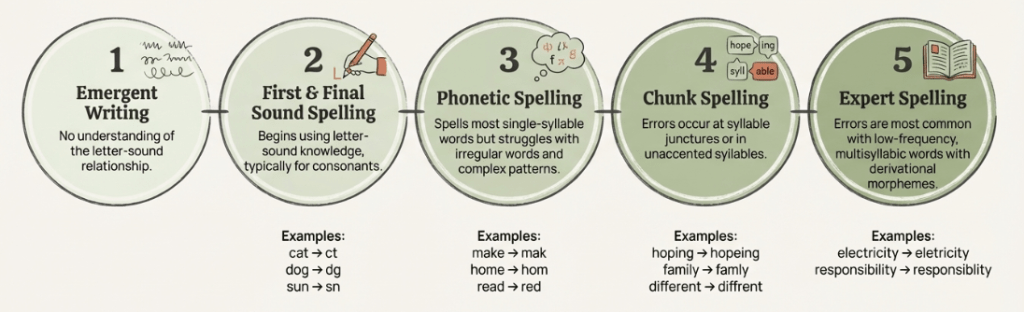
Helping children proof-read their spellings
January 31st, 2025
Developing motivated and successful writers in the EYFS
January 22nd, 2025
Underwriting: Should teachers do it?
January 16th, 2025
“This is when we play writing!”: Writing and play in the EYFS
January 14th, 2025
Supporting at-risk writers in Nursery and Reception
January 8th, 2025
Supporting children who are at risk of writing failure
January 6th, 2025
Are students with high creativity skills successful writers?
December 13th, 2024
The effects of ‘informed spelling’ on children’s reading and writing achievement
December 10th, 2024
How should teachers use books to inspire and guide EYFS pupils in creating their own non-fiction texts?
November 13th, 2024
Let’s use ‘kids writing!’
November 10th, 2024
How can you teach children to write before they know their letters?
November 10th, 2024
How do children start learning to write before they start school?
November 10th, 2024
A sensible (centralist) approach to early writing teaching
November 10th, 2024
What is student agency and why is it needed now more than ever?
November 6th, 2024
Translating ideas into writing: High‑impact strategies to nurture children′s writing in early childhood classrooms
October 28th, 2024
Student agency in the writing classroom: A systematic review of the literature
October 25th, 2024
How can non-fiction writing be taught in the EYFS to inspire and develop children’s writerly knowledge and confidence?
October 18th, 2024
Response to Ofsted’s “Strong foundations in the first years of school” report
October 10th, 2024
Children’s agency in the primary school writing classroom
October 7th, 2024
Aiming for authenticity: successes and struggles in increasing authenticity in the writing classroom
October 2nd, 2024
Asking writers: What subject knowledge do teachers need to teach writing?
September 23rd, 2024
It’s OK! Don’t panic! You can give children agency and structure in the writing classroom
September 17th, 2024
Real-world writing: Making purpose and audience matter
September 11th, 2024
Understanding why people write: Making writing authentic for children
September 9th, 2024
The Mercers’ Company & The Open University: Approaches to reading and writing for pleasure
August 30th, 2024
Friends and authors: The benefits of children co-authoring
August 26th, 2024
Comparing children’s oral and written storyretelling: the role of ideation and transcription
August 22nd, 2024
Reigniting young writers: Supporting authentic class writing projects
August 17th, 2024
Authenticity and children’s engagement with writing
August 17th, 2024
Does ‘perspective taking’ matter for students’ writing?
August 17th, 2024
‘This isn’t my real writing’: The fate of children’s agency in narrow writing schemes
August 7th, 2024
Bringing purpose & audience to the centre of our writing classrooms
August 5th, 2024
Learning to read as writers: The role of authentic class writing projects
August 2nd, 2024
The principles of planning effective class writing projects
July 31st, 2024
Keeping it real: Valuing authenticity in the writing classroom
July 26th, 2024
Who is going to read the story that I have written? The role of audience when planning, drafting and revising
July 26th, 2024
How we can support children as they are writing
July 24th, 2024
Writing strategies for English language learners
July 22nd, 2024
Thinking through writing: writing to learn
July 19th, 2024
The effects of writing-to-learn on academic achievement
July 19th, 2024
Drawing first, writing after: A winning strategy for early writers
July 19th, 2024
Intertextuality. The glue that binds reading for pleasure and writing for pleasure together?
July 18th, 2024
The book-planning 2.0 approach
July 18th, 2024
Reading for pleasure’s impact on writing for pleasure
July 18th, 2024
How to help children plan their writing
July 18th, 2024
How to teach your pupils to read as writers
July 18th, 2024
How to co-construct success criteria with your pupils for class writing projects
July 17th, 2024
What are children doing as they produce writing?
July 17th, 2024
The contribution of working memory on young writers
July 13th, 2024
How can we encourage children to think about their readers as they are writing?
July 13th, 2024
Dialogic writing. How to support peer feedback conversations
July 13th, 2024
The rationale for revision checklist sessions
July 13th, 2024
Comparing young children’s oral and written storyretelling: the role of ideation and transcription
July 12th, 2024
Evidence-based recommendations for teaching writing
July 8th, 2024
Poems, not a poem: Reimagining poetry projects
July 5th, 2024
The ABCs of children’s writing motivation
June 29th, 2024
The writer(s)- within- community model and improving the teaching of writing across a school
May 27th, 2024
Fostering writer identity & belonging in the classroom
May 27th, 2024
The double helix theory for teaching writing and reading
May 21st, 2024
Obtain quality writing by giving children some agency
May 20th, 2024
Mobilising children’s motives for writing
May 14th, 2024
Supporting children with written expression disabilities
May 14th, 2024
A systematic review and meta‐analysis of the effectiveness of spelling instruction and intervention
May 10th, 2024
The relationship between writing fluency & writing quality in 5-8 year olds
May 4th, 2024
What is writing fluency?
May 4th, 2024
No more: They don’t know what a sentence is!
May 2nd, 2024
Building up to extended writing projects
May 2nd, 2024
Spelling and handwriting provision: A checklist
May 2nd, 2024
The research on developing children’s transcription and compositional skills
May 2nd, 2024
Multicomponent writing instruction appears to yield better results
April 26th, 2024
The relationship between reading and writing on children’s compositions
April 26th, 2024
The relationship between oral language, content knowledge, cognitive skills and writing
April 26th, 2024
The impact of oral language and transcription skills on children’s early writing
April 25th, 2024
Teach transcription and composition alone or together?
April 22nd, 2024
Expanding the developmental models of writing: A direct and indirect effects model of developmental writing
April 22nd, 2024
Yes, they can: Developing transcription and compositional skills together to help children write informative essays at grades 1 and 2
April 22nd, 2024
How we can make writing feel less effortful for children
April 22nd, 2024
Evidence-based practices which give children writing confidence
April 15th, 2024
The different perspectives you can take on teaching early writing
March 15th, 2024
Response to Ofsted’s “Telling the story: The English education subject report”
March 8th, 2024
Writing non-fiction with heart and voice
November 20th, 2023
Planning a class writing project with the greater-depth standard as the standard
October 30th, 2023
Evidence-based writing instruction for 11-18 year olds
October 27th, 2023
Which writing model would best guide us to raise writing standards in our school?
October 20th, 2023
Sentence-level instruction: Our viewpoint
September 29th, 2023
Using focus groups to teach writing
September 20th, 2023
Guidance on what NOT to do when teaching at the sentence-level
September 18th, 2023
Where’s the research on teaching at the sentence-level?
September 15th, 2023
Guidance on teaching at the sentence-level
September 13th, 2023
We Are Authors Too! Book-making for World Book Day
July 4th, 2023
What is a high-quality text in the context of the writing classroom?
June 21st, 2023
How to get success criteria right in the writing classroom
May 19th, 2023
Children’s reflections on ‘business as usual’ writing units and Writing For Pleasure class writing projects
May 17th, 2023
When writing success criteria goes wrong
May 12th, 2023
The components of effective grammar instruction
May 8th, 2023
What does effective ‘shared writing’ look like?
May 5th, 2023
How can we improve children’s motivation to write?
May 3rd, 2023
A list of great texts which teach great writing: Mentor texts for 3-103 year olds
May 1st, 2023
Reading different types of fiction in the writing classroom
April 28th, 2023
The Writing For Pleasure Centre’s progression for poetry writing: EYFS-KS2
April 26th, 2023
The Writing For Pleasure Centre’s progression for nonfiction writing: EYFS-KS2
April 24th, 2023
The Writing For Pleasure Centre’s progression for narrative writing: EYFS-KS2
April 21st, 2023
Articles & resources to help you develop a cohesive approach and progression for writing in your school
April 19th, 2023
Writing: Articles and resources to help you with your school’s action plan
April 17th, 2023
What the KS1 STA teacher assessment writing statements really mean and how to achieve them
April 14th, 2023
What the KS2 STA teacher assessment writing statements really mean and how to achieve them
April 13th, 2023
14 ways to improve the writing teaching in your school
April 11th, 2023
How we can improve the confidence of struggling writers
April 11th, 2023
Reading different types of nonfiction in the writing classroom
April 8th, 2023
What does the research say about reading in writing lessons?
April 6th, 2023
Why ‘Writing For Pleasure’ teachers are always teaching
April 5th, 2023
Trust the process: setting process goals
April 3rd, 2023
Establishing publishing goals for class writing projects
April 2nd, 2023
How do we develop writing fluency?
March 30th, 2023
Being a reader-writer-teacher
March 28th, 2023
A quick guide to class sharing and Author’s Chair
March 25th, 2023
The components of an effective writing unit
March 22nd, 2023
Teaching children how to plan their writing in KS2
March 17th, 2023
The Science of Special Education Podcast: Providing research-based writing instruction
March 11th, 2023
Teaching children how to plan their writing in the EYFS and KS1
March 9th, 2023
You’re their writer-teacher! Supporting children to find fruitful writing ideas
March 7th, 2023
How to help children plan great writing
March 1st, 2023
Suggested writing practices for children with behavioural or emotional disorders
February 28th, 2023
Research-based writing practices specific to the EYFS
February 20th, 2023
Getting writing instruction right for children with SEND
February 17th, 2023
Writing For Pleasure and the role children’s emotions play in exceptional writing classrooms
February 16th, 2023
The cognitive and motivational case for inviting children to generate their own writing ideas
January 21st, 2023
Evidence-based writing instruction for children with SEND
January 14th, 2023
The components of effective sentence-level instruction
December 29th, 2022
Why diversity in writing matters! Exploring the Writing Realities framework
November 16th, 2022
Children proof-reading and cognitive overload
November 5th, 2022
Imaginative writing: Our viewpoint
October 21st, 2022
The secret to children doing great proof-reading
October 20th, 2022
More top tips when talking to children about editing
October 12th, 2022
Top tips when talking to children about editing
October 4th, 2022
Eight tips for developing great proof-readers
September 26th, 2022
What is a Writing For Pleasure pedagogy?
September 15th, 2022
The components of an effective writing lesson
July 22nd, 2022
A whole generation of children have been put on ‘writers’ welfare’
July 19th, 2022
The direct and indirect effects model of writing
July 15th, 2022
How can we ensure children are writing independently every day?
July 13th, 2022
The not so simple view of writing
July 11th, 2022
What to do when you think you don’t have time to write
June 4th, 2022
Response to Ofsted’s research and analysis. Curriculum research review series: English
May 27th, 2022
Getting Writing Instruction Right
April 29th, 2022
The Importance Of A Whole-School Vision For Writing
March 31st, 2022
What Sort Of Writing Teacher Are You?
March 24th, 2022
Writing Persuasive Letters For Personal Gain In Year 4
March 22nd, 2022
Spinning A Web Of Great Story Ideas
March 11th, 2022
Having an Ideas Party & taking a Writing Register with Year Four
February 10th, 2022
I want to discuss this! Children writing their own discussion texts
February 3rd, 2022
Mr Creighton, can we send our stories to some experts for feedback?
February 1st, 2022
We’re Going On A Writing Lesson Hunt!
January 13th, 2022
The Education Endowment Foundation’s Improving Literacy In KS2 Guidance Report: Our Review And Implications For Teaching Writing
December 15th, 2021
“What do I do with all these ideas?”
December 13th, 2021
It’s time to make a change!
December 3rd, 2021
The power of children requesting their own writing lessons
November 30th, 2021
Look what happened to my speedy book!
November 25th, 2021
Improving on a first draft: intriguing introductions
November 17th, 2021
Speedy books: making planning authentic
November 12th, 2021
Generating ideas for information texts: thinking ‘Faction’
November 11th, 2021
Calling at the Writing Station
November 9th, 2021
The benefits of building a class library of children’s own writing
November 8th, 2021
What does a knowledge-based writing curriculum involve?
October 5th, 2021
Developing Children’s Talk For Writing
September 13th, 2021
How Important Is Talk For Writing?
August 23rd, 2021
The DfE’s Reading Framework: Our Review And Implications For Teaching Writing
July 13th, 2021
Reluctant Writers: Where Do We Start? By Ellen Counter
July 7th, 2021
Teachers’ Talk Radio Interview with Ross Young & Tobias Hayden
May 31st, 2021
*New minibook* Pupil-conferencing with 3-11 year olds: Powerful feedback & responsive teaching that changes writers
May 27th, 2021
Are you for real? Bringing purpose and authenticity into the writing classroom for Teach Reading & Writing magazine
May 24th, 2021
NATE: What can we learn from Writing for Pleasure teachers? for Primary Matters magazine
May 5th, 2021
The research on handwriting
April 20th, 2021
The rights (and responsibilities) of the child writer
April 19th, 2021
Writing with the family – sofa scribbling, duvet drafting & dinner-time dabbling! by Tobias Hayden
April 15th, 2021
*NEW* UKLA’s Teachers’ Writing Group
April 16th, 2021
The Writing For Pleasure Centre’s ‘We Can Make Books Too’ Project
April 15th, 2021
Writing is one of the best ways to teach reading…
April 14th, 2021
NAAE Writing For Pleasure event on the 24th of April.
April 1st, 2021
The Writing For Pleasure Centre’s Children As Writers survey
March 11th, 2021
Our second teachers’ writing group by Sam Creighton
March 11th, 2021
Developing a sincere writing curriculum in KS1
February 20th, 2021
Teaching grammar: our viewpoint
February 9th, 2021
Our first teachers’ writing group by Sam Creighton
February 9th, 2021
Focus on writing for pleasure in primary schools National Education Union
February 3rd, 2021
“Anyone wanna collab?” Personal writing projects go online!
January 26th, 2021
Reflections on the Writing For Pleasure approach during Lockdown by Benjamin Harris
January 26th, 2021
Writing with some pupils in my Year One class
January 25th, 2021
A love letter to genre teaching
January 18th, 2021
That’s the way I work: One child’s experience of a Writing For Pleasure pedagogy
December 23rd, 2020
Closing out the year by giving the children a writer’s notebook
December 9th, 2020
Writing and using a mentor text: Example of practice
December 8th, 2020
Teachers’ Institute with The UKLA – Sunday 31st January
December 6th, 2020
Issues with the book planning approach and how they can be addressed
November 29th, 2020
Why effective writing instruction requires a writer-teacher
November 10th, 2020
They won’t have anything to write about: The dangers of believing children are ‘culturally deprived’
November 4th, 2020
What makes children want to write
October 22nd, 2020
What the research says: the most effective ways to improve children’s writing
October 21st, 2020
A guide to reading with children
October 12th, 2020
How writing approaches built on using stimuli are damaging children’s writing development
October 3rd, 2020
Join our virtual poetry retreat (this time, for adults) this half-term
September 20th, 2020
The DfE and Writing For Pleasure: What happened and what should happen next?
September 10th, 2020
Writing tests are not the answer you are looking for
August 17th, 2020
What if almost everything we thought about the teaching of writing was wrong?
July 15th, 2020
Supporting children writing at home
May 22nd, 2020
The most common misconceptions about ‘Writing For Pleasure’ debunked
May 18th, 2020