
On the 8th of October 2024, Ofsted published its Strong foundations in the first years of school report. It purports to examine how schools secure the foundational knowledge and skills that every child needs by the end of KS1.
The mission of The Writing For Pleasure Centre is to help all young people become passionate and successful writers. As a think tank for exploring what world-class writing teaching is and could be, a crucial part of our work is analysing emerging guidance reports such as the one provided by Ofsted. It is therefore important that we issue a review of what this document has to say.
We will review Ofsted’s report against The Science Of Early Literacy, The Science Of Writing and what we presently know about the fourteen principles of world-class writing teaching (Young & Ferguson 2024). Our review will highlight both the good things shared by Ofsted and also their oversights, and we will provide further exemplification and suggested reading where we think we can add value.
1. Writing fluency
“Schools introduce complex writing tasks too early. They do not give children enough teaching and practice for them to become fluent in foundational knowledge and skills, such as in handwriting and composing simple sentences.”
✅ Ofsted raise a valid concern about the balance between foundational skills and more complex writing projects in early education. Introducing complex class writing projects too early can overwhelm children who have not yet established essential skills like handwriting, encoding (spelling) and sentence construction. When these skills are not solidified, children can struggle, leading to frustration and disengagement.
Schools could benefit from adopting a more structured, gradual progression, ensuring that students establish these skills before moving on to more complex writing projects. To do this, schools could focus on developing children’s writing fluency as quickly as possible, and there is a good amount of research on this (Young & Ferguson 2021a, 2022, 2023, 2024; Cabel et al. 2023).
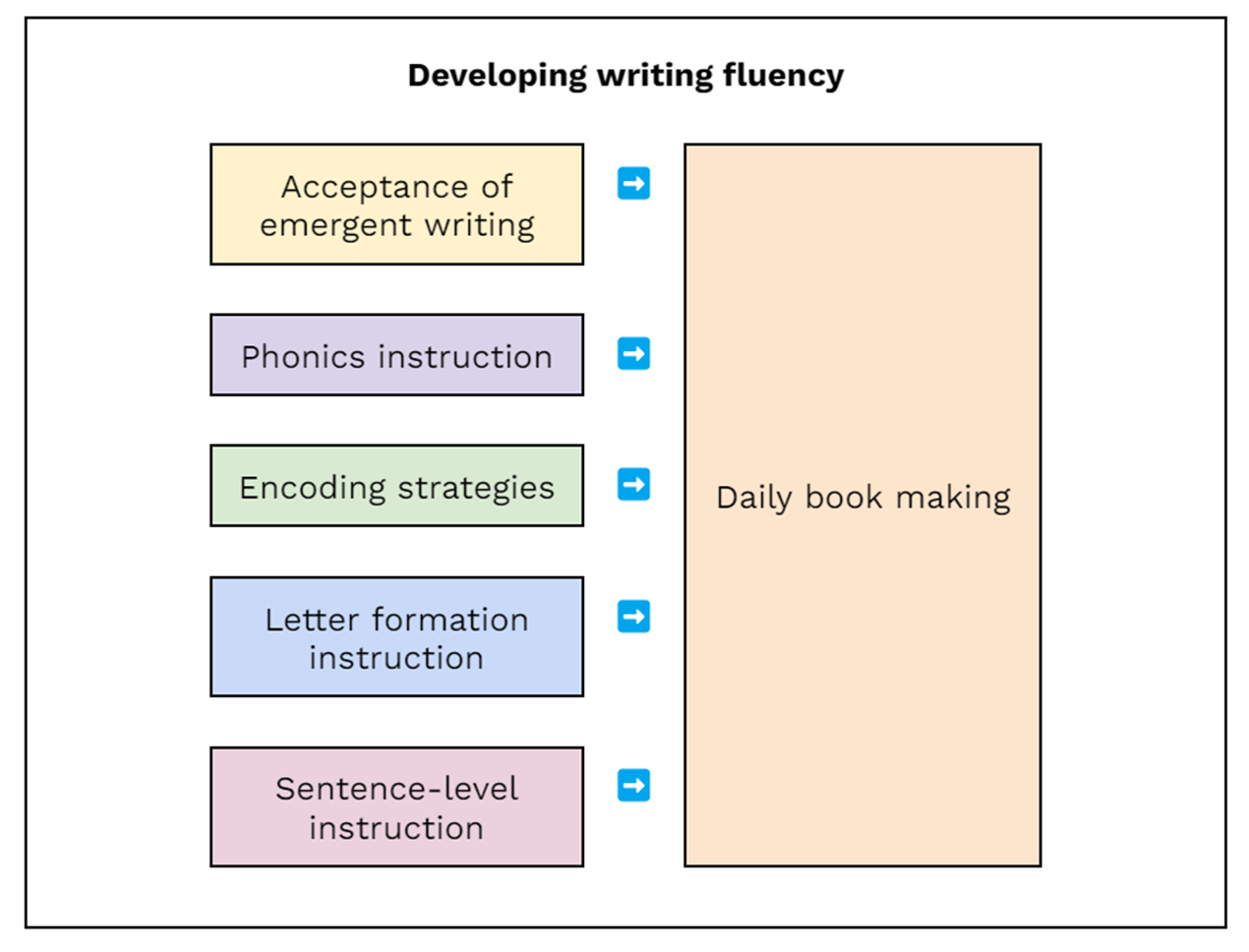
How do we develop writing fluency? [LINK]
❌ However, it’s wrong for Ofsted to suggest that these transcriptional skills should be taught in isolation, away from the craft of authoring. Nor does this foundational knowledge need to be somehow completely mastered before children can be given ‘the right to write stories’. Such a perspective not only goes against research recommendations but is also developmentally unsound. To pursue this recommendation would be an instructional mistake (Young & Ferguson 2022, 2024).
For example, if we were to follow Ofsted’s recommendations, Wyatt (from an economically underserved area of Leeds) wouldn’t have been able to make this picturebook on his first week of Nursery. His Nursery uses the Writing For Pleasure approach to teach writing (Young & Ferguson 2022). This means children learn something about writing every single day and they are invited to write every single day too.
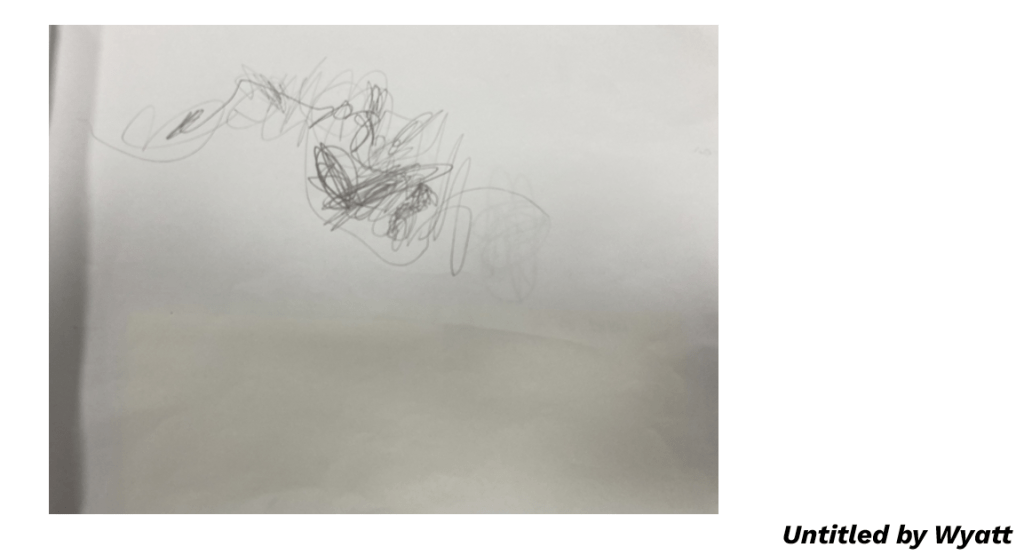
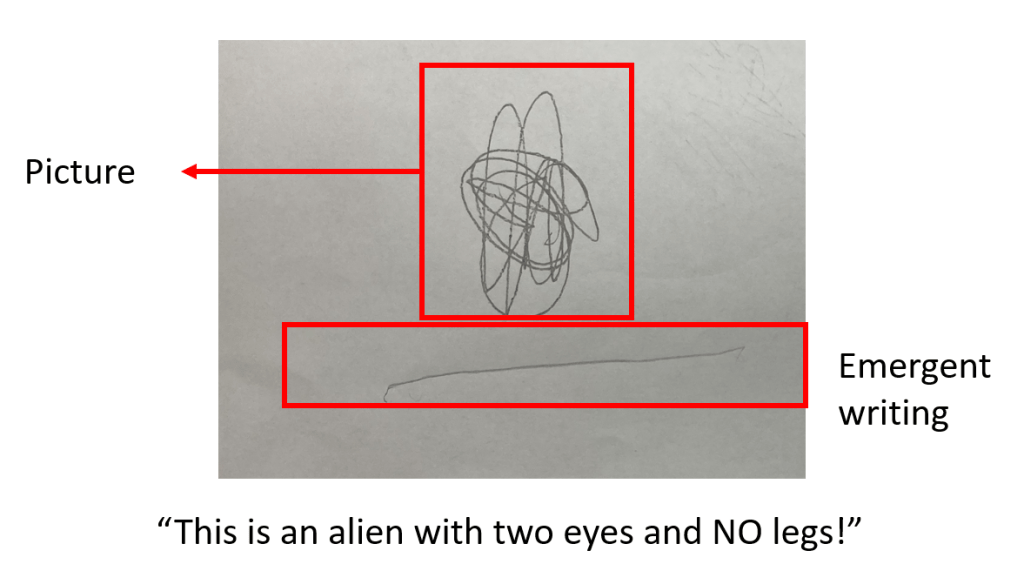


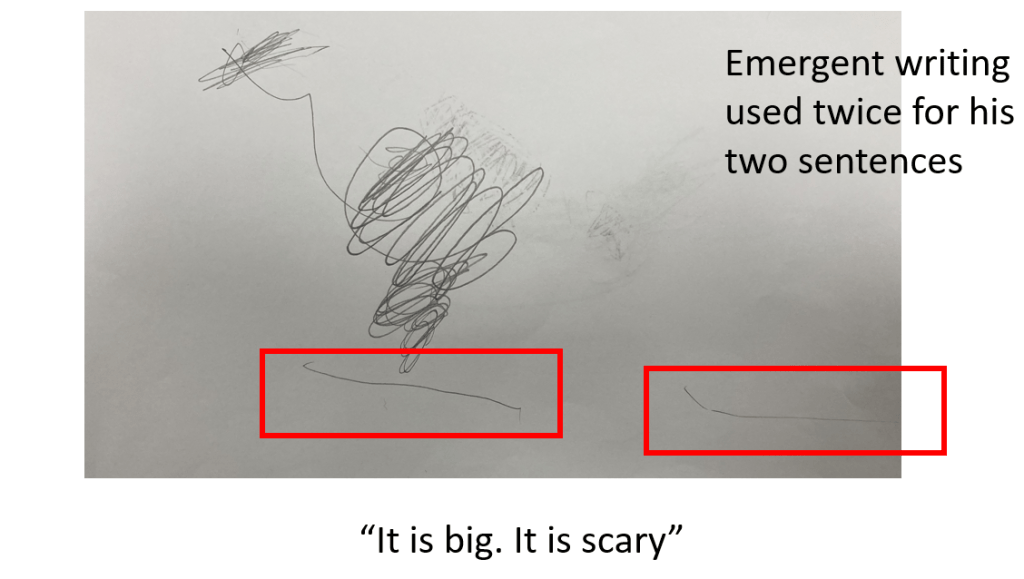

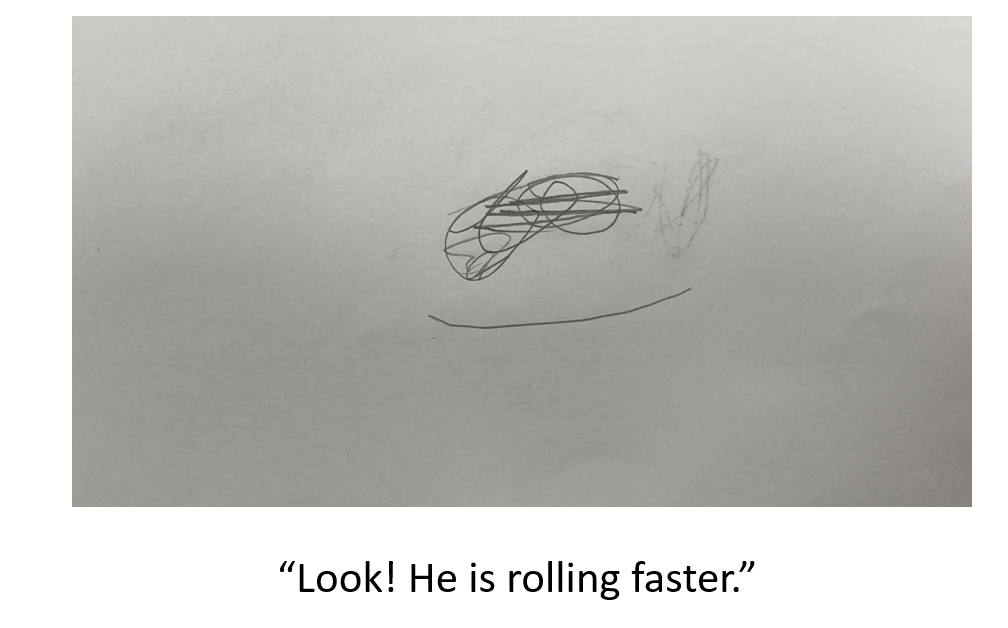
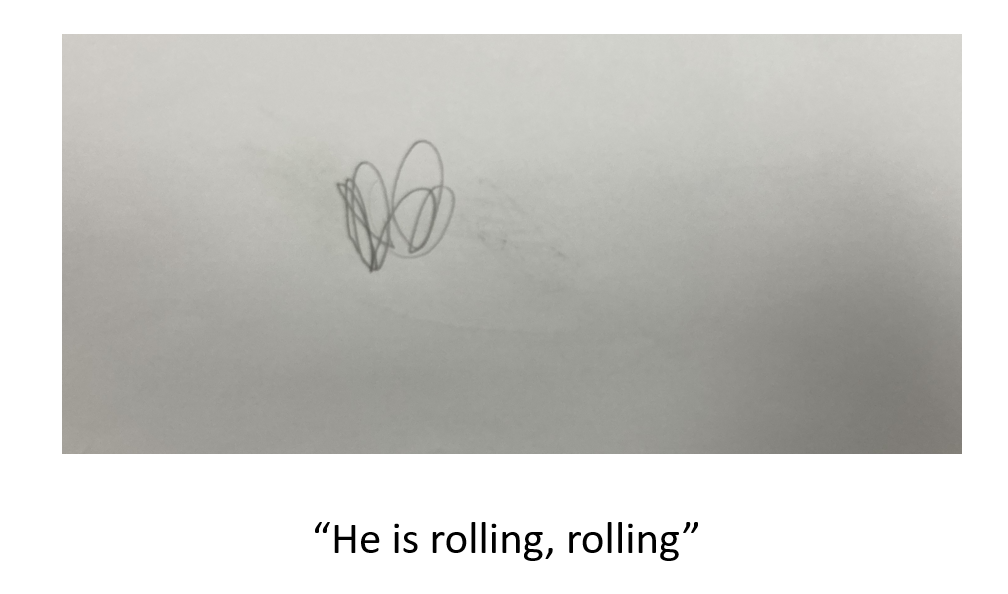
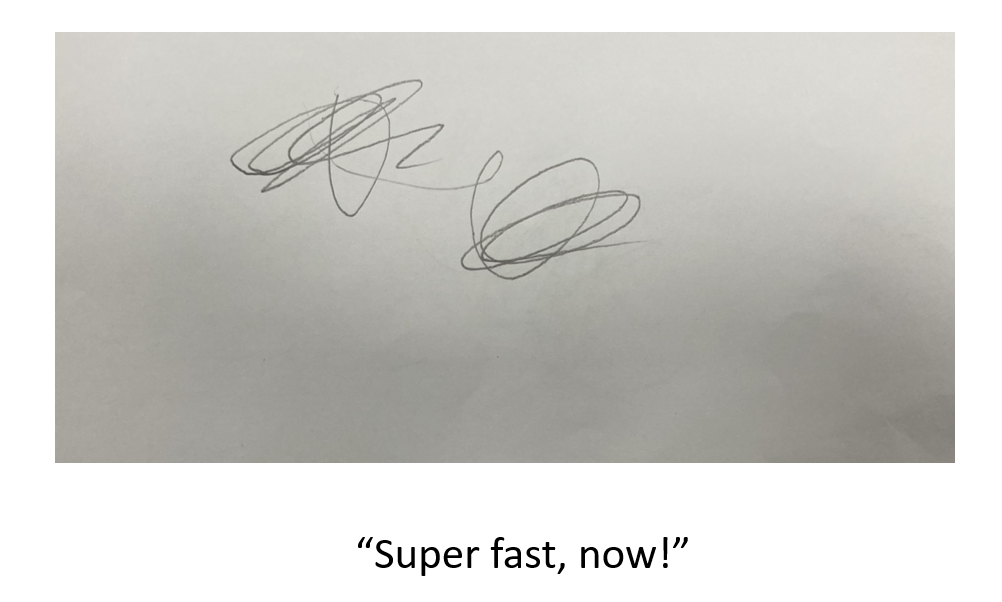

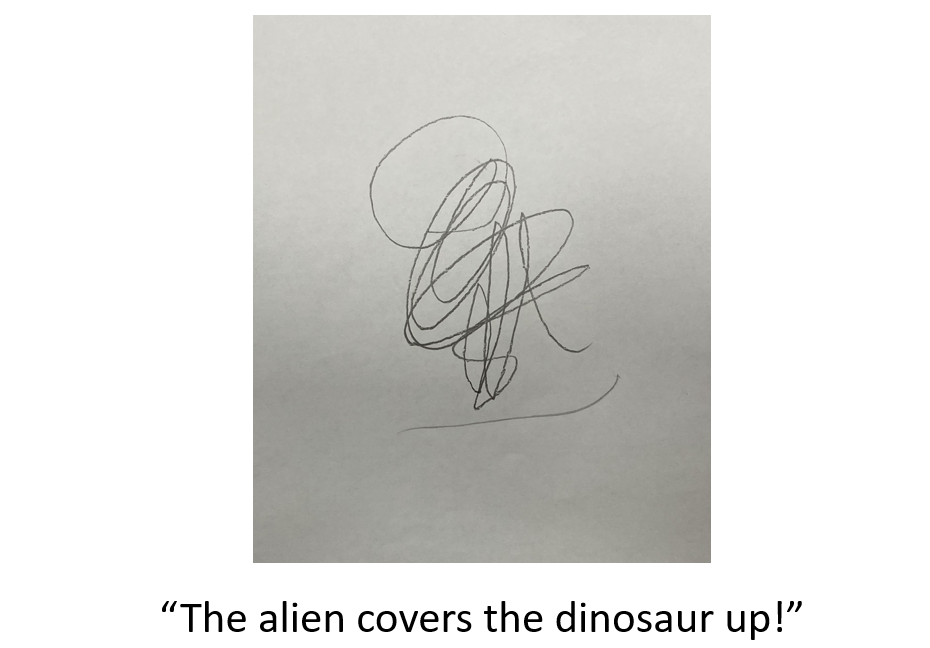
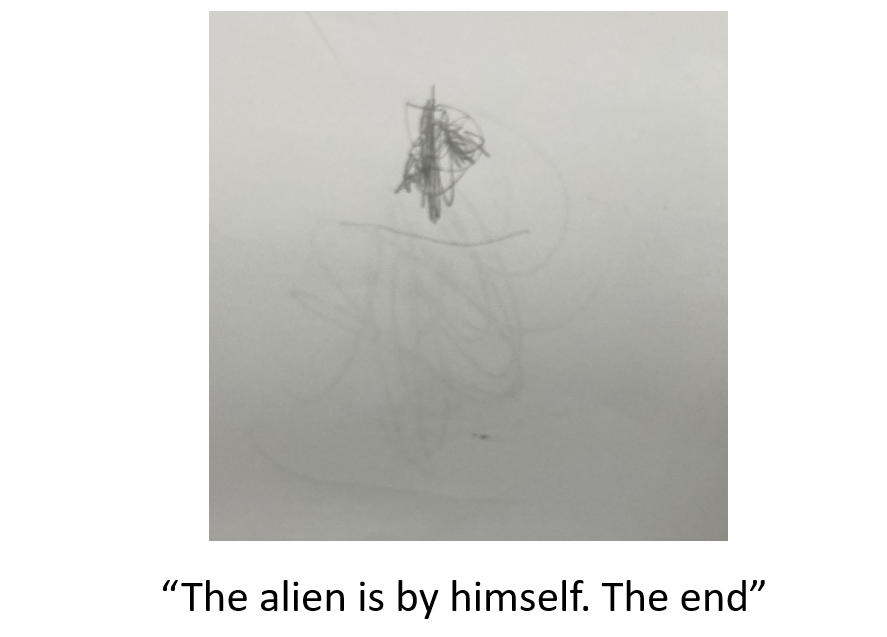
Isn’t that a brilliant story? I should explain that Wyatt is already learning a number of things about writing. He is learning that a book should have a picture and some emergent writing on every page. He has also learnt that when you are ‘telling’ your book – you should ‘tickle your writing’. This involves moving your finger across your emergent writing so you can tell people what it says. This is how I know what Wyatt’s book says. He was able to ‘read’ it to me – and I privately wrote down what his writing said in my notebook.
Ofsted would do well to read the research on developing children’s transcription and compositional skills simultaneously [LINK].
As you can see from our publications: Getting Children Up & Running As Writers, How To Teach Non-Fiction Writing In The EYFS, How To Teach Narrative Writing In The EYFS and Sentence-Level Lessons For 3-11 Year Olds, practising these skills needn’t be done away from meaningful and authentic writing opportunities. For even more exemplification, readers can view our List Book and Picturebook Projects for the EYFS and KS1.
Find out more:
- The different perspectives you can take on teaching early writing [LINK]
- How do we develop writing fluency? [LINK]
- Getting children up and running as writers [LINK]
- The research on developing children’s transcription and compositional skills [LINK]
- No more: They don’t know what a sentence is! [LINK]
2. Oral language development
“In order to write, children need to be able to compose orally (that is, to say out loud what they want to write)”
✅ Ofsted are right. We want children to develop their oral language and listening comprehension skills. Indeed, an ability and opportunity to ‘tell’ their writing could have the largest direct effect on the quality of young children’s writing (Kim & Schatschneider 2017). Again, we see how daily writing benefits Wyatt as he has learnt very early to say out loud what it is he has written down using his emergent writing.
Indeed, engaging in daily and meaningful talk while writing is one of the best ways to develop children’s language. This is one reason why a developmentally appropriate writing process, one which involves plenty of talking and sharing, is so important in the early years of writing.

A recommended recursive writing process for the EYFS (Young & Ferguson 2024)
There are a variety of different talking strategies children use as they craft texts. Children talk with one another before they write, as they write and after they write. These interactions occur in different ways and can include:
- Idea explaining – Children share what they plan to write about during the session with others.
- Idea sharing – Children work in pairs or small ‘clusters’ to co-construct their own texts together.
- Idea spreading – One pupil mentions an idea to their group. Children then leapfrog on the idea and create their own texts in response too.
- Supplementary ideas – Children hear about a child’s idea, like it, and incorporate it into the text they are already writing.
- Communal text rehearsal – Children say out loud what they are about to write – others listen in, comment, offer support or give feedback.
- Personal text rehearsal – Children talk to themselves about what they are about to write down. This may include encoding individual words aloud. Other children might listen in, comment, offer support or give feedback.
- Text checking – Children tell or read back what they’ve written so far and others listen in, comment, offer support or give feedback.
- Performance – Children share their texts with each other as an act of celebration and publication.
Encouraging children to talk and collaborate together during writing time is an evidence-based research recommendation, and the opportunity to talk as they write improves children’s final written outcomes. Children who talk as they write go on to write richer and more sophisticated texts. This may be because talk gives children more working memory for writing or because talk between children assists them in deciding what to say and how to encode it.
It’s important for Ofsted to recognise that oral language development in the context of the writing classroom goes beyond simply asking children to ‘rehearse a sentence’ before they write it, though this is one of a number of essential strategies for early writers to internalise (Young et al. 2021). Instead, children’s development as talkers relies on ‘a conversational context’. Children’s language develops when they are given the cognitive responsibility to use it. Ultimately, children must be the ones to construct their own speech and writing, otherwise, as the evidence shows, they learn little. The acquisition of language is a dynamic and creative process, not the passive reciting and copying of someone else’s model.
Ofsted’s review rightly acknowledges the profound role spoken language plays in the development of children’s encoding and spelling abilities. Thoughts and ideas have to be encoded into oral language (whether publicly by speaking them aloud, or privately in the mind) before being transcribed into written texts. This is aided by children’s ability to use their listening comprehension skills (Kim 2022). Unfortunately, Ofsted doesn’t show a clear enough understanding of what is meant by developing children’s oral language. We therefore hope that these definitions are useful.
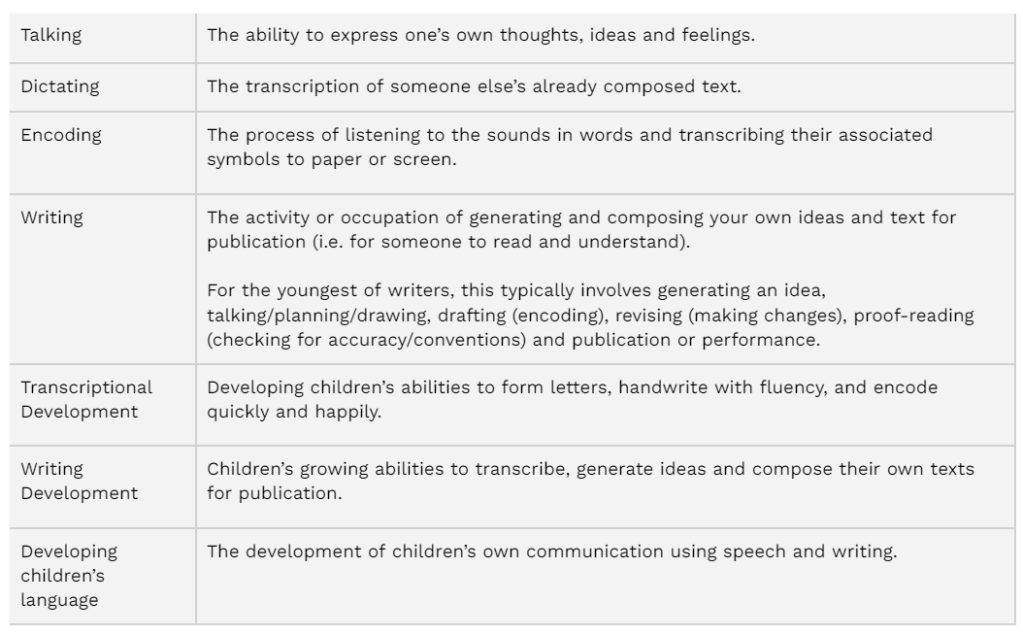
In poorly designed early years classrooms, you’ll see children given many opportunities to practise dictation, reciting and encoding. However, there is a big difference between dictation, reciting and encoding and developing children’s oral language for writing. Unfortunately, ineffective early years classrooms do not typically have a clear programme of study which helps develop children’s oral language alongside composing their own texts (Young & Ferguson 2021b, 2021c; Kim et al. 2021).
Find out more:
- Developing children’s talk for writing [LINK]
- How important is talk for writing? [LINK]
- Getting children up and running as writers [LINK]
3. Explicit handwriting and spelling instruction
“Teaching handwriting only in phonics sessions, as some schools do, is part of the problem. It means that children do not learn the basics of letter formation that establish the foundations for speedy and fluent handwriting later on.”
✅There are many benefits to teaching about letter formation in your phonics sessions, but additional explicit letter formation and handwriting instruction is important too. This need not take very long but should be regular. To read more about the research and best practice for teaching handwriting, see our provision checklist [LINK].
❌ What’s troubling is the complete absence of any discussion around emergent writing, essential to children’s early writing development (Cabel et al. 2023).
The job of teachers in the early years of children’s writing development is to nurture a generation of children who will feel themselves to be writers, and who will write happily without the constant need to ask anxiously ‘Is this right?’ or ‘I don’t know how to write it – can you do it?’
That’s why it’s a good idea at the beginning of the year to teach a lesson on the subject of ‘kid writing’. Even before mastering letter/sound correspondence or becoming a formal reader, a student (for example Wyatt) can scribble or approximate every single word they know. Therefore, all children can write if we set up the expectation that they should use a mixture of kid writing (using their approximations to make and use marks) and ‘adult writing’, using their ever developing knowledge of letter/sound correspondence and their sound and word mat resources. Kid writing is obviously a very temporary scaffold but an important one, because it ensures all the children in your class can access daily writing regardless of their ability or experience.
Here is what I typically say when delivering this particular lesson:
When I was your age, only three, four or five, I hadn’t learnt how to do all my ‘adult writing’ yet, so, while I was learning, I used my own writing too – we can call it ‘kid writing’. Let me show you what kid writing can look like.

At this point, I show the class some of the writing I’ve collected from children at different stages of development so they can see for themselves what kid writing can look like:
- Squiggles
- Letter-like shapes
- A selection of known letters
- Informed encoded ‘sound’ spellings [LINK]
I continue with:
As you can see, while these children were learning more about adult writing, they used ‘kid writing’ too. You can use this writing in your books. If you want to use some adult writing that you already know, go for it! By the way, my teacher taught me more and more about adult writing every day and now I can write like an adult. I’m going to teach you how to write like adults this year too!
This lesson is based on what is appropriate in terms of child development and reflects the stages of emergent writing. You can find out more by looking at the diagram below and by following the accompanying link.

(Byington & Kim 2017)
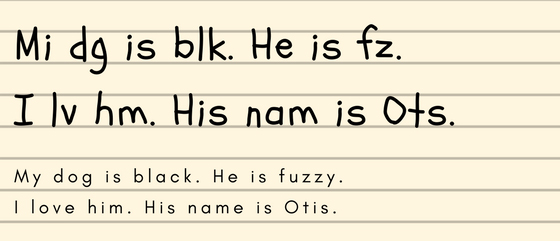
Of course, an added benefit to all this is children learning to use and apply their developing spelling (encoding) skills, something that Ofsted also highlights as important. We would certainly agree with Ofsted here. This is something we often pick up on when working with colleagues in the EYFS and KS1. Indeed, it feels like the time is now right for Ofsted to move its focus on how phonics can help children with their early reading to focusing on how it can have a transformative impact on children’s early writing development. It takes a lot of cognitive energy for children to take the phonemes of their speech and present them as graphemes of written language; otherwise called encoding. In the context of writing, phonics instruction should also focus on how to encode and produce ‘sound spellings’ (also known as informed spellings, approximated spellings and phonetic spellings) and be orientated towards how this instruction will be relevant and useful to the class as writers during their daily writing time (Young & Ferguson 2022). We know that when children receive phonics instruction that also encourages them to produce ‘sound spellings’ when they are writing, they outperform those not in receipt of such instruction on a whole variety of writing and reading measures (Rowe 2018).
Find out more:
- Early spelling development [LINK]
- Invented spelling in kindergarten as a predictor for future reading and spelling success [LINK]
- Using encoding instruction to improve the reading and spelling performances of elementary students at risk of literacy difficulties: A best-evidence synthesis [LINK]
- Encoding and ‘informed spelling’ [LINK]
4. Working-class children have got no experiences worth hearing about
“For children with fewer opportunities and experiences in their home lives, there is little to tell. ”
❌ The classism here is quite breathtaking. We couldn’t quite believe it. Is there any lower educational expectation than believing that a child has nothing to say? The reality is children don’t have fewer experiences than others: they simply have different experiences. We can’t give children rich lives, but we can give them the lens to appreciate the richness that is already there [LINK]. All children have funds-of-knowledge, funds-of-identity and funds-of-language they can profitably draw on to make and share meaning with (sympathetic) others. Ofsted would do well to read the research used to develop our Writing Realities framework [LINK]. This deficit thinking is not helpful to anyone – least of all children from economically underserved areas.
Find out more:
- True stories [LINK]
- Someone at home books [LINK]
- My friend… stories [LINK]
- A story about me [LINK]
- Memoir writing [LINK]
Summary
What we are really pleased about:
✅ The need to teach writing explicitly is put front and centre in the report [LINK].
✅ There is a focus on developing children’s writing fluency [LINK].
✅ Reiterates the point that phonics instruction should serve children as encoders as well as decoders [LINK].
✅ Oral language development is highlighted as a significant factor in children’s writing success [LINK].
✅ Teaching sentence structures functionally is reiterated [LINK], [LINK], [LINK].
✅ The need for short but regular handwriting and spelling instruction is acknowledged [LINK], [LINK].
✅ Showcases how schools need to have a clear progression for writing development in the EYFS through to the end of KS1 [LINK].
What we are less than thrilled about:
❌ Suggesting that foundational knowledge needs to be somehow mastered before children should be given ‘the right to write’ [LINK].
❌ Not mentioning the importance of accepting and building on children’s emergent writing practices when they first come to school [LINK].
❌ Not accepting that making errors is a part of learning to write.
❌ Suggesting that working-class children have no experiences worth writing about [LINK].