Join us at HfL’s annual English conference ‘Powerful Pedagogy: Say it, Read it, Write it’ – a dynamic day of learning designed specifically for primary school teachers and leaders. This enriching event will allow you to explore innovative teaching strategies and effective pedagogy to support all learners in reading, writing, and spoken language.
Join us online for a day of learning on the 6th of February 2025.
Getting writing right: Evidence-based recommendations for teaching writing
This talk draws on over fifty years of research reviews, including meta-analyses and case studies, conducted by The Writing for Pleasure Centre. It identifies 14 evidence-based principles that have been consistently associated with high-performing writing instruction. These principles, which form the core of the “Writing for Pleasure” pedagogy, include strategies such as building a community of writers, setting clear writing goals, and teaching the writing process. With a solid research foundation, these practices are shown to raise writing standards and accelerate progress for all learners. This session will explore how teachers can implement these principles to foster effective writing instruction in their classrooms.
Learning Outcomes
An understanding of pedagogical approaches to speaking and listening, reading and writing that will enhance pupil engagement and learning.
An informed understanding of current research and good practice.
Effective ways to support all learners no matter their age, stage, background or current attainment.
Strategies for developing a holistic and cohesive approach to English teaching in school.
On the 8th of October 2024, Ofsted published itsStrong foundations in the first years of school report. It purports to examine how schools secure the foundational knowledge and skills that every child needs by the end of KS1.
The mission of The Writing For Pleasure Centre is to help all young people become passionate and successful writers. As a think tank for exploring what world-class writing teaching is and could be, a crucial part of our work is analysing emerging guidance reports such as the one provided by Ofsted. It is therefore important that we issue a review of what this document has to say.
We will review Ofsted’s report againstThe Science Of Early Literacy, The Science Of Writing and what we presently know about the fourteen principles of world-class writing teaching (Young & Ferguson 2024). Our review will highlight both the good things shared by Ofsted and also their oversights, and we will provide further exemplification and suggested reading where we think we can add value.
1. Writing fluency
“Schools introduce complex writing tasks too early. They do not give children enough teaching and practice for them to become fluent in foundational knowledge and skills, such as in handwriting and composing simple sentences.”
✅ Ofsted raise a valid concern about the balance between foundational skills and more complex writing projects in early education. Introducing complex class writing projects too early can overwhelm children who have not yet established essential skills like handwriting, encoding (spelling) and sentence construction. When these skills are not solidified, children can struggle, leading to frustration and disengagement.
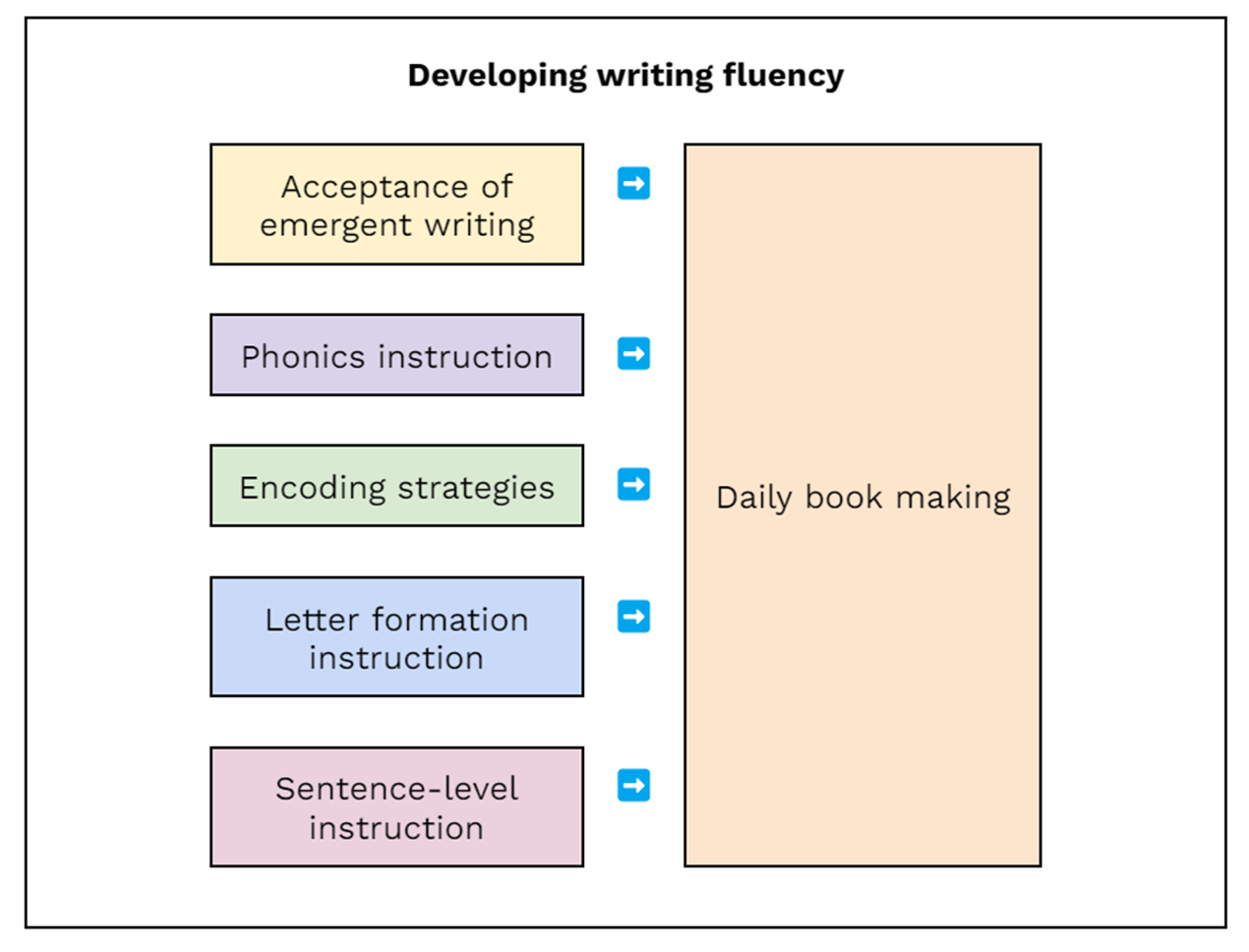
Schools could benefit from adopting a more structured, gradual progression, ensuring that students establish these skills before moving on to more complex writing projects. To do this, schools could focus on developing children’s writing fluency as quickly as possible, and there is a good amount of research on this (Young & Ferguson 2021a, 2022, 2023, 2024; Cabel et al. 2023).
❌ However, it’s wrong for Ofsted to suggest that these transcriptional skills should be taught in isolation, away from the craft of authoring. Nor does this foundational knowledge need to be somehow completely mastered before children can be given ‘the right to write stories’. Such a perspective not only goes against research recommendations but is also developmentally unsound. To pursue this recommendation would be an instructional mistake (Young & Ferguson 2022, 2024).
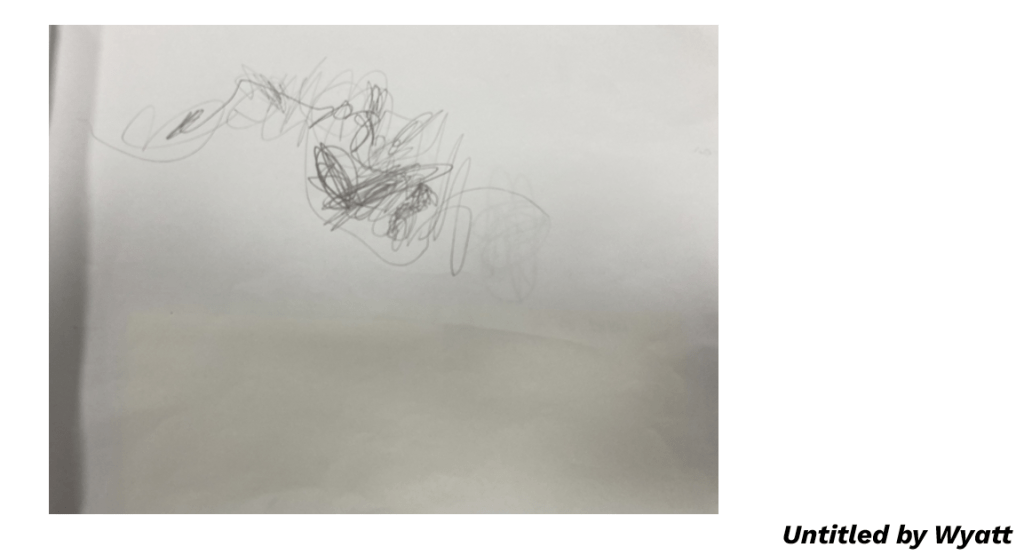
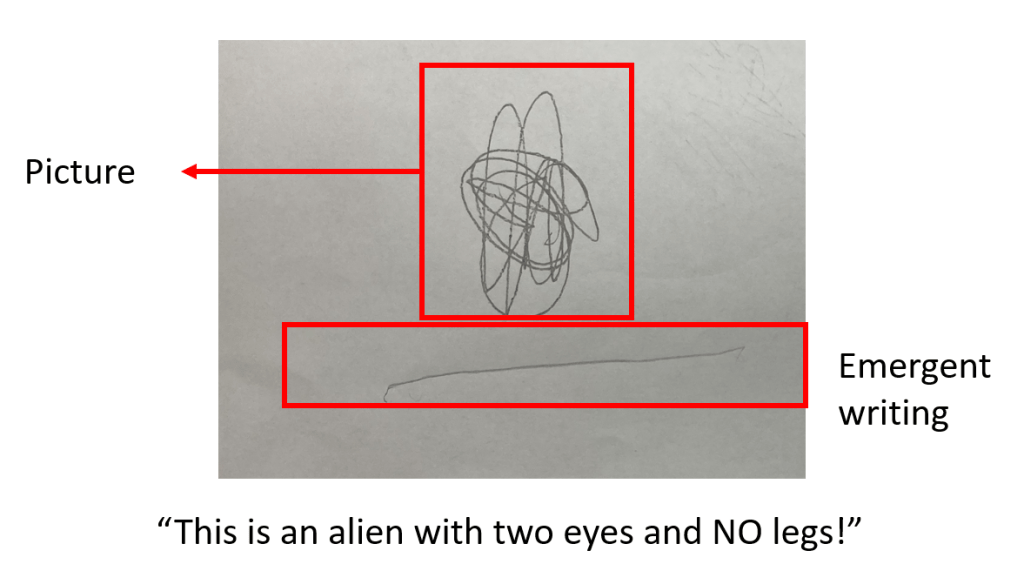
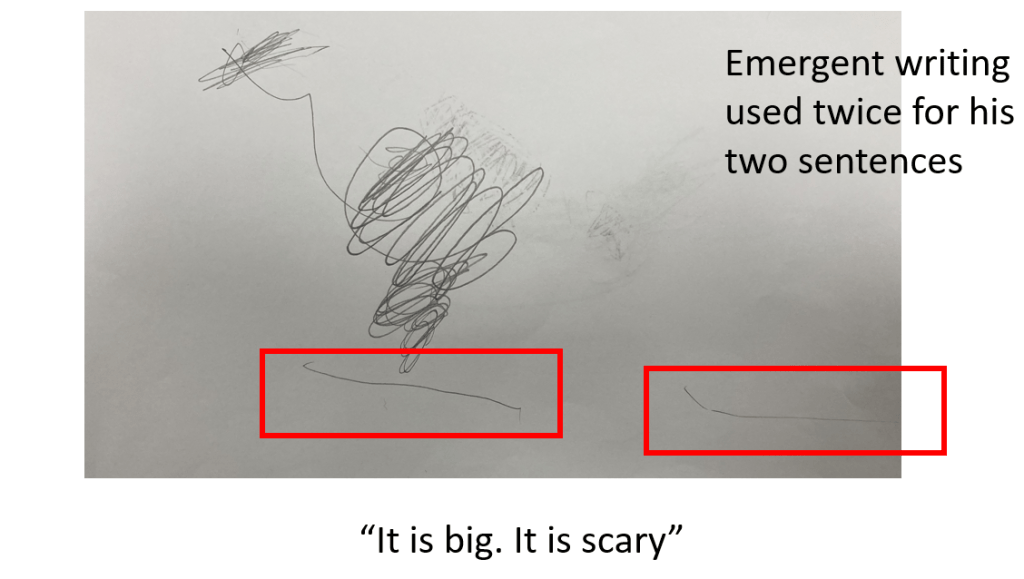
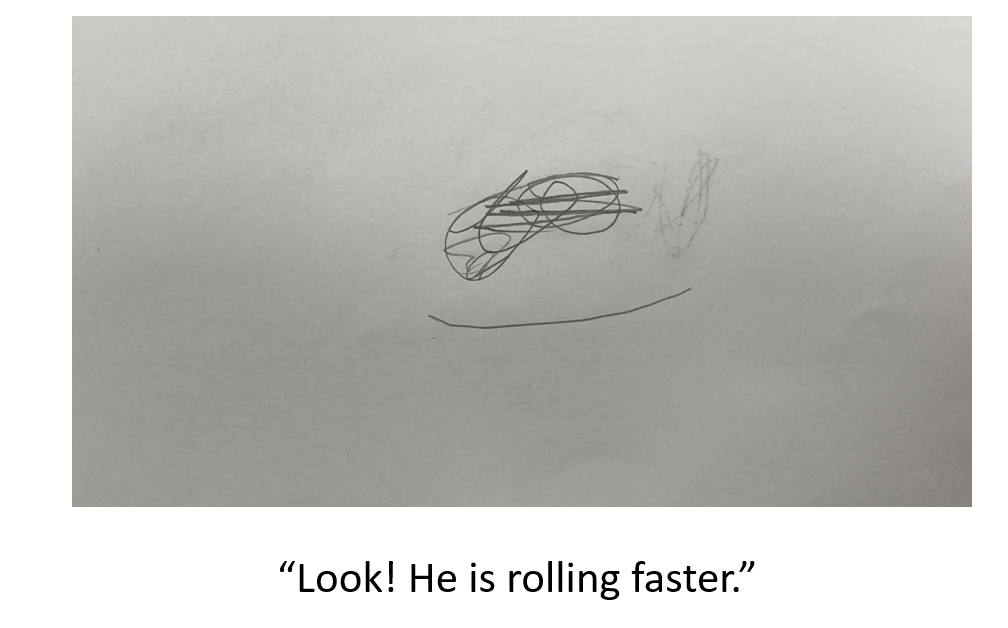
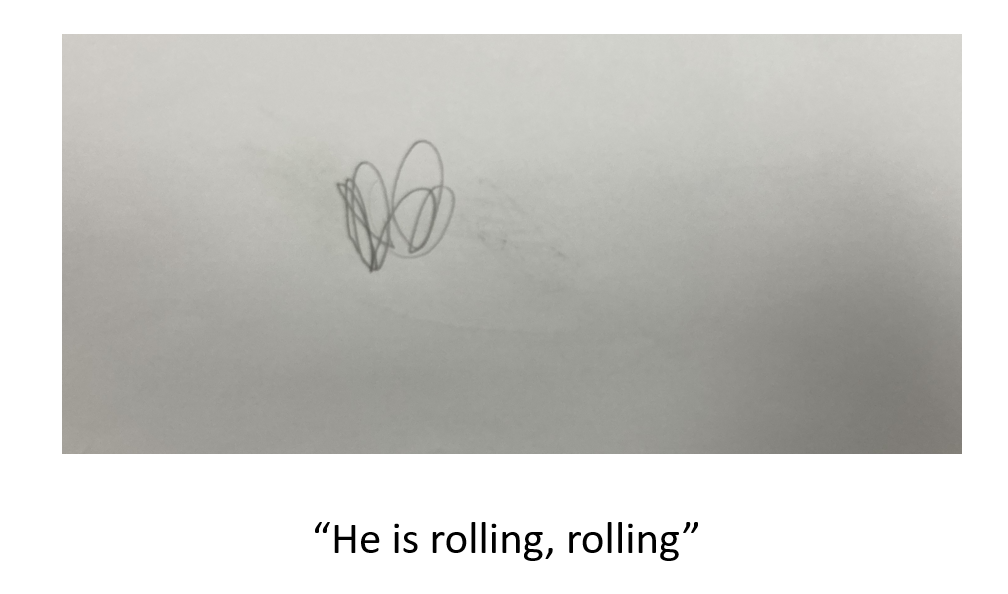
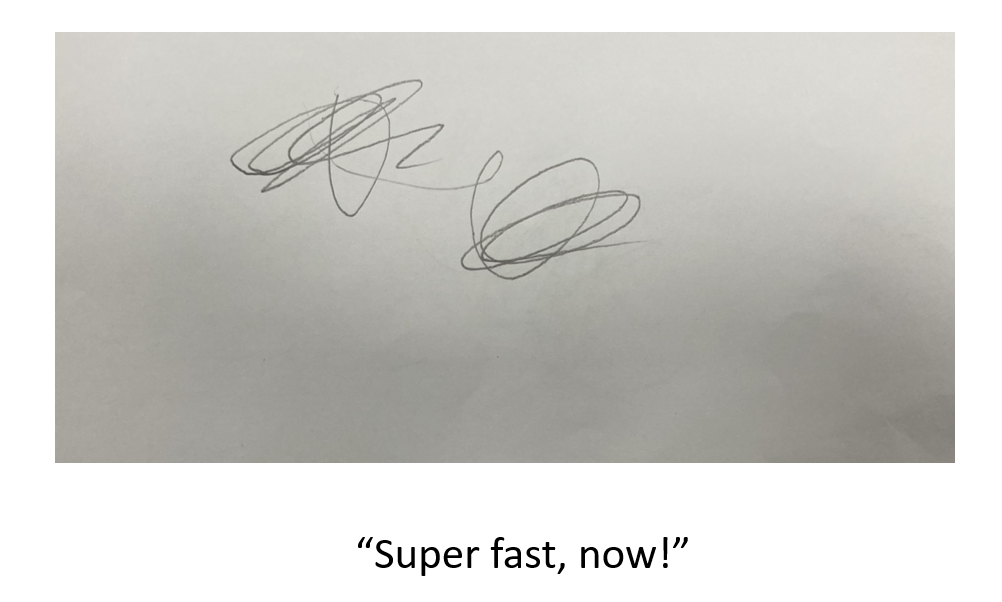
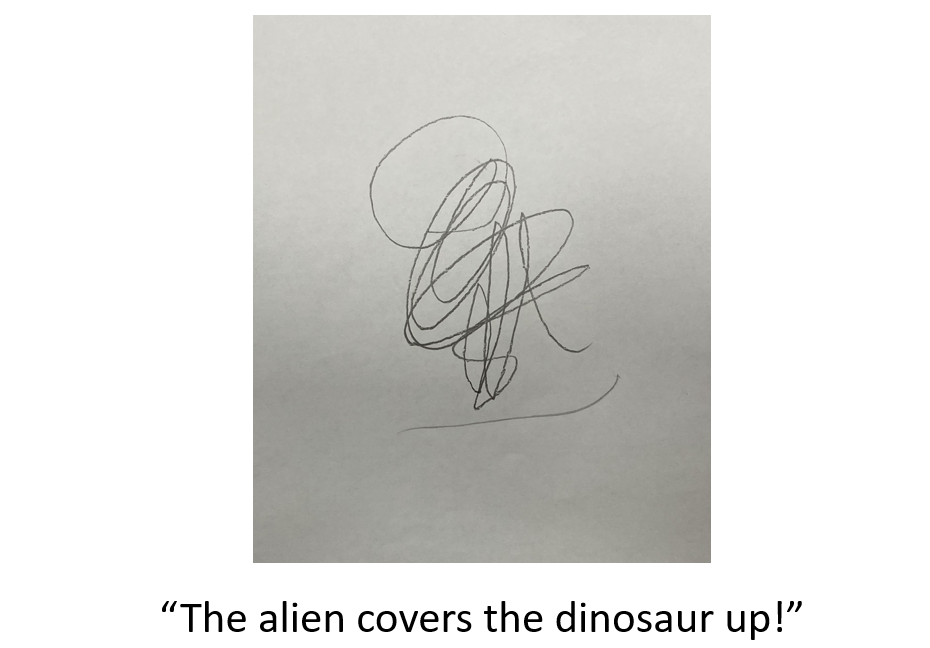
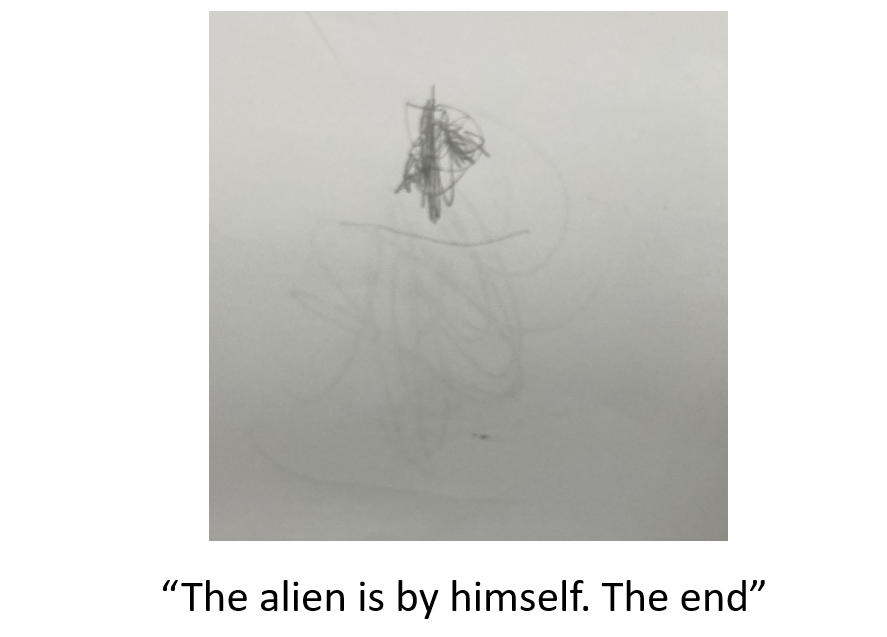
For example, if we were to follow Ofsted’s recommendations, Wyatt (from an economically underserved area of Leeds) wouldn’t have been able to make this picturebook on his first week of Nursery. His Nursery uses the Writing For Pleasure approach to teach writing (Young & Ferguson 2022). This means children learn something about writing every single day and they are invited to write every single day too.
Isn’t that a brilliant story? I should explain that Wyatt is already learning a number of things about writing. He is learning that a book should have a picture and some emergent writing on every page. He has also learnt that when you are ‘telling’ your book – you should ‘tickle your writing’. This involves moving your finger across your emergent writing so you can tell people what it says. This is how I know what Wyatt’s book says. He was able to ‘read’ it to me – and I privately wrote down what his writing said in my notebook.
Ofsted would do well to read the research on developing children’s transcription and compositional skills simultaneously [LINK].
The research on developing children’s transcription and compositional skills [LINK]
No more: They don’t know what a sentence is! [LINK]
2. Oral language development
“In order to write, children need to be able to compose orally (that is, to say out loud what they want to write)”
✅ Ofsted are right. We want children to develop their oral language and listening comprehension skills. Indeed, an ability and opportunity to ‘tell’ their writing could have the largest direct effect on the quality of young children’s writing (Kim & Schatschneider 2017). Again, we see how daily writing benefits Wyatt as he has learnt very early to say out loud what it is he has written down using his emergent writing.
Indeed, engaging in daily and meaningful talk while writing is one of the best ways to develop children’s language. This is one reason why a developmentally appropriate writing process, one which involves plenty of talking and sharing, is so important in the early years of writing.
A recommended recursive writing process for the EYFS (Young & Ferguson 2024)
There are a variety of different talking strategies children use as they craft texts. Children talk with one another before they write, as they write and after they write. These interactions occur in different ways and can include:
Idea explaining – Children share what they plan to write about during the session with others.
Idea sharing – Children work in pairs or small ‘clusters’ to co-construct their own texts together.
Idea spreading – One pupil mentions an idea to their group. Children then leapfrog on the idea and create their own texts in response too.
Supplementary ideas – Children hear about a child’s idea, like it, and incorporate it into the text they are already writing.
Communal text rehearsal – Children say out loud what they are about to write – others listen in, comment, offer support or give feedback.
Personal text rehearsal – Children talk to themselves about what they are about to write down. This may include encoding individual words aloud. Other children might listen in, comment, offer support or give feedback.
Text checking – Children tell or read back what they’ve written so far and others listen in, comment, offer support or give feedback.
Performance – Children share their texts with each other as an act of celebration and publication.
Encouraging children to talk and collaborate together during writing time is an evidence-based research recommendation, and the opportunity to talk as they write improves children’s final written outcomes. Children who talk as they write go on to write richer and more sophisticated texts. This may be because talk gives children more working memory for writing or because talk between children assists them in deciding what to say and how to encode it.
It’s important for Ofsted to recognise that oral language development in the context of the writing classroom goes beyond simply asking children to ‘rehearse a sentence’ before they write it, though this is one of a number of essential strategies for early writers to internalise (Young et al. 2021). Instead, children’s development as talkers relies on ‘a conversational context’. Children’s language develops when they are given the cognitive responsibility to use it. Ultimately, children must be the ones to construct their own speech and writing, otherwise, as the evidence shows, they learn little. The acquisition of language is a dynamic and creative process, not the passive reciting and copying of someone else’s model.
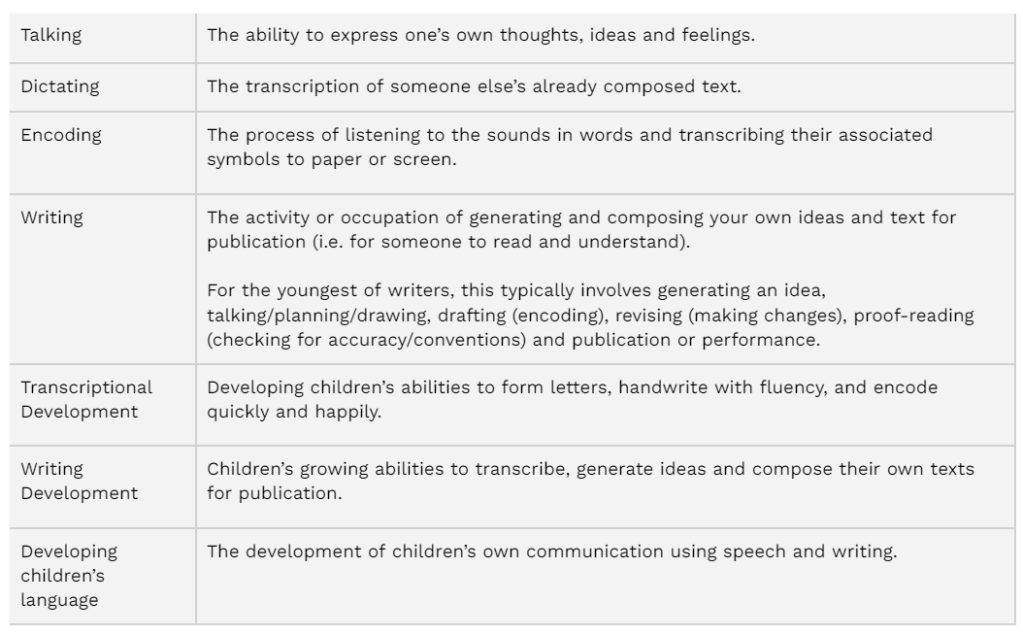
Ofsted’s review rightly acknowledges the profound role spoken language plays in the development of children’s encoding and spelling abilities. Thoughts and ideas have to be encoded into oral language (whether publicly by speaking them aloud, or privately in the mind) before being transcribed into written texts. This is aided by children’s ability to use their listening comprehension skills (Kim 2022). Unfortunately, Ofsted doesn’t show a clear enough understanding of what is meant by developing children’s oral language. We therefore hope that these definitions are useful.
In poorly designed early years classrooms, you’ll see children given many opportunities to practise dictation, reciting and encoding. However, there is a big difference between dictation, reciting and encoding and developing children’s oral language for writing. Unfortunately, ineffective early years classrooms do not typically have a clear programme of study which helps develop children’s oral language alongside composing their own texts (Young & Ferguson 2021b, 2021c; Kim et al. 2021).
“Teaching handwriting only in phonics sessions, as some schools do, is part of the problem. It means that children do not learn the basics of letter formation that establish the foundations for speedy and fluent handwriting later on.”
✅There are many benefits to teaching about letter formation in your phonics sessions, but additional explicit letter formation and handwriting instruction is important too. This need not take very long but should be regular. To read more about the research and best practice for teaching handwriting, see our provision checklist [LINK].
❌ What’s troubling is the complete absence of any discussion around emergent writing, essential to children’s early writing development (Cabel et al. 2023).
The job of teachers in the early years of children’s writing development is to nurture a generation of children who will feel themselves to be writers, and who will write happily without the constant need to ask anxiously ‘Is this right?’ or ‘I don’t know how to write it – can you do it?’
That’s why it’s a good idea at the beginning of the year to teach a lesson on the subject of ‘kid writing’. Even before mastering letter/sound correspondence or becoming a formal reader, a student (for example Wyatt) can scribble or approximate every single word they know. Therefore, all children can write if we set up the expectation that they should use a mixture of kid writing (using their approximations to make and use marks) and ‘adult writing’, using their ever developing knowledge of letter/sound correspondence and their sound and word mat resources. Kid writing is obviously a very temporary scaffold but an important one, because it ensures all the children in your class can access daily writing regardless of their ability or experience.
Here is what I typically say when delivering this particular lesson:
When I was your age, only three, four or five, I hadn’t learnt how to do all my ‘adult writing’ yet, so, while I was learning, I used my own writing too – we can call it ‘kid writing’. Let me show you what kid writing can look like.
At this point, I show the class some of the writing I’ve collected from children at different stages of development so they can see for themselves what kid writing can look like:
As you can see, while these children were learning more about adult writing, they used ‘kid writing’ too. You can use this writing in your books. If you want to use some adult writing that you already know, go for it!By the way, my teacher taught me more and more about adult writing every day and now I can write like an adult. I’m going to teach you how to write like adults this year too!
This lesson is based on what is appropriate in terms of child development and reflects the stages of emergent writing. You can find out more by looking at the diagram below and by following the accompanying link.
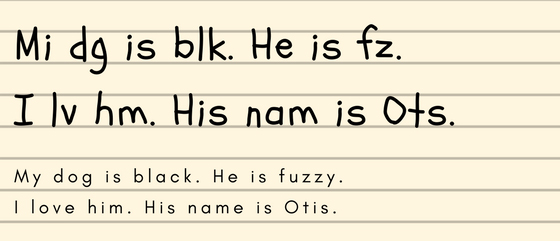
Of course, an added benefit to all this is children learning to use and apply their developing spelling (encoding) skills, something that Ofsted also highlights as important. We would certainly agree with Ofsted here. This is something we often pick up on when working with colleagues in the EYFS and KS1. Indeed, it feels like the time is now right for Ofsted to move its focus on how phonics can help children with their early reading to focusing on how it can have a transformative impact on children’s early writing development. It takes a lot of cognitive energy for children to take the phonemes of their speech and present them as graphemes of written language; otherwise called encoding. In the context of writing, phonics instruction should also focus on how to encode and produce ‘sound spellings’ (also known as informed spellings, approximated spellings and phonetic spellings) and be orientated towards how this instruction will be relevant and useful to the class as writers during their daily writing time (Young & Ferguson 2022). We know that when children receive phonics instruction that also encourages them to produce ‘sound spellings’ when they are writing, they outperform those not in receipt of such instruction on a whole variety of writing and reading measures (Rowe 2018).
Invented spelling in kindergarten as a predictor for future reading and spelling success [LINK]
Using encoding instruction to improve the reading and spelling performances of elementary students at risk of literacy difficulties: A best-evidence synthesis [LINK]
4. Working-class children have got no experiences worth hearing about
“For children with fewer opportunities and experiences in their home lives, there is little to tell. ”
❌ The classism here is quite breathtaking. We couldn’t quite believe it. Is there any lower educational expectation than believing that a child has nothing to say? The reality is children don’t have fewer experiences than others: they simply have different experiences. We can’t give children rich lives, but we can give them the lens to appreciate the richness that is already there [LINK]. All children have funds-of-knowledge, funds-of-identity and funds-of-language they can profitably draw on to make and share meaning with (sympathetic) others. Ofsted would do well to read the research used to develop our Writing Realities framework [LINK]. This deficit thinking is not helpful to anyone – least of all children from economically underserved areas.
What is the good of your stars and trees, your sunrise and the wind, if they do not enter into our daily lives – E.M. Forster
Why write about the world outside?
British poetry has a long tradition of connection with landscape and nature. We cannot separate ourselves from the natural world, and young people are increasingly concerned about it. What we can do is bring into sharper focus for both children and ourselves the joyful, healing, subtle, delicate or terrifying aesthetics of nature. Children can share their experiences of nature with others, and this is the most important aspect of the project. When writing a nature poem, we’re aiming to share a particular experience, and we have to resist the temptation to write generally about it. It’s about choosing a diamond moment. We are lucky enough to have many experiences with nature, in urban jungles, streets, allotments, gardens, weather, woods, parks, beaches, rivers, seas, peaks, hills and playgrounds. Many of these experiences will be enjoyable; some may not!
This poetry project gives children the opportunity to write an impression, to capture a moment, to use poetry as a symbol and to make something familiar seem unfamiliar. Perhaps the children could even produce a literary magazine showcasing the power and fragility of nature.
This study investigated how children demonstrate agency in writing projects across three elementary classrooms within a single US school. The researchers uncovered significant insights into the relationship between curriculum design and student agency.
The findings illustrate that a writing curriculum that supports choice and the expression of students’ voices enabled them to integrate their funds-of-knowledge, funds-of-identity and out-of-school experiences within their writing [LINK]. This approach facilitated rich, meaningful writing experiences where students could reflect their personal voices and identities.
However, misunderstandings around the science of writing and phonics instruction have impacted writing curricula and student agency. The prevailing trend towards presentational-skills writing instruction has lead to reduced opportunities for student choice and self-expression [LINK and LINK]. This flawed pedagogical approach has constrained students’ ability to engage deeply with their writing and has limited their opportunities for a creative and agency-driven writing apprenticeship.
To counteract these limitations, teachers can (and must) proactively reform their writing curricula and instruction to better support student agency [LINK and LINK]. This includes offering choices in content, process, and product, which can enhance motivation and engagement. As highlighted by the study, allowing students to create their own writing and negotiate their identities within the writing classroom can empower them to become more engaged and adaptive participants in the writing process.
In essence, fostering student agency in writing requires an instructional approach that values and integrates students’ voices, experiences, and perspectives. By doing so, educators can nurture a more dynamic and responsive educational environment that supports students’ development as creative and autonomous writers.
***
Key studies and perspectives illustrate how classroom environments and instructional practices can either support or hinder students’ agency. For example, McCarthey’s research shows that students express agency by engaging with or resisting classroom norms, while Hamel’s study emphasises the role of teacher support in fostering a writing classroom where students feel empowered to share and publish their compositions.
The researchers also touch on the role of genre in writing instruction, suggesting that while teaching about text forms can help students understand different text types, overly rigid approaches to genre teaching can stifle creativity and agency. Instead, integrating genre instruction with opportunities for student choice, as seen in the Writing For Pleasure approach and Rylak et al.’s study, can enhance students’ engagement and agency in writing.
***
Findings from the research showed how the writing curriculum in different classroom settings shaped students’ writing practices, their interactions with their peers, and how they expressed agency through their writing. The study focused on three different classrooms and examined how students navigated and negotiated their writing experiences.
K/1st grade classroom:
Writing environment: A dynamic and colourful space where students had multiple opportunities to write, often in a collaborative and fluid manner. The curriculum was open, allowing students choices in topics, genres, and collaboration. This flexibility encouraged creativity, such as combining pictures and text and collaborating with peers [LINK].
Student agency: Students showed enthusiasm for writing, expressing creativity and independence in their choice of topics and writing styles. Collaboration was encouraged, and students actively engaged in sharing their work with peers, which allowed them to incorporate feedback and ideas into their writing [LINK].
2nd/3rd grade classroom:
Writing projects: Students worked on personal narrative writing where they could discuss life experiences [LINK]. While genre instruction was crucial, the study suggests allowing students to make choices within genres to maintained children’s engagement and relevance.
Student agency: The life experiences project allowed students to explore their identities and express themselves creatively. The students’ writing showed a blend of classroom literacy and personal experiences.
4th/5th grade classroom:
Writing projects: Students engaged in opinion writing [LINK] and a poetry project. While the opinion writing was more structured, the poetry project allowed for greater personal expression and creativity [LINK]. Again, while genre instruction was crucial, the study suggests allowing students to make choices within these taught genres to maintain children’s engagement and relevance.
Student agency: The poetry project was particularly enjoyed by students as it allowed them to explore their identities and express themselves in a less constrained manner.
Conclusion
This study emphasises the importance of fostering student agency in writing instruction by creating supportive, flexible, and culturally responsive learning environments [LINK]. Teachers should focus on building classroom communities where students are supported to choose their writing topics in an open, friendly, and safe atmosphere. This kind of environment encourages regular peer feedback and interaction, whether in pairs, small groups, or as a whole class. Allowing students to make choices, particularly within the parameters of a specific genre, aligns with best practices and significantly promotes their sense of agency [LINK].
In addition, the research highlights the value of culturally responsive practices in enhancing student engagement and agency in writing. Recognising and valuing students’ linguistic and cultural backgrounds can make a meaningful impact on their writing experiences [LINK]. As multilingualism becomes increasingly prevalent, it is important for classrooms to explicitly incorporate and value children’s funds-of-language and writing in multiple languages [LINK]. This approach not only fosters inclusivity but also respects and leverages students’ full linguistic repertoires, enhancing their overall learning experience.
Furthermore, a school’s writing curriculum should connect to students’ lived experiences and real-world contexts [LINK]. This connection allows students to act on their intentions and interests, helping them develop their writerly identities and empowering them to express their creative ideas. Such an approach encourages students to engage deeply with their writing and see its relevance beyond the classroom.
In conclusion, the researchers argue against the use of highly structured writing schemes that limit students’ creative expression. Instead, it advocates for curricula that prioritise student-driven writing projects, enabling students to create extended texts, explore various genres, and write for real audiences [LINK]. The critique of curricula which misunderstands ‘the science of writing‘ highlights the limitations of approaches that focus narrowly on writing responses to reading and provide few opportunities for extended writing. These flawed curriculums are considered detrimental to the development of students’ writerly identities and agency [LINK and LINK].
The study ultimately advocates for open, stimulating writing classrooms that offer students choice and opportunities for critical engagement with texts. Such classrooms can serve as models for others, especially in an era where prescriptive educational mandates are becoming more common. The overall message is a call for instructional practices that prioritise student agency, cultural responsiveness, and real-life relevance in writing education, moving away from rigid, scripted writing schemes towards more inclusive, effective and affecting approaches [LINK].
In this paper, Nadia Behizadeh discusses two different approaches to teaching writing. On one end of the spectrum is authentic writing instruction, where students use writing to think deeply, create new ideas, express themselves, and influence others. At the other end is formulaic writing instruction, where the focus is just on following conventions of grammar, punctuation, and mechanics [LINK and LINK].
A major concern in UK and US schools is that writing instruction tends to lean towards the formulaic side, often using pre-designed writing schemes that don’t take into account students’ backgrounds, cultures, or interests [LINK]. This issue is particularly problematic for students of colour and for pupils in economically underserved areas, making it a matter of social justice [LINK].
While there are many reasons for formulaic instruction, teachers have the power to make writing instruction more authentic. However, striving for more authentic writing can be challenging, especially in schools that don’t understand or appreciate evidence-based writing teaching.
Definition of authenticity
Behizadeh discusses the idea of ‘authenticity’ in writing instruction, explaining that many teachers believe that making writing projects real and relevant to students’ lives can increase their engagement and success [LINK]. Here’s a simplified breakdown:
Authentic learning means that what pupils do in school is meaningful and connected to the real world. For a writing task to be authentic, it should have real-world relevance and be valued outside of school.
Authenticity isn’t either/or – class projects can be made more or less authentic. Traditionally, it’s been teachers who have decided what is ‘authentic,’ but there’s a shift towards letting children see the relevance of class writing projects in their own terms [LINK].
Authentic writing is when students feel they have the ability to connect a class writing project to their life, experiences, culture, interests, and goals [LINK].
It’s about starting with what students know and helping them connect to new topics and genres in a way that feels relevant to them [LINK].
Examples and research
A study on meaningful writing found that personal connection doesn’t mean students always write about themselves. For example, a student found writing about hockey fan culture meaningful even though she wasn’t into hockey, because it helped her think about her own culture [LINK].
Students value having some choice in what they write about, focusing on expressing themselves over just following rules, writing for real audiences, and sharing their compositions with others [LINK].
Four key factors for authentic writing
Structured choice for writing topics: Helping students choose writing topics that relate to their lives with some guidance from teachers or peers [LINK].
Expression over conventions: Teaching grammar and mechanics within the context of expressing something important, rather than as separate rules [LINK and LINK].
Writing for impact: Encouraging pupils to write for real purposes and audiences, and providing ways for them to publish their manuscripts [LINK].
Sharing writing: Creating a safe environment for students to share their writing, building a community, and giving opportunities to share with various audiences [LINK and LINK].
Balancing authenticity and other needs
While aiming for authenticity, teachers should still keep in mind other factors, like preparing students’ writing for moderation and standardised tests.
Here’s a simplified summary of the findings from the study on authentic writing instruction:
Facilitating choice of a valued writing topic
The teacher and the researcher used essential questions and prompts to help students brainstorm meaningful topics for their writing [LINK].
Activities included small group discussions, quick-writes, and an Ideas Party where students shared their ideas.
Students read and critiqued mentor texts to see how authors use various techniques to make their writing meaningful and successful [LINK].
These activities aimed to help students find topics they cared about and engage in expressive writing.
Successes:
High student engagement with rich conversations and enthusiasm.
Students appreciated generating their own writing ideas.
Challenges:
Some students had already decided on their topics and didn’t feel influenced by the prewriting activities.
Some students chose topics they didn’t find very meaningful.
Striving for expression and adherence to conventions
The teacher taught lessons on grammar and structure to support meaning-making [LINK and LINK].
Mentor texts helped students generate ideas and see different narrative structures [LINK].
The workshop environment and peer reviews were helpful for students [LINK].
Teaching planning techniques helped pupils organise their ideas [LINK].
Challenges:
The planning techniques may have limited creativity, especially for students already familiar with narrative structures.
Knowing their audience would have helped make the writing process more authentic for students [LINK].
Here’s a summary of the findings regarding opportunities for impact and increasing authenticity in writing instruction:
Creating Opportunities for Impact
Presentation Options:
Students were given various ways to present their work, including public presentations and publishing.
A “presentation menu” was introduced in the third week, after students had drafted and revised their narratives.
Despite these options, few students chose public presentations or online posting, with more interest shown by students in Gifted and Accelerated classes.
Only a small number of students submitted their work for publication.
Successes:
Those who chose public presentations felt proud and learned more about each other.
Presentation options were appreciated, enhancing the writing experience for some.
Challenges:
Most students did not feel that the presentation options significantly increased authenticity.
Timing of introducing presentation options might have mitigated their effectiveness since the audience was identified late in the process.
Publishing a book in the school library did not provide a clearly valued audience.
Creating a stronger sense of an actual audience
Student reactions and feedback:
Students indicated that choice of topic, process freedom, personal expression, and conveying important messages were the most meaningful aspects of the project.
Some students felt more authenticity in narrative writing, while others preferred writing explanation essays.
Students’ suggestions for increasing authenticity included different genres and more time.
Audience issues:
Students may not have felt a strong sense of an actual audience [LINK].
Too often scheme-based writing tasks focus on imagined audiences rather than real ones [LINK].
Authentic writing experiences should include real impacts, real reactions and real conversations with the audience [LINK].
By focusing on real-world projects and actual audiences, students can find greater meaning and purpose in their writing, ultimately strengthening their skills and sense of empowerment as writers.
Unlock the magic of writing non-fiction in the EYFS with How To Teach Non-Fiction Writing In The Early Years. This innovative guide by writer-teachers Felicity Ferguson and Ross Young is designed to transform how young children create and share their knowledge in the early years writing classroom.
Based on extensive research and practical experience, this book offers a fresh perspective on teaching non-fiction. It emphasises the importance of infusing personal voice, humour, and artistry into informational texts, making them engaging and memorable for both writers and readers. Within these pages, Ferguson & Young also present The Writing For Pleasure approach, a methodology proven to inspire the youngest of writers and enhance their writing skills.
Inside, you will find:
A detailed progression for teaching non-fiction writing.
Step-by-step guides for planning and teaching non-fiction writing projects.
Insights into using mentor texts to inspire and guide your young writers.
Practical advice on delivering effective writing lessons, including idea generation, planning, drafting, revising, proof-reading and publishing.
Strategies to support multilingual learners and children with special educational needs.
Methods for assessing writing in a way that celebrates growth and creativity.
The authors, drawing on their own challenging journey to becoming effective writing teachers, share their story and research findings, providing a compelling argument for a new way of teaching writing that prioritises both rigour and pleasure.
Equip your young writers with the tools and confidence they need to express themselves and share their knowledge with the world. How To Teach Non-Fiction Writing In The Early Years is your essential guide to fostering a lifelong love of writing in every child.
Poetry: the best words in the best order – Samuel Taylor Coleridge
Why write poems about the senses?
All poetry is in some way sensory, and much narrative text is sensory too. Writers use the senses to express a feeling that is very personal. The feelings may be quite specific but are often also universal in that others will recognise them and relate to them. Writers might draw on their senses as they reflect on objects that bring back hidden memories. They might use their senses to bring nostalgic moments to mind. The senses can also be used to evoke a mood, to deliberately show things, or to explore experiences in different ways.
This poetry project will give children opportunities to practise using sensory description; showing, not telling; observing and expanding on small yet significant details; making comparisons; and painting with words for the pleasure of the artistry.
As this writing project is similar to a writing exercise, it will help children to see the benefits of techniques that writers often practise and use. Children will absorb these techniques as part of their repertoires and will be able to draw on them again in all kinds of future writing.
By Danielle Rylak, Lindsey Moses, Carolina Torrejón Capurro and Frank Serafini
This study is focused on understanding how first-grade students in the USA engaged with writing when given the freedom to choose their own topics, genres, and formats. To do this, the researchers combined the best of a ‘writing workshop’ approach with the ‘genre study’ approach.
A contemporary writing workshop approach
A contemporary writing workshop approach prioritises the development of writing skills by explicitly teaching them through the writing processes. This model is designed to help children not only become better writers but also to understand writing as a purposeful activity aimed at a real audience. Key aspects of a modern writing workshop approach include:
Writing as a process: Students are explicitly taught the writing processes – generating ideas, planning, drafting, revising, proof-reading, and publishing. Children are provided with ample instruction and time to practice these stages repeatedly and consistently, allowing them to ultimately internalise these processes.
Peer collaboration: Collaboration with peers is a crucial component of the writing workshop. Students work with their teacher and friends to critique and improve their compositions [LINK and LINK]. This social aspect of learning emphasises the importance of communication and feedback in the development of writing skills.
Connection between reading and writing: Teachers make explicit connections between reading and writing. By studying books from a writer’s perspective, students learn to identify and emulate components of the author’s craft in their own writing [LINK]. This approach helps students to see that they can apply lessons learnt from their reading directly into their own writing.
Exposure to multiple genres: The diverse and structured nature of writing workshop allows students to read, discuss, and write across various genres. This exposure helps them to develop a broad range of writing skills and to understand the different conventions and purposes of different types of texts.
Overall, the writing workshop model fosters a rich, supportive environment where students can develop their writing abilities in a holistic and socially interactive manner. By integrating the study of texts, peer collaboration, and structured practice, writing workshop equips students with the tools they need to become confident and competent writers across multiple genres.
A genre study approach
According to the researchers, genre study within writing workshop has a crucial role to play in developing students’ writing skills. Genre study allows children to explore a variety of mentor texts which realistically match the kind of writing they are planning to make too.
Role of mentor texts: Mentor texts are integral to genre study. These texts serve as models, offering students examples of the crafts and techniques used by established authors and illustrators [LINK]. By studying mentor texts, students gain insights into text structures and narrative techniques that they can then use and apply into their writing. This exposure helps them understand how different genres can function and what makes each unique.
Appropriation and redesign: As students engage with mentor texts, they naturally begin to appropriate ideas and techniques from these works, adapting them into their own compositions [LINK].
Modelling and confidence building: Teachers play a critical role in modelling how to use the author’s craft during instruction [LINK]. Through explicit and direct instruction, teachers demonstrate how to apply a writerly technique observed in the studied mentor texts [LINK]. This kind of instruction helps students build confidence in their own writing abilities. This modelling, combined with the availability of mentor texts, supports students in developing a deeper understanding of the typical features that can define different genres [LINK].
Literary heritage: The concept of ‘literary heritage’ suggests that the literature to which children are exposed becomes a foundational element in their writing development. The techniques and styles they encounter in these texts are not just learnt but are incorporated into their own writerly repertoire, allowing them to take ownership of the craft. This process underscores the importance of providing students with rich and varied literary experiences to draw upon as they develop as writers [LINK].
Overall, genre study within a writing workshop approach encourages students to explore and experiment with different forms of writing, guided by theexamples set by mentor texts and the support of their teachers. This approach helps students to develop a nuanced understanding of different genres, enhances their writing skills, and fosters a sense of ownership over their writing process.
Agency in the writing classroom
According to Rylak and their colleagues, agency is the ability of students to make deliberate decisions and act intentionally to achieve your their writing goals. This concept is central to the writing workshop approach, where students are encouraged to be active participants in their writing rather than passive recipients of someone’s else compositional ideas.
Agency in the writing workshop: Compared to a presentational-skills approach to writing, the writing workshop model provides students with greater agency by placing them at the centre of the writing process. In this environment, teachers act as transmitters of knowledge but also as facilitators, allowing students more flexibility and choice in their writing. This gives students the opportunity to express their opinions, help set class writing goals, and work towards improving their compositions independently.
Benefits of increased agency: Research suggests that when students are granted agency in the writing classroom — particularly through the freedom to choose their own writing topics within the parameters of a class writing project — they experience several benefits. These include reduced difficulty in generating topics, the production of longer compositions, an increased willingness to write during their free time, and greater confidence in sharing their writing with others. These outcomes indicate that students not only become more engaged but also develop a stronger sense of confidence as writers.
Bringing outside lives into the classroom: Agency in writing workshop also allows students to bring their personal experiences and outside lives into the classroom [LINK]. This aspect of agency is crucial as it enables students to write about topics that are meaningful to them and to consider their audience when composing their manuscripts. Moreover, collaboration with peers further enhances their agency, as they learn to negotiate ideas and share their perspectives during the composing process [LINK].
The findings reveal important insights into how first graders like Maya and Bruno engage with and apply composing techniques when given the freedom to choose in an open-ended writing unit. The study highlights several key themes related to student agency, the role of multimodal instruction, and the implications for writing pedagogy.
Key findings:
Application of techniques: Children continually utilised the techniques taught by their teacher, demonstrating that they had internalised these strategies [LINK]. When students are exposed to specific writing strategies, they are likely to incorporate them into their manuscripts even when not required, showing a deepening of their understanding and skill [LINK].
Publishing: The study underscores the value of teaching students to use multiple modes—beyond written text—when creating their compositions. This approach aligns with research suggesting that multimodal instruction broadens students’ interpretive repertoires and enhances their ability to communicate. By allowing students to explore different modes, teachers support a more inclusive literacy practice that acknowledges diverse ways of knowing and expressing ideas.
Student agency: The children were able to demonstrate agency in their writing by making purposeful, independent decisions about which writerly techniques they wanted to use. This agency was fostered by having a strong structure for class writing projects, while still offering flexibility and choice [LINK]. The ability to choose and redesign techniques according to their own compositional needs reflects the students’ growing independence as writers and their confidence in their creative decisions.
The assumed tension between giving structure and allowing for complete freedom: The study identifies an assumed tension between providing children with structured support through planning sheets, success criteria and revision and editing checklists and allowing students the freedom to design and create anew. The reality is that structured support is there to help guide young writers and the freedom to choose their own writing ideas and ways of publishing are there to support their creative agency. The findings suggest that structured class writing projects and more open personal writing projects can help balance these needs, giving students the tools they need to write effectively while also allowing them the freedom to experiment and innovate.
Implications for practice:
Pedagogical flexibility: The combination of structured class writing projects and personal projects appears to be a powerful approach, fostering both skill development and creative expression. Teachers might consider integrating more open-ended writing opportunities with more focused instructional units to support students’ agency and creativity.
Overall, this study contributes to a growing body of research that advocates for a more flexible, writer-centered approach to writing instruction, one that values student agency, structure, instruction, and the long-term development of writing skills. Indeed, providing pupils with agency should not be equated with teacher apathy. Structure provides the rules, guidelines, parameters, expectations, goals, instruction, and feedback for pupils’ autonomy to flourish. At the end of the day, it’s difficult for students to feel any sense of control over their writing if their writer-teacher is only ever providing chaos [LINK and LINK].
Hey everyone. Happy new academic year! If you’re a new member of SLT or a writing coordinator, here are some articles and resources that could be really useful to you this year:
14 ways to improve the writing teaching in your school [LINK]
This article outlines 14 research-based principles for effective writing instruction, designed to improve both enjoyment and performance.
Which writing model would best guide us to raise writing standards in our school? [LINK]
This article introduces The Writerly Knowledge Model, which combines rigorous instruction with attention to students’ social and affective needs. This model offers a comprehensive approach to improving writing achievement in schools, focusing on both the process and craft of writing.
The writer(s)- within- community model and improving the teaching of writing across a school [LINK]
This article explains how writing coordinators can use the Writer(s)- Within- Community Model to improve the writing provision across their school. It emphasises the importance of collaboration between writers, teachers, and students to create a supportive ‘writing school’. The model highlights how school environment, individual abilities, and guiding principles collectively shape writing education.
Evidence-based recommendations for teaching writing [LINK]
This article shares effective methods for teaching writing, drawn from nearly 1,000 studies, applicable to students aged 5–18. Key points include the importance of frequent, purposeful writing with explicit instruction, teacher and peer feedback, and teaching writing skills like grammar, planning, and revision.
The components of an effective writing unit [LINK]
This articles explains how a well-planned class writing project provides a structured way to teach children about the writing process, with research showing it can have a highly positive impact on progress. Effective writing units follow a routine of introducing topics, reading as writers, setting goals, generating ideas, drafting, revising, and publishing. While teachers can adapt the structure to meet class needs, omitting core steps may hinder students’ writing development, emphasising the need for a flexible but comprehensive approach to teaching writing across a school.
SRSD (Self-Regulation Strategy Development) is an effective approach for teaching writing, focusing on helping students become independent writers by using specific strategies. The process involves teaching one writing technique at a time, demonstrating its use, providing resources for reference, and encouraging students to apply it in their writing. SRSD is validated through research and integrates well with other principles of effective writing instruction, promoting both the mastery of ;craft moves’ and self-regulation in young writers.
Spelling and handwriting provision: A checklist [LINK]
This checklist will help writing coordinators ensure that their spelling and handwriting provision is fit for purpose and reflects the latest research and thinking about quality handwriting and spelling instruction.
How we can support children as they are writing [LINK]
This article offers teachers and writing coordinators proven strategies to support children as they are writing.
According to Wiggins, students should be given real-world writing projects that have genuine audiences and purposes, rather than boring, formulaic assignments.
He argues that in school, writing tasks often lack real purpose or audience, making them dull and uninspiring. Students are typically focused on getting good grades rather than making an impact with their writing. By contrast, real-world writing aims to engage and affect the reader, which is what makes writing interesting and valuable. Therefore, teachers should design class writing projects that challenge children to think creatively and write for real audiences.
Backward design
This approach to planning class writing projects involves starting with the publishing goal in mind [LINK]. This means preparing students for real-world writing.
Importance of audience and purpose: In real-world writing, knowing your audience and purpose is crucial. Your writing should have a specific impact on your readers, whether it’s to entertain, inform, persuade, or explain something to them [LINK].
Mismatch with school writing: Scheme-based writing assignments often lack real purpose and audience. They tend to be verbose, dense, and disconnected from practical application, which is not how writing works in the real world.
Empathy and clarity: Effective real-world writing involves cognitive empathy—understanding what your audience needs and presenting information clearly and concisely [LINK]. This is a critical skill that is often overlooked by writing schemes.
Improving writing instruction: Instead of focusing on writing skills out of context, teachers should help students find meaningful content to write about [LINK]. Encouraging students to write with conviction and for real audiences can make their writing more impactful and engaging.
Understanding audience
Empathy in writing: To be successful as a writer, you need to have empathy. This means understanding who your audience is and what they care about [LINK]. You’re rarely writing just for yourself, so you need to think about your readers’ needs and expectations.
Identifying the audience: When writing, it’s important to think about specific people who might read your work. This can help make your writing clearer and more engaging [LINK].
Example from Alverno College: Alverno College uses a competency-based approach to teaching and assessing writing. Students are given projects that require them to explain concepts to specific audiences, like explaining aspirin to a non-chemist friend. This helps them practice tailoring their writing to different readers.
Success criteria: Teachers and children can create success criteria together with a focus on how well the writing reaches the audience. This includes factors like word choice, tone, structure, and content. Students also assess their own manuscripts, which helps them understand how well they’re communicating [LINK and LINK].
Understanding different audiences: There is no single audience for any piece of writing. Writers need to consider different subgroups within their audience and adjust their message accordingly. Not everyone will respond to the same message so it’s important to find the right niche or group that will appreciate your manuscript.
To write effectively, children need to understand their audience deeply and write with their needs in mind [LINK]. This involves thinking about specific people who might read their compositions and making sure their writing is clear, relevant, and engaging for them.
Beyond egocentrism
Real-world writing projects: Students should be required to produce writing that has a real-world purpose and audience. This means writing projects should mirror what people actually write in their everyday lives, such as instructions, letters, or reports [EYFS, KS1 & KS2].
Feedback and empathy: Children deserve feedback on their writing based on how well it meets its purpose and connects with the audience [LINK]. This helps them understand how their writing is perceived by others and improves their ability to communicate effectively. It also gives them an opportunity to make social connections with their readership. This can be very motivating!
Self-assessment and peer review: Before submitting their writing to their teacher, students could: (i) write a statement explaining their purpose and audience, (ii) get feedback from their peers focused on how well the manuscript meets its purpose and reaches the audience, and (iii) revise their manuscript based on this feedback and provide a summary of what feedback they used and why.
Making a difference: Children are more motivated to write when they know their writing will have an impact [LINK]. This could be sharing their writing in class, publishing it online, and/or writing something that is personally meaningful [LINK].
Serious intent writing: ‘serious intent’ writing doesn’t mean writing about serious topics. It means taking the purpose and audience seriously, whether writing a joke, an advertisement, or a letter to a friend. The goal is to communicate effectively and make a difference to the reader.
Conclusion
Effective writing teaching involves real-world writing projects, understanding the audience, and receiving meaningful feedback. This approach helps students become better writers by teaching them to focus on the impact of their words, rather than just completing a scheme-assigned writing task.