All children, but particularly struggling or less experienced writers, need high-quality teaching and explicit instruction if they are to fulfil their potential as writers. This is why SRSD instruction through daily mini-lessons works so well (Young & Ferguson 2023). The concept is simple. Teach your class one writerly technique, process or strategy (what we call a craft move) before inviting them to use the move for themselves in their writing that day.
Case studies show that the most effective writing teachers deliver instruction in keeping with SRSD when teaching ‘craft knowledge’ (Young et al. 2021), ‘sentence-level strategies’ (Young & Ferguson 20232d) and ‘functional grammar lessons’ (Young & Ferguson 2022c).
The best writing teachers understand how using the lesson structure shared below can be instrumental in helping children with SEND undertake writing meaningfully and independently. It is essential that teachers teach with clarity, elegance and simplicity. With this in mind, Young & Ferguson (2021a), inspired by the work of Karen Harris & Steve Graham, suggest that teachers of writing use the following process when delivering writing instruction:
Step One:
Orientate Remind the children of the class writing project they are currently working on. This includes checking they know what they are writing and who they are writing it for.
Step Two:
Discuss – Introduce the craft move you want the children to try out in writing time today. Give the craft move a name. For example ‘show don’t tell’.
– Then be a salesperson. Tell your class why this craft move is so fantastic and how its use could transform their writing.
– Link the craft move to the class’ success criteria for the writing project (Young & Hayden 2022). For example: ‘show don’t tell’ is going to help us achieve ‘share your characters’ feelings’, which is one of our success criteria.
Step Three:
Share Models or Model Live Share models. Show children examples of where other writers have used this craft move in their writing. There should certainly be an example of where you’ve used the craft move in your own writing. You should also show examples from other recreational or commercial authors and/or from other students’ writing. Invite children to ask you questions.
Or
Model using the craft move live in front of your class. Share some of the writing you are currently working on and show how you’re going to use the craft move to enhance your writing. Invite children to ask you questions.
Step Four:
Provide Information We always recommend turning your instruction into a poster or resource which the children can refer to throughout writing time. This helps them memorise the craft move and any conventions it might involve. For example, you might make a poster to accompany a lesson on punctuating speech. The poster can almost always be pre-prepared to save time and can remain up in the classroom over many days, weeks or even months. Children will be showing independent, self-regulating behaviour every time they consult the poster.
Step Five:
Invite – Invite children to use the technique during that day’s writing time.
– Monitor children’s use of the craft move during your daily pupil-conferencing (Ferguson & Young 2021).
-Sometimes you might feel you want your children to practise the strategy prior to using it in their own writing. However, in all honesty, we find this is rarely necessary.
Step Six:
Evaluate You can invite children to share how they used the craft move in their writing during class sharing and Author’s Chair (Young & Ferguson 2020). If you have noticed a student who has used the craft move in a particularly powerful, innovative or sophisticated way during your pupil-conferencing, you should invite that child to share their writing with the class. The class can then discuss their friend’s writing and its impact.
It’s important to remember that the stages shared above constitute a good guide. However, teachers should also feel free to experiment with them if they want to. The professional judgement made by a particular teacher might be that a certain stage could be omitted altogether and that another stage might need more time devoted to it. For example, some teachers like children to practise the mini-lesson prior to using it in their own writing, while others find this an unnecessary distraction. Some like to model the mini-lesson live, and create their poster in front of their class, while others like to have made their poster prior to the lesson, or to share writing they have already crafted.
It can be useful to compare SRSD instruction with The Gradual Release Of Responsibility model for instruction (Pearson & Gallagher 1983). We hope that teachers notice how writing instruction can be delivered and then applied, in context, by children every day.
I did or I do – The teacher either shares how they’ve used the craft move or models how to use it live.
We do – The class is invited to use and apply the craft move in their own writing that day.
You do – Children understand the value of the craft move and so continue to use it in their future writing, including in their personal writing projects (see Young & Ferguson 2021b).
I, We & You sits in stark contrast to the ineffective but common habit of ‘front loading’ writing instruction at the beginning of a writing project and proceeding to ‘cross your fingers’ in the hope that the children will remember everything you’ve tried to teach them. This kind of practice doesn’t help children to write well – least of all children with SEND (Young & Ferguson 2023).
If your teaching of mini-lessons is well planned and, above all, responsive to what your pupils need instruction in most, then over time children will internalise these strategies for themselves and so become confident, agentic, personally responsible and independent writers.
Before we start, let me define what a Writing For Pleasure pedagogy is. Writing For Pleasure is actually nothing more than a synonym for world-class writing teaching (Young & Ferguson 2021, 2022, 2023a, 2023b). It’s a cohesive and carefully conceived evidence-based writing pedagogy based on 14 principles which represent the most effective teaching practice. These principles have a track record of raising standards and accelerating progress and are the result of 600 research studies, spanning over 50 years of scientific research. The principles are also informed by what case studies tell us the best performing writing teachers do in their classrooms which makes the difference.
***
I hate writing. An utterance that every teacher has heard and something every teacher dreads to hear. We all have students who have good days and bad days. Sometimes they write with inspiration, engagement and excitement. Other times, they are left frustrated, disengaged or upset. How children feel about writing affects how they learn about writing. This is because writing is something that is both personal and intensely social, both cognitive and emotive (Young & Ferguson 2021, 2022).
After years of frustration with my own writing teaching, I decided to focus on how we taught writing in our school and the connections that could be made between children’s affective needs, their academic progress, and the use of effective teaching methods. I quickly learnt that many of our students lacked confidence and they felt they lacked competence. The children said they had little agency or personal responsibility over their writing. They didn’t know why or for whom they wrote the things they did. They didn’t have strong emotional connections with the pieces they were writing. Writing and being a writer didn’t hold personal or social relevance for them. They didn’t have a desire to write nor did they identify as writers.
Instead, they simply produced writing because they were told to – because they were obligated to do so for their teachers’ (my) evaluation. With regards to writing, there was nothing in it for them and there was little of themselves in the writing. We realised that children were underachieving because of our lack of focus or interest in attending to their emotional (what you can call their affective) writing needs.
(Children’s affective writing needs as identified by Young & Ferguson 2021)
As a school, we got it pretty wrong. At the time, we thought you needed to attend to children’s emotions separately from their academic work. That they would simply transfer their emotional and affective development to the writing classroom. It was only when we accepted that children’s emotional and affective needs were interconnected within the writing classroom itself that a dramatic change happened. When we changed our writing curriculum to better serve children’s ‘emotional writing needs’, the impact was incredible. Not only did children’s enjoyment and satisfaction in writing increase, so did their academic performance and achievement.
A ‘whole-child approach’ to teaching writing. Here we can how the 14 principles of world-class writing teaching support children’s emotional and affective writing needs.
With my colleague Felicity, I wrote the book Writing For Pleasure to share our understanding of the connection between children’s emotions and their writing. For example, thanks to the work of neuroscientist Mary Helen Immordino-Yang, we now know that emotion and cognition are interconnected in neural processing (2016). She shares how it is difficult to remember things, engage in complex cognitive activities (like writing) and make meaningful decisions (about your writing) without emotion. According to Mary Helen, children don’t typically bother remembering things that don’t matter to them. This has important implications for our writing teaching.
This is why it’s important that pupils believe that writing matters and that their writing matters. It’s also important that, as teachers, we see that it is not just the children’s writing that mattersbut developing them as a writer (and as a human being) matters even more. Writer-teacher Donald Graves taught us this when he announced: ‘teach the writer – and then the writing’. When children care deeply about their writing, they are willing to work hard on developing themselves as writers. When they have an emotional connection to their own writing idea, they are determined that their writing be the best it can be.
But how do you create that desire in them for their writing to be the best it can be? I’m going to share with you eight of the best ways in which this can be done.
1. Ensure that when children write in your classroom, it matches how writing is undertaken out in the real-world.
Writer-teacher Donald Graves, nearly forty years ago, famously announced to educators that: ‘Children want to write. They want to write from their very first day at school. This is no accident. Before they went to school, they marked up walls, pavements, newspapers with crayons, chalk, pens or pencils… anything that makes a mark. The child’s marks say, “I am.”’ Graves said that in 1983 and we now know, in 2023 that this is physiologically correct. Neuroimaging shows that the same systems we used to survive in the harsh physical world of hunter-gather times are now the same systems we use to negotiate our well-being in the social world.
The feeling of enjoyment, pleasure and satisfaction that writing brings us comes from the same place as our need to survive.
Successful hunter-gatherers shared messages on walls and the ancient Egyptians designed hieroglyphs to survive in the social world that they had created. And so that strong need to write that Graves discussed is due to children’s desire to survive (and thrive) in the sociocultural world in which they find themselves. Children are quite literally wired to desire literacy. Spend even a small amount of time at a table, with some blank stapled picture books, in a Nursery or Reception classroom, and you’ll know what I mean (Young & Ferguson 2022b).
Children especially have a physiological compulsion to share experiences and expertise with you; to try and relate to and influence others; and to understand themselves and their learning. When children write, they put part of their identity out onto the paper or screen with the beautiful hope that it will be accepted by their readership. Their writing is an olive branch held out to the world. Writing for children is about trying to find their place in the world, make sense of the world, and impose themselves on the world (Young et al. 2022).
As a teacher, this is what makes teaching writing such an honour and privilege. In my opinion, it’s the greatest subject we get to teach. No other subject allows us to make deep human connections with our students. It’s also a massive responsibility. Children are trusting us to give them the tools to thrive in the world. A young writer’s identity cannot and should not be separated from their writer-identity. To do so, I would argue, is to remove their humanity and is nothing less than an act of linguistic and cultural oppression (Young et al. 2022). There is no lower expectation in education than to think a child has nothing to write about (Young & Ferguson 2022c).
It’s only when we show children that writing and being a writer is a vehicle that helps them make and share meaning with others in the world that they can flourish. This is where we have to start. It’s not the final destination. For example, our Writing For Pleasure schools set up their classrooms as genuine communities of writers. To such an extent that they create their own publishing houses from which children’s writing is published out into the world. At the beginning of the academic year, each class comes up with their own logo, strapline, and a mission statement for the types of writing they are going to try and publish throughout the academic year. Children start in Nursery. Every day, they come into school and learn how to make picturebooks (Young & Ferguson 2022b).
Our Writing For Pleasure classrooms run like a mixture of creative and innovative writer’s workshop but also have the rigour, organisation and behavioural expectations of professional publishing houses. The teacher’s role is twofold. One, to be a fellow and sympathetic writer-teacher who can be the children’s biggest advocate and cheerleader but second of all to be the class’ editor-in-chief; ensuring high-expectations and demanding that the children’s writing be the best it can be.
What higher expectation and level of respect can a teacher show a child than to believe that their writing can and should (albeit in a developmentally appropriate way) stand shoulder to shoulder with commercially published works? Children at Writing For Pleasure schools receive a genuine writer’s apprenticeship which matches how writers write. Children are writers for real and they are expected to write with serious intent. They live the writer’s life and learn the writer’s discipline by writing meaningfully for a sustained period. Every. Single. Day.
Children find it hard to apply themselves when we fail to convince them that they will want to use what we are teaching them about writing. Luckily, you don’t see this in Writing For Pleasure schools where children are taught in such a way that they are in a constant state of composition. When they are not writing, they are thinking about writing. They take their personal writing journals with them everywhere they go. You see them taking them onto the playground and into the lunch hall. They even set up secret writing societies in abandoned computer rooms – true story. And alongside their reading books, they take their writing journals to and fro between home and school every single day (Young & Ferguson 2021b). They are receiving a genuine and rigorous writerly apprenticeship.
Ensuring children are living the writer’s life is essential. It’s the only way children will convert our lessons about writing into long-term writerly knowledge (Young & Ferguson 2022). It’s the only way they can convert learnt skills, strategies and processes into an internalised writer’s discipline. To understand and breathe the writer’s discipline, children simply must receive instruction and write meaningfully for a sustained period every single day. There is no other way.
2. Invite children to use a writing idea they have an emotional connection to and teach ‘projects’.
It’s every child’s minimum entitlement to go to school to learn how they can express themselves and share what they know through writing. One thing Writing For Pleasure teachers do is spend time helping each individual child find a relevant idea that they have an emotional investment in writing about (Young & Ferguson 2022c). They also ask their classes to consider who they would like to write for and how and where their writing will be published at the end of a project (The Writing For Pleasure Centre 2022). And I do mean project. I don’t mean work or unit or activity. I mean projects. Projects are about crafting. They are about ‘making’ writing. Children like the idea of working on something over time and making ‘something’ for someone. They come into class every day and look forward to continuing their important work. A project is something you still think about when you are away from your desk. Children have always liked the idea of ‘projects’. As a teacher, they help you put the craft back into writing.
This idea of class writing projects is part of what we term a ‘sincere writing curriculum’ where the needs of the child as a writer are able to successfully meet the needs of your curriculum objectives.
Children are expected to fully apply the requirements of the curriculum but in a way that meets their needs as independent agentic young writers. I want to be clear that this pedagogical decision isn’t made for ideological reasons. It’s not suggested just because it’s seen as a humane thing to do (though it certainly is!). It’s suggested, ultimately, because it means children write better texts. A sincere writing curriculum helps children see for themselves the relevance and usefulness the academic material you’re teaching them has on their ability to create and share meaning with others. They are encouraged to engage with the academic material in a way that makes sense to them as authors and thinkers. In the process, they apply what they’ve learnt in a significant way and on a deep level (Young & Ferguson 2021d). This is learning.
3. Don’t let your own tastes and preferences influence how you assess the quality of children’s writing.
Your role as a teacher of writing, when assessing a child’s portfolio of manuscripts, is to make an assessment on their ability to apply the skills the curriculum requires (Young & Ferguson 2021d). You’re there to assess their abilities to craft great texts – not the ideas they use to showcase their abilities. What I mean is you’re not there to pass judgement on the worthiness of their topic choice. To be a great writer-teacher, you have to check your ego. You can’t constantly get in the way of the child and their ideas. Instead, you’re there to teach them powerful writing craft to make that idea the best. You’re there to champion them and their ideas and you’re there to make a judgement on the quality of their writerly technique.
Let me just say, the writing curriculum does not require children to write about adult-chosen subjects. They don’t need to be given lofty, worthy, middle-class topics to be deemed a good writer (Young et al. 2022). For example, did you know the curriculum allows a child to write about Spiderman if they wanted to? That is allowed, you know. The point is – have they written about him well? Have they written about him with clarity and elegance? Have they written about him with voice and artistic flair? That’s what we’re there to judge. And that’s what we are there to teach – the writer’s craft.
Too often we see teachers or scheme writers taking cognitive and emotional responsibility for children’s writing ideas. As a result, children fail to receive a complete writerly apprenticeship. Teachers or scheme writers who formulate writing ideas on children’s behalf would appear to be making a serious instructional mistake (Young & Ferguson 2022, 2023a). One of the problems is that children don’t have equal access to these imposed writing topics. For example, when teachers or scheme writers choose topics for writing derived from their own personal interests and cultures, they are only ever helping children who are most ‘like them’ (Young et al. 2022). When we choose children’s topics for them, we make writing even harder than it already is. We force them to negotiate a topic which they are unfamiliar with. I suspect everyone here knows that – and yet so many schools do it.
In contrast, when children are allowed to choose and access a topic they are familiar with and then emotionally connected to, their writing performance can improve and they produce higher quality texts (Young & Ferguson 2021c, 2022, 2023a).
For example, as a teacher, you know how to write an essay. However, if I forced you to write an essay about quantum mechanics, I suspect you’d struggle in ways you wouldn’t if I let you discuss something you like. The same goes for the children in our writing classrooms. Teachers regularly force their pupils to write about something that is most likely not stored in their long-term memory.
Writing is already the most cognitively demanding thing we ask children to do when they are at school (Young & Ferguson 2022). They desperately need their working memory to be available for negotiating the writing processes. They don’t need us making it even more demanding by asking them to juggle a topic for which they have limited knowledge and (most likely) limited motivation in writing about.
As a writer-teacher, I have absolute belief and faith in children. I think they are really funny, original, interesting, thoughtful, and super smart. We have 30+ beautiful and unique people in our writing classrooms – all ready to tell us things through writing. They really don’t need us to give them crappy writing ideas taken from the internet. Let’s make their writing lives easier by allowing them to tap into something that they are already familiar and motivated to write about. Let them generate their own writing ideas.
When we push our own tastes or preferences down onto children, it’s the children who don’t match our preferences that suffer – and the reality is that it’s usually the children who are least like us who we penalise most in our judgements. I should add that I can be as guilty of this as anyone. I have to continually check myself and keep an eye on my own writing prejudices (Young et al. 2022).
4. Invite children to contribute towards the goals for a class writing project.
When students are invited to be involved in setting the goals for a writing project, they become clearer about the objectives for the project and become far more invested in, and attached to, using and applying the goals (Young & Hayden 2022). In Writing For Pleasure classrooms, everyone (children and teacher together) wants to write the best texts that they can. Teacher and children together come up with a list of ‘goals’ they want their writing to achieve. A teacher will first often ask her class: What can you tell me that’s going to help us write the best stories in the whole entire world? Afterwards, she will ask: What do you think these mentor texts can tell us about writing the best stories in the world too? She will then go on and ask questions like the following:
What interesting things have the authors done that we could do too?
What cool craft moves have the authors used that we could use too?
What’s the best thing about this text?
What might you try and copy in your text?
What makes these texts so good?
What are your favourite bits? What has the author done? Can we steal their techniques for our own texts?
What sorts of things do you think I need to teach you so you can write pieces like this?
What makes these the best texts in the whole entire world ever..?
What are we going to have to do or include to write the best texts ever?
What can we learn from these texts?
What have you learnt about writing from these texts?
What techniques might you steal for your text?
Why is that part so good? What’s the writer done there? Can we do that in ours too?
Why does that part work so well? What craft move has the writer used? What should we call that move?
Here is a wonderful example of a writer-teacher ‘bathing their children in mentor texts’ for a fairytale writing project. Her mentor texts include commercial books, a fairytale she’d written, and the mentor texts we provide as part of our Class Writing Project material. In the middle, we see the list of goals the children and teacher want to achieve when they write their own fairytales.
This participatory approach instils in children a sense of ownership and community knowledge construction which helps everyone remain motivated over the course of a writing project. When we invite children to work with us to construct the goals (success criteria, toolkits, ingredients whatever you want to call them) they apply the needs of the curriculum to their own chosen ideas to a high level of sophistication.
In Writing For Pleasure classrooms, children can use their own language to describe the elements of style and good craft they are spotting in the mentor texts they are studying (Young & Hayden 2022). The responsibility for this communal knowledge construction rests not only on the teacher but on the children as well. Children actually understand the ‘success criteria’ because it’s in their language. It’s then our job to translate that success criteria into powerful writing instruction which matches the needs of the curriculum (Young & Ferguson 2021d; Young & Hayden 2022). Our role is essentially to be the middleman between the children and the curriculum for the benefit of both.
In Writing For Pleasure schools, children apply the objectives of the curriculum in a way that best capitalises on their own strengths and preferences and everyone wins. The child, the teacher, SLT, the STA and writing moderators (Young & Ferguson 2021d).
This becomes particularly clear when you see how our teachers set process goals (the thing that need to get done or be achieved during that day’s writing time) in conjunction with their students. These process goals are set in direct response to the needs of the class. If some children need more time to write their very best texts, our teachers are responsive and factor that into the process goal they set for that day. For example:
Today, our goal is to plan our stories using the Story River technique.
Today, our goal is to write the opening chunk of our story.
Today, our goal is to draft five lines – and only five lines!
Today, I just want us to draft our stories for 10-15 minutes then we’ll call it a day.
Today, our goal is to write the second page of our Information Books.
Today, our process goal is to draft the end chunk to our discussion texts.
Today, our goal is to make the final page of our picturebooks.
Today our goal is to check our writing against our Revision Checklist.
Today, our goal is for the last few children to finish revising their pieces.
Today, our process goal is to check for capitalisation.
Today, our goal is to check our use of tense.
Today, our process goal is to check punctuation – specifically our speech punctuation.
Today, our goal is to check our common word spellings.
Today, our process goal is to correct our ‘temporary spellings’.
These sorts of goals might strike fear into some teachers’ minds but they need not worry. Children in Writing For Pleasure schools know that once they’ve finished the goal for that particular writing session, they are free to then work on their own personal writing project (Young & Ferguson 2021e). This way, all children, at all times, are engaged in meaningful writing. This simple pedagogical adjustment ensures every single child has their very best opportunity to write their very best text. No one is left behind or rushed unnecessarily. Unlike in most writing pedagogies, there is no loser here. No one is disadvantaged. No one suffers. No child’s spirit is denied or killed simply because the scheme’s weekly lesson plan says it must be so.
5. Don’t teach writing artificially.
If what we do instructionally achieves the instructional end – A learns X – we have succeeded instructionally, but if A hates X and his teacher as a result, we have failed educationally – Nel Noddings
I love this quote. Highly prescriptive approaches that aim to corral children through a set of artificial procedures only result in children looking like they’ve produced writing. These approaches (that I won’t name but I’m sure you all know the ones I’m talking about) lack humanity, and as such children rarely want to (or do) produce their very best compositions. These are low-expectation pedagogies. The lowest of the low. You see children putting in minimal effort and therefore you see minimal outcomes produced. It’s only through sustained, repeated and meaningful practice that the craft of writing – and being a writer – is learnt and understood. This is the only way powerful writerly knowledge is remembered, understood deeply to mastery, and applied in versatile and refined ways. Dare I say, in ‘greater-depth’ ways (Young & Ferguson 2021d). From the perspective of wanting to develop extraordinary writers, artificial procedures which may appear efficient and effective are actually utterly inefficient and ineffective. Children leave such classrooms with no idea how they can take a germ of an idea and see it through to successful publication or performance independently. Greater-depth writers – they are not.
Instead, they’ve been used up and spat out. Most upsetting for me is that they’ve been cheated out of their chance to live an independent writerly life. And I can tell you – it’s a truly intoxicating and satisfying life to have. One that should be offered to all children.
Teachers who use the decontextualized writing activities and grammar drills some schemes provide complain that children don’t transfer these skills well when they are (eventually) invited to write ‘for real’. This is to be expected because the best place to teach children about writing is in the context of writing (Young et al. 2021; Young & Ferguson 2022e,2022f) – just as the best place to teach a child about tennis is on a tennis court.
Writing isn’t the rational intellectual and mechanical activity these sorts of schemes and exercises wish it was (Young & Ferguson 2022). Instead, writing involves the real-world; things like purpose, audience and emotion can’t be removed from it. If you remove these things from the writing classroom, you’re teaching something (perhaps dictation, recitation, structural linguistics or even compliance) but it’s not the craft of writing you’re teaching. All the grammar PowerPoints, exercises and worksheets in the world won’t help a teacher develop a writer who can take a germ of an idea and see it through to publication independently and successfully. Only scaffolded, repeated and meaningful practice in the craft of writing and being a writer will do that.
I don’t want to be misunderstood here. This isn’t me saying children can simply develop naturally and without instruction. No. We know a naturalistic approach to teaching writing doesn’t work (Young & Ferguson 2021, 2023b). I want instruction. I want high-quality instruction. Indeed, The Writing For Pleasure Centre advocates for 14 principles of world-class writing instruction (Young & Ferguson 2021, 2022). What I’m saying is children should know that their teachers are always orienting their instruction towards helping them write their very best texts out into the world. It’s simply not right to train and herd children through an artificial procedure that gets them to mechanically produce what can only be called a writing ‘trick’. A pedagogical perverse ‘sleight-of-hand’ that is designed to last just long enough for the teacher to extract something that looks like writing out of their class for evaluation. I’m not criticising teachers here. However, I’m certainly willing to criticise any consultants or resource providers who encourage and design such procedures.
Ultimately, the aim of the very best writing teachers is for their students to be able to write successfully outside the context of their school and their teacher’s instruction. I might add that this is what the assessment requires too.
6. Celebrate the fact that you’ll receive 30+ different pieces.
Writing is a social goal-orientated problem-solving activity. The goal or problem being how to share your meaning in the best way possible (Young & Ferguson 2021, 2022). When teachers in Writing For Pleasure schools introduce class writing projects to their students, they are presenting their class with a problem to solve and with a goal to achieve. In response, children approach the ‘problem’ of the class writing project from a variety of perspectives. Not only are children invited to bring their strengths to bear on the project by choosing their own topics to place within the parameters set, they also transform the project into something new and unexpected. Allowing children to choose their own topic for writing within the parameters of a class writing project is about giving all children equal access to writing. This is what makes teaching writing so brilliant. No class writing project is exactly the same every year because that year’s cohort bring themselves to bear on it. For some teachers, this is horrifying – at least at first. While for others, it’s the most exhilarating part of their school day and their professional lives. In the writing classroom, there are an infinite number of ways in which children can meet the same ends and answer ‘the problem’ set. For example, look at this writing project undertaken in Year Four & Year Six at Elmhurst Primary School.
7. Teach one thing about the writer’s craft each day and invite children to use it in their developing composition.
We assume that isolating writing skills from meaning making will somehow make it more accessible to children and easier for them to understand. Actually, separating skills from the context in which they are meant to be used – as so often happens in grammar-teaching – makes it impossibly hard. That’s why writing instruction in Writing For Pleasure schools typically ends with the teacher inviting the children to use what they’ve just learnt about in their actual real-life writing that day. Our teachers follow a very simple rule. Teach, then invite (Getting Writing Instruction Right).
Children sit on the edge of their seats or lean in on the carpet because they know they are about to receive an interesting ‘tip, trick or secret’ of the writer’s craft from their very own writer-teacher. A lesson that’s hopefully going to make the composition they are working on that day even better.
Writing For Pleasure teachers like introducing children to a type of writing and then every day they teach them one thing to help them write a great one of their own. They will model and share aspects of writerly knowledge with their fellow apprentice writers each day. This might be a grammatical or literary feature. It might be a writerly strategy or technique. Alternatively, they might want to model writerly behaviours and dispositions. For example, how to read and discuss your manuscript with other writers. Whatever it is, the lesson will be modelled directly, explicitly and efficiently. Importantly, the teacher will talk about why they use the lesson themselves as a writer-teacher. They’ll share anecdotes and talk about its benefits in a genuine way – before inviting the children to use it too. They act almost like a sales-person, selling the technique they are teaching. Selling its benefits to the children. It’s this kind of instruction that makes writing feel attainable (Young & Ferguson 2023a). We know from the research and case studies that it’s this kind of instruction that takes a competent writing-teacher and makes them truly exceptional (Young & Ferguson 2023b). And it’s this kind of instruction that makes children feel confident, competent and motivated when they leave the carpet to go and work on their own pieces.
8.The writing environment and atmosphere you create matters.
Our emotions steer our intellectual and social endeavours and interests, such as our curiosity to make and discover, our desire to emulate role models, and what we decide to dedicate our recreational and professional lives to doing. The writing environment has such a huge influence on how children feel and perform (Young & Ferguson 2021).
We see this in teachers too. Many teachers (particularly pre-service teachers), for far too long, haven’t been enjoying themselves in their own writing classrooms. Research has shown that many of us have been let down badly. From our own experiences of learning to write at school to our initial teacher education. We enter the writing classroom nervous and unsure. We are scared of writing and we don’t enjoy it and this rubs off on our students (Young & Ferguson 2023b).
However, create the right writing environment and children will do the things their writer-teachers do. When the environment gives off signals of: interest, inspiration and compassion, children feel it and want a piece of it. When the environment is hostile, judgemental or competitive, children feel it and they become it. If children’s previous experiences have led them to conclude that writing is a painful, confusing and isolating activity for which they feel they have a track record of failure and incompetence, that stays with them. Importantly, if you as a teacher have had previous experiences that have led you to conclude that writing is a painful, confusing and isolating activity for which you feel you have a track record of failure and incompetence, that stays with you too (Young & Ferguson 2021).
But, if we can just change this cycle. If children’s experiences can lead them to conclude that writing is an utterly natural, enjoyable, satisfying and socially rewarding activity for which they have a track record of repeated success and competence – that can stay with them for life. In essence, children’s emotional reactions to the very idea of writing and being a writer control the writerly decisions they choose to make in the classroom and beyond into adult life.
Children copy the behaviours of those who they respect and look up to (Young & Ferguson 2021, 2023b). If you’re a passionate writer-teacher, that rubs off on your students. I’ve seen it dozens of times in my career. However, children don’t just copy your writerly behaviours and aspire to ‘be a writer like you are’. The truly magical thing about being a Writing For Pleasure teacher is that children also bring their own cognitive and emotional preferences, cultural knowledge and predispositions into your classroom too (Young et al. 2022)!
You get to learn as much about writing and being a writer from your students, as they do from you. I have to say that these exchanges with child writers have been some of the greatest privileges of my professional life. I’ve never been able to successfully describe it. You have to just experience it for yourselves. But I can’t thank the children I’ve written with enough for making me a better writer and teacher of writing. They’ve also made me a better reader of writing and a better listener to children.
***
In 2017, I was given a research grant by The Goldsmiths’ Company to go out and investigate what it was some exceptional writing teachers were doing in their classrooms that was making the difference. To participate in the study, the teachers had to show a track record of securing exceptional academic progress and achieving high levels of enjoyment and feelings of satisfaction from their young writers.
What we found out was profound and you can read about it for free on our website. The affective and effective were utterly intertwined in the teachers’ practice. When children are taught using research-based teaching methods, they not only achieve better than peers who do not receive such teaching, but they write with more desire, pleasure, and enthusiasm (Young & Ferguson 2023b).
What we found was that the most effective writing practices are also the most positively affecting practices too. Writing For Pleasure teachers are able to connect the affective needs of young writers with 14 principles of world-class writing instruction and bring them together as a cohesive whole. Let me put it plainly and simply: attending to children’s emotional needs in the writing classroom is the most effective practice you can employ.
I’ve had time to think about this research since 2017. I’ve come to the conclusion that there are probably two types of Writing For Pleasure teacher (or school):
The first type looks to use world-class writing practices to help raise standards – and in the process – almost by accident – finds that these practices also support children’s emotional needs and so children begin to enjoy and gain a greater satisfaction from their teacher’s pedagogy.
The other type is focused first and foremost on attending to children’s emotional needs – and in doing so – starts to use some of the most powerful and effective writing instruction research knows. Their focus on being responsive to their pupils’ needs results in their academic progress and performance improving dramatically.
Neither of these two types of teacher is going about it in the wrong way. However, what I would say is that there is a deeper learning taking place for the teacher or school who looks to attend to the emotional needs of their students first (this as opposed to simply employing a list of instructional strategies on the recommendation of The Writing For Pleasure Centre). A teacher or school learns plenty more when they have to respond to what their kids are screaming out for. In the process of wanting to make writing easier and better for our pupils, we naturally respond by employing effective writing practices – perhaps without even knowing it.
***
Before I end, I would like to ask a few reflective questions:
What do you want children to experience or feel when they are in your writing classroom?
Will they write as a means to make and share meaning with others out in the world?
What will children learn and pick up from you and the environment you’ve created?
I’d also like to ask: Will there be a moral purpose to your writing teaching? In Writing For Pleasure schools, we believe children should know how to successfully live a writer’s life after they leave school and into their future lives. We want them to write well for educational purposes (to pass exams and to share what they know with skill and precision). We also hope they would know how to live the writer’s life for economic reasons (the ability to write with authority, daring and originality is great currency). We hope they could live the writer’s life for political or civic reasons – sharing their knowledge and opinions with clarity and imagination. We also hope they would write for personal reasons – as an act of reflection or recording. Finally, we would want them to know how to write for reasons of pure pleasure and recreation – feeling a sense of joy and accomplishment in sharing their artistry, identity and knowledge with others in ways that are profound and confident.
I hope what I’ve discussed here gives you some inspiration to design a writing classroom which responds to the needs of your students. What I’ve described as a humane and sincere curriculum or as a ‘whole-child’ approach.
As writer-teachers, I think we’ve got to continue engaging in responsive writing teaching. We’ve got to engage in assessment-based writing practices. However, it’s not just assessment of children’s writing products that is important. We’ve got to start assessing how our writers are getting on when they are in the process of making writing – and most importantly, how are they feeling (The Writing For Pleasure Centre 2022)?
Children unnecessarily (but routinely) underperform in writing classrooms simply because they are required to write on topics for which they have limited knowledge and little motivation to write about (Young & Ferguson 2022a, 2022b, 2022c).
Writing is probably the most cognitively challenging thing children have to do while at school. Writing requires them to coordinate at least thirteen different cognitive resources simultaneously (Young & Ferguson 2022a).
(Writing is hard (but rewarding). The cognitive resources children have to draw on to write well. Adapted from The Science Of Teaching Primary Writing by Young & Ferguson 2022a)
In addition, there are many social, emotional, metacognitive and self-regulatory skills that children have to use and apply to produce a great piece of writing, and to develop themselves as confident and successful writers.
Young & Ferguson’s (2021) hierarchy of emotional writing needs
Having been brought up on a diet of scheme-supplied writing prompts, contrived topics, and artificial writing situations, many children learn to detest the writing classroom (Clark et al. 2021; Young & Ferguson 2022c, 2023a). Children can find that the quality of their writing is actually being judged on their ability to remember the stuff they’ve been required to write about by the scheme-writer rather than on the quality and accuracy of their craft. Teachers too end up spending the majority of their writing lesson giving out content knowledge and not writerly knowledge (Young et al. 2021; Young & Ferguson 2022a). Children’s writing development suffers as a result.
In contrast, in Writing For Pleasure schools, we know that when children are allowed to choose and access a topic they are familiar with and emotionally connected to, their writing performance improves and they produce higher quality texts (Young & Ferguson 2021, 2022b, 2023b). This is because, perhaps for the first time, they can write from a position of cognitive strength, confidence and expertise. They get to access content which is not only stored in their long-term memory but they are also extremely keen to write about. This frees them up to focus on all the other demanding cognitive resources required to write successfully!
This free handbook addresses all the major aspects of teaching writing. We would like this handbook to support teachers in developing sound subject knowledge and exceptional classroom practice. The handbook includes:
Over 500 research entries covering the major aspects of developing students as writers.
Short abstracts and keyword tags to help teachers find the research they are looking for.
An analysis of the analysis and what it is the best performing writing teachers do that makes the difference.
A chapter dedicated to each of the 14 principles of world-class writing teaching.
Research on the early teaching of writing including compositional development, phonics, encoding, spelling, letter formation and handwriting.
Extended entries on major topics such as speaking and listening, reading/writing connection, multilingualism, special educational needs and disabilities, and social and emotional disorders.
Focused chapters on the affective needs of student writers, including: self-efficacy (confidence), self-regulation (competence and independence), agency, motivation and writer-identity.
Essential literature and suggested reading offered at the end of each chapter.
This handbook is a useful resource for anyone interested in developing world-class writing teaching. Teachers should find what is shared within these pages utterly interesting, informed and helpful.
New to this second edition:
New research studies related to initial teacher education.
Further research studies on the subject of child agency, ownership and personal responsibility.
Additional studies on the subject of writer motivation and writer-identity.
Substantial new studies related to multilingualism.
Major additions to the special educational needs chapter.
New studies on the subject of drawing/planning and their influence on children’s writing.
Writing in the early years.
Studies on encoding and handwriting fluency.
New research studies have been added to the genre-study and mentor text section. This includes using this kind of study to influence success criteria and rubrics.
Papers on the importance of pursuing purposeful and authentic class writing projects.
Additional studies on functional grammar teaching.
More information on developing as a writer-teacher.
Substantial new studies on delivering live-verbal feedback and pupil-conferencing.
Our section on the writing/reading connection has had additional studies added to it.
In No More: ‘I Don’t Know What To Write Next!’, Felicity Ferguson & Ross Young share with you a rich variety of attractive planning strategies and techniques, for EYFS right through to KS2. In addition, they supply graphic organisers and planning grids for key fiction, non-fiction and poetry genres. Using these resources and planning strategies will help your pupils:
Stay on track
Keep their pieces cohesive
Get over writer’s block
Know how to carry on
Pick up from where they left off
Write more – and write better
Making a good plan for your writing is like providing yourself with a comforting road map if you lose your way. And we know that effective planning has a huge positive impact on children’s writing outcomes. This publication will help you give planning the attention it deserves.
For all students, writing is the most cognitively challenging thing they do while at school. Writing requires children to coordinate at least thirteen different cognitive resources simultaneously (Young & Ferguson 2022). In addition, there are many social, emotional, metacognitive and self-regulatory skills that they have to use and apply to produce a great piece of writing, and to develop themselves as confident and successful writers (Young & Ferguson 2021).
(Writing is hard (but rewarding). The cognitive resources children have to draw on to write well. Adapted from The Science Of Teaching Primary Writing by Young & Ferguson 2022a)
Children with SEND can find writing a particular challenge (Young & Ferguson 2023). For example, children with learning disabilities can find it difficult to:
Conceptualise what their writing is meant to do for their reader and what it is meant to look like.
Write imaginatively.
Organise their ideas and write with a strong authorial voice.
Generate ideas.
Translate their ideas into sentences fluently.
Find the words they want to use.
Craft sentences which are transcriptionally accurate.
Use conventional spelling.
Handwrite quickly, happily and fluently.
Rework their compositions and make revisions.
Manage themselves during writing time.
Children with learning disabilities typically have:
Less writerly knowledge than their peers.
Less process knowledge than their peers.
Less genre knowledge than their peers.
Negative feelings about writing and being a writer.
Children with learning disabilities typically believe that:
Writing is about mechanics, spelling, punctuation, capitalisation, and penmanship.
They can’t write without someone else being there to help them.
Children with learning disabilities typically produce writing that is:
Low in quality, disorganised and lacking cohesion.
Below is a review of the meta-analyses of studies specific to working with children with SEND. The table lists the evidence-based instructional practices and their ‘effect size’. This tells us how powerful the type of instruction is found to be across the multiple studies analysed. Anything at or above 0.4 can be considered to make a significant positive contribution towards children’s learning. Effect sizes can often be different across different papers. Readers should therefore treat such findings only as a broad indicator of what can work when the conditions are right.
Evidence-based writing practices specific for children with SEND
Type of instruction
Effective size
Goal setting
0.57
Genre study
0.94
Teaching the writing processes
0.60
Generating ideas, drawing, talking and making plans
1.55
Mini-lessons (SRSD instruction)
2.09
Transcriptional instruction (encoding, letter formation, handwriting and spelling)
2.40
Be a writer-teacher (modelling and writing alongside)
2.48
Pupil-conferencing by the teacher and feedback from peers
0.75
This table is taken from Supporting Children With SEND To Be Great Writers: A Guide For Teachers And SENCOS (Young & Ferguson 2023).
The table above confirms that teachers and schools who use the Writing For Pleasure approach and its associated materials are already doing an excellent job in supporting their children with SEND to become great writers. For example, the Writing For Pleasure approach ensures:
Children are writing for a sustained period every single day (The Writing For Pleasure Centre 2023).
Children are regularly invited to write about things they know a lot about and are motivated to write about. This means they are naturally writing from a position of confidence and strength (Young & Ferguson 2022b).
Children are taught daily mini-lessons which are short, elegant, explicit and follow the principles of self-regulation strategy development instruction. This includes lessons on grammar, sentence construction and other literary craft moves (Young et al. 2021; Young & Ferguson 2022c, 2022d).
Children are always set a precise and easily achievable ‘process goal’ for each lesson (Young & Ferguson 2023).
Writing instruction is regularly accompanied by a poster, chart, checklist or other resource to visualise and reiterate taught content (Young et al. 2021; Young & Ferguson 2022c, 2022d, 2022e; Young & Hayden 2022).
Children get to write in environments which are calm, well-organised and reassuringly consistent (2023).
Children with SEND are invited to write alongside their friends who may be more experienced writers.
Children receive live verbal feedback and responsive individualised writing instruction every day from their writer-teacher (Ferguson & Young 2021).
Children see writing modelled (either live or pre-made) every day as part of a good mini-lesson and they have opportunities to watch and write alongside their writer-teacher during writing time (Young et al. 2021; Young & Ferguson 2022c, 2022d, 2022e).
Children are encouraged to use a writer’s process which suits where they are developmentally (Young & Ferguson 2023).
Expectations are clear as children are shown what they are expected to produce for themselves via the use of mentor texts and genre study (Young & Hayden 2022).
Children receive a solid apprenticeship in writing in the EYFS and KS1. This means they master encoding, letter formation, handwriting fluency and basic sentence construction early into their writerly apprenticeship (The Writing For Pleasure Centre 2023; Young & Ferguson 2022f).
Writing classrooms are set up to ensure that children are always expected (and importantly, are utterly able) to write well independently. This means they don’t acquire bad habits like ‘learned helplessness’ (Young et al. 2021; Young & Ferguson 2022f).
Finally, it’s important to say that by no means is every student with a SEND a poor writer. Indeed, we’ve met many pupils with a SEND who are exceptionally talented writers. It’s also important to say that we have an absolute belief and faith in children with SEND. We think they are really funny, original, interesting, knowledgeable, thoughtful, and super smart. Students with SEND bring many writerly strengths to our classrooms.
Teachers (rightly) ask “And what about children with SEND?”
There have been few satisfactory answers to this question. So here, for the first time, is a book which explains with amazing clarity and simplicity how children with special educational needs and disabilities, and all who find writing difficult, can improve and achieve.
All children deserve the highest-quality writing teaching based on what research has long been telling us. In this eBook, we demonstrate:
How the Writing For Pleasure approach naturally supports children who, for various reasons, find writing difficult.
How to pinpoint a child’s writerly needs and quickly find the appropriate advice and practical real-world strategies that will help.
How you can set up interventions for children which are closely connected to what they are expected to do in the writing classroom. This means you can be confident that the extra support you’re providing is responsive, relevant and effective.
The best solutions are often the most simple and elegant ones. This publication shows you exactly how to put them into practice, and see your struggling writers and children with SEND begin to flourish.
Good sentence construction, the act of writing multiple words in sentence types that make semantic and syntactic sense, is needed for clear and meaningful written expression (Young & Ferguson 2022a, 2023a). However, struggling writers can lack the linguistic knowledge and skills required to produce complete, interesting, and varied sentences.
We recommend that teachers teach sentence-level mini-lessons which are in keeping with the principles of SRSD instruction (see below). Essentially, pupils learn about a type of sentence structure (what we call a sentence craft move) before being invited to use it for themselves during that day’s writing time (Young & Ferguson 2022b).
Steps for delivering effective sentence-level instruction
Step One:
Orientate Remind the children of the class writing project you are currently working on. This includes checking they know what they are writing and who they are writing it for.
Step Two:
Discuss Introduce the sentence-level move you want the children to try out in writing time today. Name the craft move. For example ‘If…, then… When…, then…’. (Young & Ferguson 2022b).
Then be a salesperson. Tell your class why this craft move is so fantastic and how its use could transform their writing. Share how you’ve used the craft move in the past.
Link the craft move to the class’ product goals for the writing project (Young & Hayden 2022). For example: ‘If…, then… When…, then…’ is going to help us achieve ‘explain why things happen’, which is on our product goals list.
Step Three:
Share Models or Model Live Share models. Show children examples of where other writers have used this craft move in their writing. There should certainly be an example of where you’ve used the craft move in your own writing. You should also show examples from other students’ writing. Invite children to ask you questions.
Or
Model using the craft move live in front of your class. Share some of the writing you are currently working on and show how you’re going to use the craft move to enhance your writing. Invite children to ask you questions.
Step Four:
Provide Information We always recommend turning your instruction into a poster or resource which the children can refer to throughout writing time. This helps them memorise the craft move and any conventions it might involve. For example, you might make a poster to accompany a lesson on using subordinating conjunctions. The poster can almost always be pre-prepared to save time and can remain up in the classroom over many days, weeks or even months. Children will be showing independent, self-regulating behaviour every time they consult the poster.
Step Five:
Invite Invite children to use the technique during that day’s writing time.
Monitor children’s use of the craft move during your daily pupil-conferencing (Ferguson & Young 2021).
Sometimes you might feel you want your children to practise the craft move prior to using it in their own writing. However, in all honesty, we find this is rarely necessary.
Step Six:
Evaluate You can invite children to share how they used the craft move in their writing during class sharing and Author’s Chair (Young & Ferguson 2020). If you have noticed a student who has used the craft move in a particularly powerful, innovative or sophisticated way during your pupil-conferencing, you should invite that child to share their writing with the class. The class can then discuss their friend’s writing and its impact.
If your teaching of these sentence craft moves is well planned and, above all, responsive to what your pupils need instruction in most, then, over time, children will internalise these strategies for themselves and so become confident, agentic, personally responsible and independent writers (Young & Ferguson 2020; Young et al. 2021).
It’s important to remember that the stages shared above constitute a good guide. However, teachers should also feel free to experiment with them if they want to. The professional judgement made by a particular teacher might be that a certain stage could be omitted altogether and that another stage might need more time devoted to it. For example, some teachers like children to practise the craft move prior to using it in their own writing, while others find this an unnecessary distraction. Some like to model the craft move live, and create their poster in front of their class, while others like to have made their poster prior to the lesson, or to share writing they have already crafted.
Recommended text:
Teachers will find our eBook Sentence-Level Instruction For 3-11 Year Olds useful as it showcases over 50 mini-lessons used by Writing For Pleasure teachers. All these mini-lessons follow the routine shared above.
Writing sentences in the EYFS and KS1
We’ve found that many schools ask children to write extended pieces or to write ‘at length’ too soon. As a result, children don’t receive a good foundation in what a sentence is and what it tries to achieve. However, this doesn’t mean writing sentences needs to be divorced from meaning-making and meaning-sharing. Infact, to do so would be an instructional mistake (Young & Ferguson 2022a).
In Writing For Pleasure schools, children from Nursery to Year Two are expected to compose simple and compound sentences across multiple pages in their ‘book-making projects’ (The Writing For Pleasure Centre 2023; Young & Ferguson 2022c). Children soon recognise that a page can reflect a complete thought – often a sentence. These skills are further developed in KS2. By the end of LKS2, children are expected to draft relatively fluently and compose a variety of diverse sentences (Young & Ferguson 2022b).
For children in schools who may not have received such an apprenticeship, they may need to ‘go back to go forward’ and book-make for a period of time. We’ve found that book-making naturally supports children of all ages develop their understanding of writing sentences (see Young & Ferguson 2022b for more details).
Sentence-level book-making projects
Beyond delivering sentence-level mini-lessons, teachers may find undertaking specific book-making projects useful. The examples below can be used with children of any age. They look to give them a solid apprenticeship in what constitutes a sentence but in a way that is orientated towards function, meaning-making and meaning-sharing. These book-making projects can be found in our publication Sentence-Level Instruction For 3-11 Year Olds.
The ‘what is a sentence?’ book-making project
The ‘what is end punctuation?’ book-making project
Finally
Teachers’ instruction should always be in the service of helping children craft their most successful and meaningful texts. We want children’s compositions to be a place where they can meaningfully use and apply what they’ve learnt about sentences. We should be able to spot what we’ve taught them when we read through their manuscripts at the end of the day. Through this process of ‘playing with sentences,’ children can see how their writing is getting better before their very eyes.
References
Ferguson, F., Young, R. (2021) A Guide To Pupil-conferencing With 3-11 Year Olds: Powerful Feedback & Responsive Teaching That Changes Writers Brighton: The Writing For Pleasure Centre
Young, R., Ferguson, F. (2020) Real-World Writers London: Routledge
Young, R., Ferguson, F. Hayden, T., Vasques, M. (2021) The Writing For Pleasure Centre’s Big Book Of Mini-Lessons: Lessons That Teach Powerful Craft Knowledge For 3-11 Year Olds Brighton: The Writing For Pleasure Centre
Young, R., Ferguson, F. (2022a) The Science Of Teaching Primary Writing Brighton: The Writing For Pleasure Centre
Young, R., Ferguson, F. (2022b) The Writing For Pleasure Centre’s Sentence-Level Instruction: Lessons That Help Children Find Their Style And Voice Brighton: The Writing For Pleasure Centre
Young, R., Ferguson, F. (2022c) Getting Children Up And Running As Book-Makers: Lessons For EYFS-KS1 Teachers Brighton: The Writing For Pleasure Centre
Young, R., Hayden, T. (2022) Getting Success Criteria Right For Writing: Helping 3-11 Year Olds Write Their Best Texts Brighton: The Writing For Pleasure Centre
Young, R., Ferguson, F. (2023a) The Writing For Pleasure Centre’s Handbook Of Research On Teaching Young Writers Brighton: The Writing For Pleasure Centre
This is the third of a series of blogs, written by a teacher for teachers, aimed at helping you prepare yourself as a Writing For Pleasure practitioner. This particular blog asks you to find out more about how the children perceive themselves as writers so that you can analyse the results and then consider how to tailor your teaching to meet your pupils’ writing needs.
Now that you have found out more about yourself as a writer and your pupils’ experiences and interests, it’s vital to ask the children directly how they feel about writing, and get to understand their writerly identities. Before you start this next task, let your class know that you are reflecting on how you teach writing within your lessons and want to find out from them exactly how they feel about writing and how they view themselves as writers. Stress that they will never have their answers used against them in any way and they should just answer truthfully.
Task 1: Conduct pupil surveys. 5 mins each time. (As with the task in the previous blog, I suggest you do this every term and see how it changes once you adopt Writing for Pleasure within your classroom!)
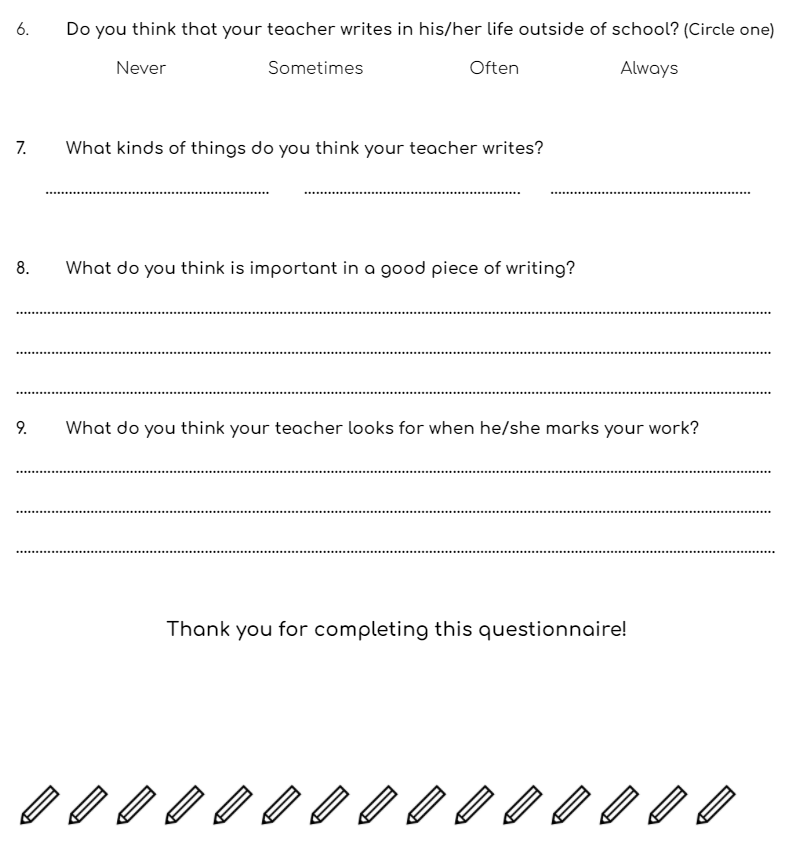
See the appendix for a blank version that can be copied.
With younger children, you might want to do this in groups and read the questions to them before they answer.
When I first did this with a class, I found out that 56% of children in my class did not think positively about writing (with one child even writing “Oh God do I have to” when asked what goes through his head). 74% of children also never chose to write anything at home and a staggering 100% of them thought that I looked solely for either correct punctuation or good handwriting when I marked their work.
Your pupils’ responses: is change needed?
It’s possible (or even, likely) that between 30-60% of children in your class will show some dislike towards writing. Please remember that this is not your fault, but is a symptom of a broader issue regarding a general and unfortunately well-established world-wide culture of teaching writing. Children’s negative expressions about writing might range from mild physical discomfort (i.e. My hand hurts when I write) to more severe emotional and physical reactions (i.e. I absolutely HATE writing or I get a really bad headache and feel stressed). It’s also likely that when you ask them what makes a good piece of writing they will simply list a range of grammatical terms and punctuation without referring to their function or their impact on the reader. If that happens – don’t panic! You’ve now got something to work with, and will be addressing all of these things as you introduce writing for pleasure with your class.
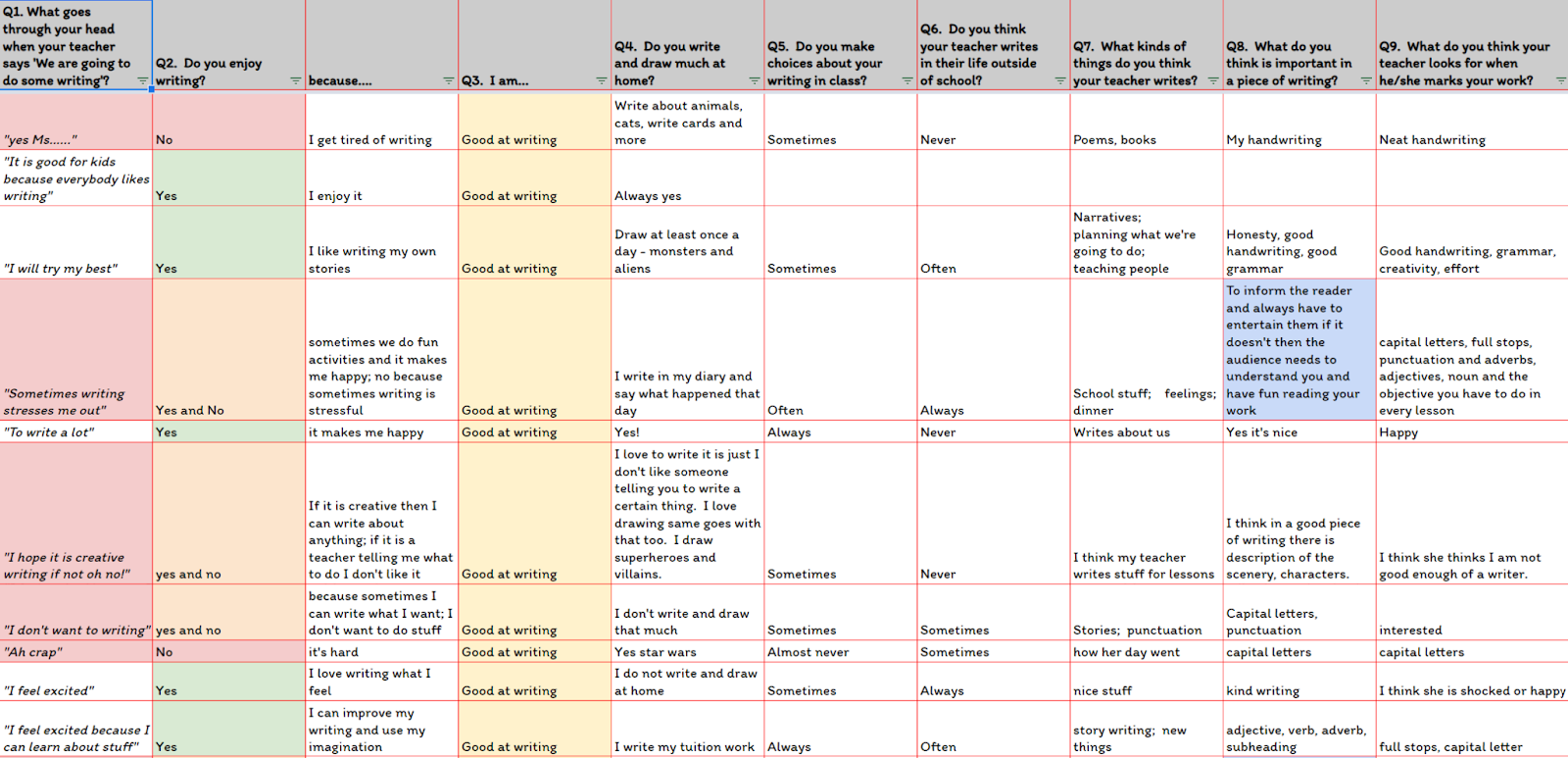
OptionalTask 2: Analyse your pupil surveys. 60-90 mins (this time varies according to the number of children in your class and the responses you get!) Here is an example, with the answers typed into a spreadsheet and colour coded according to responses, but you can choose to analyse the responses in a way that is most helpful to you.
If your pupils say that they don’t enjoy writing, that is not necessarily something to be concerned about – the reason for this lack of enjoyment is key. Writing can be painful (physically and emotionally); it can and often will be frustrating! Following up the survey with a conversation with each child is crucial. Don’t take this personally – be interested and open to criticism. This may not always feel comfortable but this is when you know that real change and development can (and will) happen.
The collection of responses from yourself and your pupils will more than likely tell you that a change of approach is necessary – but why? We can address some reasons for change based on the children’s likely responses.
If children refer to stress/ worry/ anxiety around writing – the first thing to do is have a conversation with them to find out more about why this might be.
Sometimes we can overload children with information about ‘things we must include’ in a piece of writing – if they are having to attending to grammatical and literary features while also grappling with the content you have provided (e.g. trying to remember everything about the events of the Great Fire of London whilst also writing a really interesting report) they will be overloaded with a cognitive burden that can feel painful. We can start to amend this by giving children agency to make their own choices concerning what they want to write about. (Refer back to your notes from the previous task – your class knows about a lot of things already!) Having choice over content is empowering, since your young writers will be writing from a position of strength. For our part we should respect a child’s choices and not allow them to be subject to disapproval from us.
The question of children using written language for their own purposes and of maintaining confidence in their own ‘voices’ is one that presents itself not only in the introductory stages but all through primary school.
Taken from ‘The Language of Primary School Children’ (Connie & Harold Rosen, 1973) p. 92.
If children do not think they are good at writing – again, let them write about the things they know so that they can focus on the craft of their writing, rather than the content.
You could also ask your class to create their own ‘writing rivers’ too, reflecting on the earliest experiences of writing that they can remember up to the present day. This can create a lovely starting point for discussions between the children and for you to have with each child about the types of writing that have been most motivating and/or memorable to them. This activity can help them (and you) to identify what it is they need to enjoy writing.
If children are listing elements of grammar and punctuation without referring to their function or impact on the reader, when explaining what they think should be in a ‘good’ piece of writing– think about how you might be teaching this with your class.
All too often, we can fall into the trap of teaching children about grammar and/or punctuation as checklists without any context and without relating it back to its function and impact on the reader. If we start to teach these things within the context of a piece of writing that we are reading and/or crafting, linking it to audience and purpose, we show children the personal value of the grammar and punctuation choices we make.
Next time, we’ll start thinking about how we can start adapting our teaching practice – thinking about initial adjustments and forming new habits within our writing classrooms.
By Ellen Counter. Ellen has been a primary teacher for the past 15 years, working in three different London boroughs. She has enjoyed teaching every age group during that time – from Nursery to Year 6. She completed her MA in Children’s Literature in 2013. Ellen is currently the Strategic English Lead in a seven-form primary school in East London.
Ross was recently interviewed by Kala Williams about The Writing For Pleasure Centre’s Writing Realities framework. You can watch their interview here.
Alternatively, you can read their transcript interview below.
Kala Williams: How did the Writing Realities framework come about?
Well, it came off the back of the excellent work being done around renewing teachers’ interest in ensuring that their classroom libraries reflect the realities of school children’s lives.
At The WfP Centre we felt we needed to extend this thinking to the writing classroom. My colleagues and I (Professor Doug Kaufman, Felicity Ferguson and Dr Navan Govender) believe strongly that all young people deserve an opportunity to represent themselves – share who they are and what they know – through writing.
And if you look at what’s been going on with some writers and publishers in the news recently, it’s never been more important that children learn how to represent others in their writing in a way that is respectful, informed and meaningful. So it all came from conversations around that really.
There are 6 main principles: writer-identity, critical literacies, culturally sustaining pedagogy, multiliteracies, translanguaging and intertextuality. Can you briefly outline what is meant by each of these?
Definitely. So:
Writer identity is the idea that our writing and who we are can’t really be separated. Everything we write will either share an aspect of who we are, what we think, what we care about, what we know or how we feel. Therefore, as teachers, one of our roles is to nurture and develop children’s writer identities.
Critical literaciesis the idea that, as writers, we sometimes need to stand back and look at our writing critically. And by critically, I don’t necessarily mean negatively – but we need to sometimes meditate on what we are writing. For example, sharing our composition with others to get their perspective or it might be actively subverting dominant narratives by writing a graphic novel. Another example is reimagining the traditions in fairytales. You know, how often it’s a woman who needs to be saved by a man. Things like that.
Culturally sustaining pedagogy is about creating a writing community in the classroom which looks to invite, sustain and nourish everyone’s identity. It’s about celebrating who your peers are and what they have to say. But it’s also about sustaining the lives and cultures of people who might not be present in the classroom itself. Essentially writing about people who may not be like you, or maybe are like you but in different ways. It’s about writing about them in an informed and respectful way.
Multiliteracies is the idea that writing is just one of many ways in which we can share meaning. Writing can be undertaken in lots of different ways. You know – multi – literacies. So, this can mean children writing and working together. Teachers can give instruction which is responsive to their individual classes. Children can be teachers in the writing classroom. Classes can get together and think about the different ways they might want to publish or perform their writing at the end of a project. Things like that.
Translanguaging is when young writers are given choice over how they decide to use language according to different circumstances and in response to the purpose they have for their writing and their audience. This means children can write in multiple languages, use different dialects, language varieties if they want to, and write in different registers (use different levels of formality). Depending on who they are writing for.
Intertextuality is the idea that what we write is influenced by our reading, our play, the things we watch and listen to, the video games we play and our various life experiences – what can be called ‘life texts’. These texts not only affect what we write about but how we write it and who we are as writers. Intertextuality is kind of like remixing or ‘playful-plagiarism’. It’s about children taking a text they know (whatever that text might be) and making something new with it.
Clearly a lot of research has gone into this framework but do tell us how the book Real-World Writers helps teachers to incorporate the framework in everyday practice?
Firstly, children are explicitly taught idea generation techniques that writers use to generate their own ideas for class (and their personal) writing projects. This helps develop their writer-identities.
The book has a chapter devoted to helping children share what they know and, importantly, their personal response to what they are learning about, in the wider curriculum.
We have a chapter devoted to helping children develop their sense of intertextuality. How they can use and write about their reading profitably in the writing classroom.
The projects we recommend are always purposeful and authentic (meaning they serve the real reasons writers write) and so children always get together with their teacher and consider how they wish to publish or perform their writing – for a genuine audience – at a project’s end.
We explain how teachers can engage children in talking about their writing in a critical way during class sharing, through activities like Author’s Chair, and through daily pupil-conferencing with their teacher.
Let’s get into more detail about writer identities. How do primary teachers pinpoint such identities in developing writers in order to build writing confidence?
Well this is the interesting thing. It’s not the teacher’s job to pinpoint children’s identities on their behalf. Instead, the teacher explicitly teaches idea generation techniques which help children identify the subjects they wish to write about for themselves.
So, for example, in the Nursery and Reception classes in our affiliate schools – this is sometimes done by having what we call an ‘Ideas Party’. The teacher simply gets some flipchart paper out and asks the most beautifully simple question: ‘what would you like to write about today?’. It’s wonderful. Children shout out all sorts of things and the teacher draws little pictures onto the flipchart in response. Takes about 5-10 minutes. When ready, children choose something from the board and off they go to write.
Another example for slightly older children, and this is actually a lesson by writer-teacher Georgia Heard, involves children making what’s called an ‘Ideas Heart’. Children write in their heart all the things that are important to them. They can then choose one of these things to write an information text or maybe a personal narrative. And actually, what’s really interesting about this particular technique, is that these two genres often merge and you get some beautifully informative but also very moving non-fiction texts – great for greater-depth I must say. And actually they are a real joy to read. You get to know your pupils so much more in this type of writing classroom. It’s a real privilege being a Writing For Pleasure teacher I have to say.
Critical Literacies is an interesting principle. However, it can be challenging to develop writing projects that take into account social action of relevance to a wide spread of cultures and classes within a classroom. Any practical tips for teachers to take into account the backgrounds of their pupils in order to come up with projects that appeal to all writers in their classroom?
Certainly, in terms of writing for social action, we suggest a number of projects.
We have our Letter For Personal Gain project. This is where children write to someone who they think can get them something they really want – or make something happen. All the children send their letters off at the end of the project – and you see what happens. This introduces the idea that writing can be used as a tool for persuasion and action. You can then build on this by undertaking our Advocacy Journalism project. This is where each child writes an article about a local charity they are personally moved by. They advocate for that charity in their article. You can run this project like a competition – so the best articles actually win a cheque for their charity. Regardless, all the children send their articles (with a covering letter) to their specific charity inviting them to read it and use it if they want to.
Finally, we have a Community Activism project. Children identify a local issue which they are moved to write about. They can send articles or letters to the local press and other local magazines and things. Or they write to the council department or any other body which is responsible for the issue they’ve identified.
Can you give some primary based examples of how culturally sustaining pedagogy has been prioritised so as to shed some light on the impact of research and care in the writing journey?
I think my favourite example of this personally has always been People’s History. It’s a project which invites children to interview someone at home or in their community and write a brief personal narrative from their life. A small moment from that person’s life that has stayed with them – for whatever reason. These can then be put on public display in the school hall (along with some artwork) and families and the local community can be invited to come read, talk and share – a bit like a gallery exhibition really. Again, it’s such a pleasure to read these pieces. Children take such care over them and it brings the community together.
Primary writers often struggle with connections to audience and tend to write from an ‘inverted position’ not necessarily taking into account the reader. How does the approach of multiliteracies develop critical thinking?
This is a really good point you make. It’s true that children are often, usually unnecessarily, asked to write for – you know – ‘pseudo-authentic’ reasons. Essentially, ‘fake reasons’. A diet of this kind of writing results in children as you say writing from an ‘inverted position’ or not being able to take into account a reader – usually because there is no genuine reader beyond their teacher’s evaluation. A good example of this is requiring children to write letters to glue sticks persuading them to come back into the classroom.
Multiliteracies, I suppose, invites a class to get together to talk about their goals for a class writing project. Questions can be asked like:
Who do we want to receive our writing at the end of this project?
What might they need from us?
What are we going to need to do and think about to ensure that our writing is seen as successful and meaningful by these people?
It’s very difficult for children to give genuine answers to these sorts of questions if there isn’t a genuine reader to discuss. You know?
Let’s talk more about translanguaging. It is important children are able to demonstrate their writers flair and often this means personalities through characterisation coming through their descriptive and expressions. We always as primary teachers encourage Standard English with some degree of informal colloquial language based on English dialects but is this inclusive enough?
Dr Ian Cushing is doing some wonderful work about this at the moment. He would be a great guest to have. I would like to listen to him answer this question. But you’re right. Standard English is what is asked for by the curriculum. Writing in Standard English for a long time has granted people access and credibility. Ian Cushing is sociolinguist and so can talk about the problems with that. Certainly, we need to teach Standard English because, rightly or wrongly, at the moment, it continues to give people that access and credibility. However, we also need to make sure that children don’t come to see Standard English as the standard. Instead, Standard English is just one of many English varieties which they can choose to write in. Choice is the key word here. Choice based on what they think their audience will actually want, expect or need from them.
Intertextuality as referenced in the framework seems to be an ultimate outcome of readers who write to me but can you break down how primary teachers can get children to develop written responses to what they read in terms of when on the writing journey (this question is more about handling lower abilities who might struggle with this cognitive level of critical response)?
It’s funny because I see it a bit differently to you. I always consider intertextuality to be something that starts very early. For example, when I write with children in Nursery or Reception, they absolutely love to play around in intertextuality. They will make me Frozen-inspired picturebooks or they’ll write about when they crashed their motorbike on the playground and it exploded into a ball of flames. These pieces of writing are artefacts which represent children’s responses to what they’ve read or their ‘life texts’.
For example, if I read The Mole Who Knew It Was None Of His Business by Werner Holzwarth & Wolf Erlbruch to a Reception class just before I invite them to go make books – I know for a fact I’m going to get a lot of pooey – messy stories back by the session’s end!
One thing our Nursery and Reception teachers do is they will show children a well-loved book. A book they’ve read a few times for pleasure. They’ll bring it to the writing classroom and they’ll flick through the pages and they’ll simply ask: what do you see on this page that we could do in our books today? This is intertextuality too.
The easiest way to see intertextuality in action – and this goes for teachers of any age – is to read them a poem and invite them to draw or write ‘something’, ‘anything’ after they’ve heard it. You’ll receive 30+ different personal responses in return. These personal responses can then be shared with each other as a whole class and they become your class’ collective response to that poem. And through this process, through hearing other people’s responses – children develop a much deeper understanding of that poem than they would otherwise. It’s a beautiful thing.
Your framework mentions some interesting case studies where all 6 principles of Writing Realities are evidenced. Do share some key examples of how the principles have led to enriching writing outcomes in a British context.
Oh my goodness I know! The case studies are just all so wonderful and inspiring to read aren’t they! It’s very difficult for me to choose a favourite. Today, I think I’ll choose the case study of Chris Searle. He was an amazing teacher in Stepney – London – well worth investigating him online. He created a true community of writers in his classroom. They wrote People’s History of the lives of women in the local area. They helped people translate all their home language writing into English. They published commercially available poetry and memoir anthologies about working-class life in Stepney. They started their own community action group to help save the docklands. They would regularly write in response to what they were reading in the local papers. Really transformative stuff.





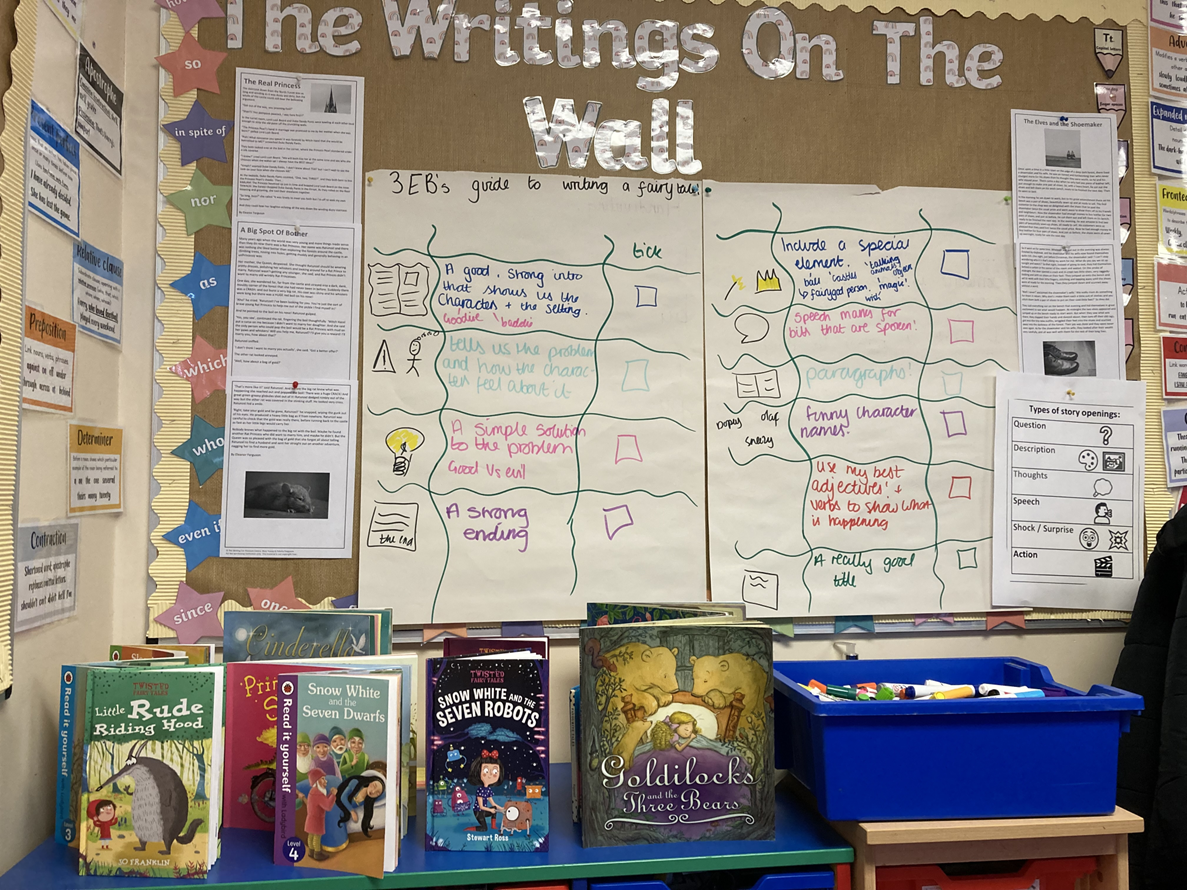
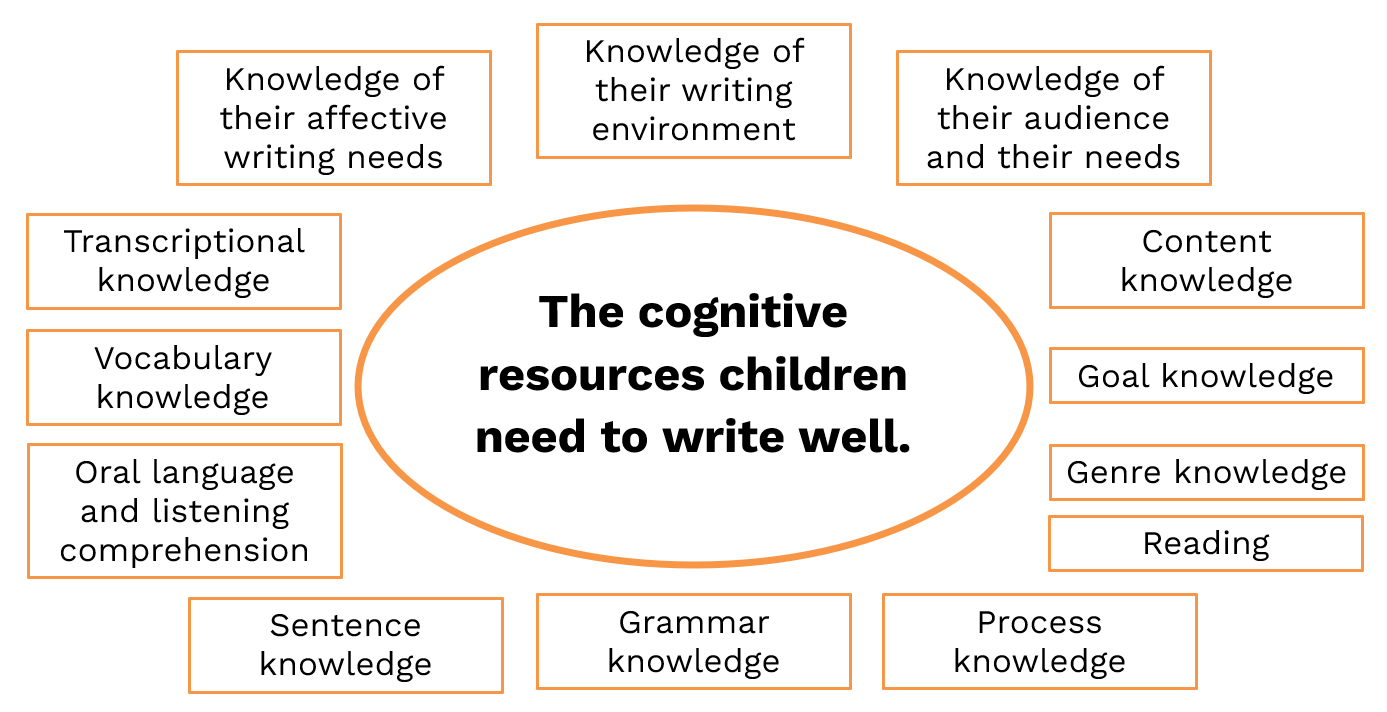
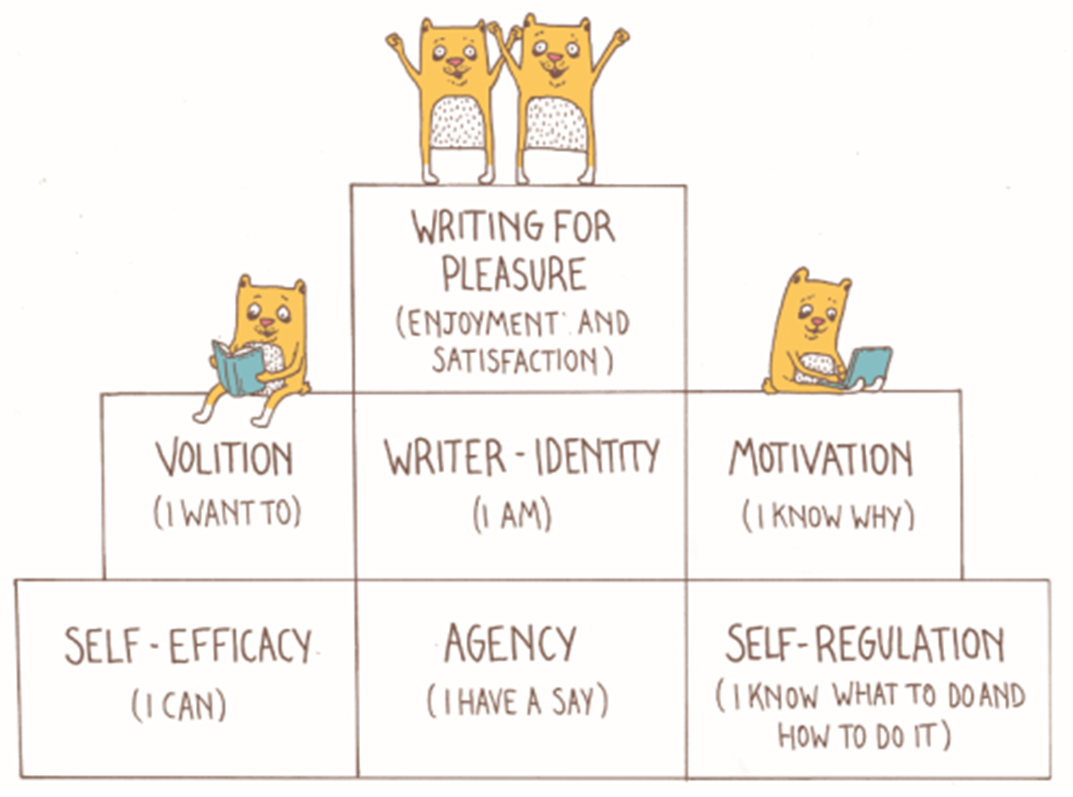


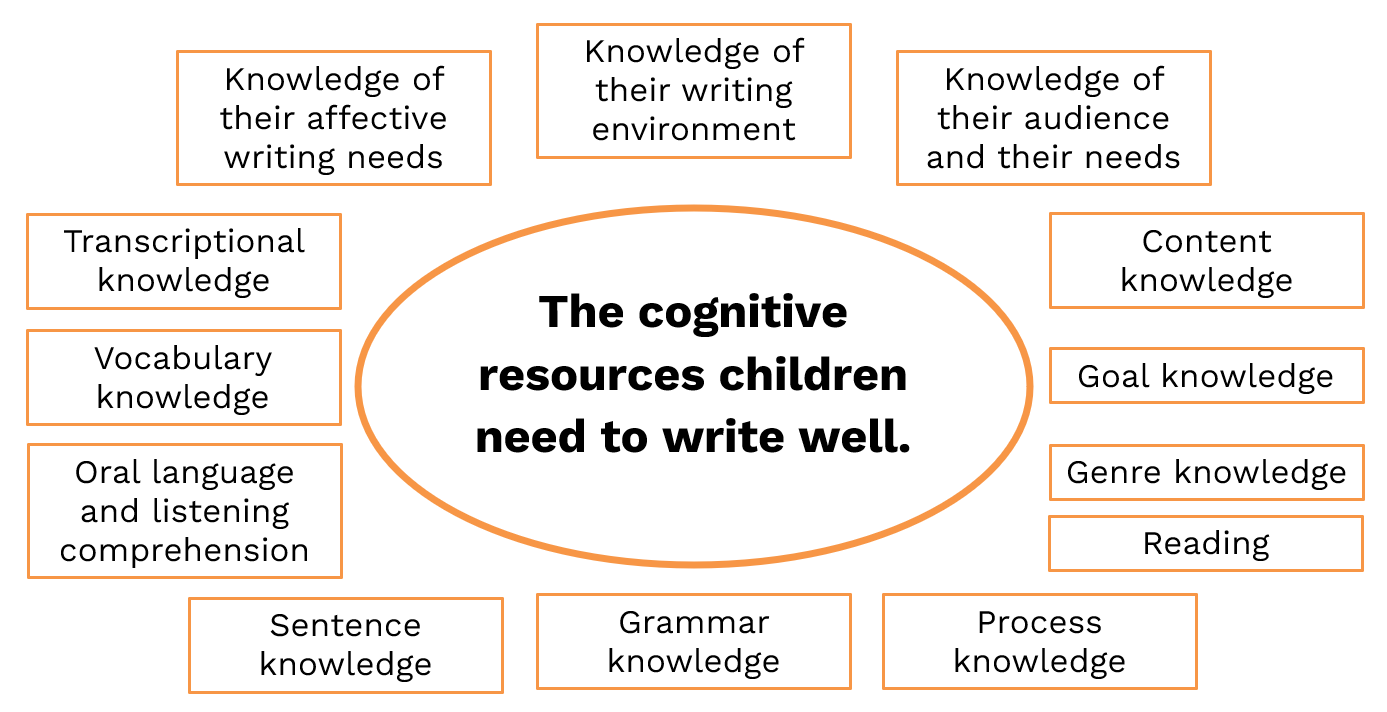


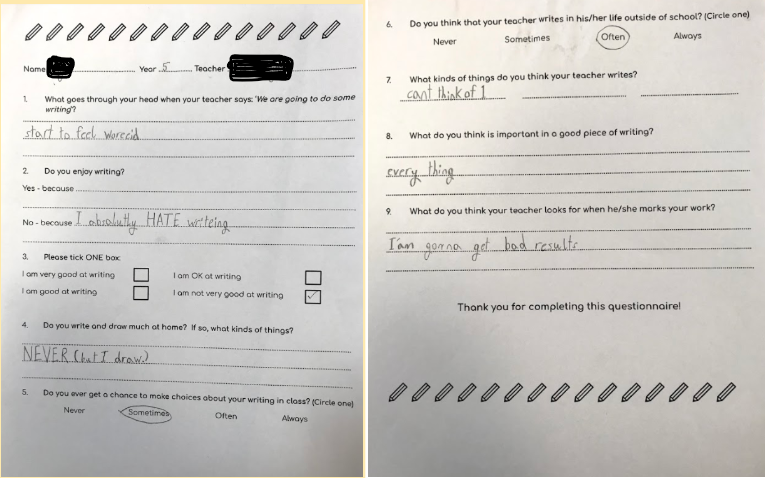 With younger children, you might want to do this in groups and read the questions to them before they answer.