Discussion is an exchange of knowledge; an argument, an exchange of ignorance – Robert Quillen
This discussion writing project builds on what children have learnt in other non-fiction projects in previous years. For example, they have learnt how to recount. They’ve learnt how to tell stories and write memoirs of their past. They’ve learnt how to give information to others and how to explain themselves. They’ve learnt how to account for and explain why things happen in both history and science and, finally, they’ve learnt how to hold a position on something they care about through persuasion. However, there are subtle differences between this project and all of the others we provide. Discussion isn’t just explanation. It’s not about simply giving facts or writing about the consequences of something, nor is it just a persuasive piece. It’s not there simply to promote and champion your position, nor is it there simply to challenge or destroy another’s. Instead, discussion brings all of these skills together. Children will learn to consider more than one point of view and use recounts, poetic metaphor, evidence, explanation and persuasion to better understand both sides. Writing discussion pieces is about being both thoughtful and penetrative.
We discuss things all the time. We weigh things up and discuss things in our heads. We hear people out – we might challenge their thinking from time to time and we will probably try to justify our thoughts with some kind of explanation. We might also challenge what we’ve heard but still be open to changing our own opinion. In the world of social media, globalisation and political polarisation, discussion is an important life and academic skill that children should be exposed to, and they should know how to use it for themselves.
“Hi Ross and Phi. I’m after a bit of advice on how best to deliver editing lessons for spellings. I often find that these lessons don’t go so well as children struggle to find words they have spelled wrong in their own writing. How would you teach this skill and what resources do you think are best to help children do their corrections independently?”
This is a great question! I’ve tried to provide some advice below.
1. I would break proof-reading for spelling down into three component parts and devote as many days to it as you feel you need to.
Start by proof-reading for common words only (I’ll leave this to your professional judgement; you can give out resources for the 10, 100, 1000 most common words).
Once you’re happy with that, I would then move on to checking “our class’ tricky words“. For this session(s), you will want to create a word mat of all the words your class typically struggles with. It can be useful to flick through some of their books prior to making your word mat.
Finally, children can correct their temporary spellings. Hopefully, at the beginning of the year, you modelled to your class how they can use temporary spellings. This is when we know we want to use a word but we are not sure how to spell it conventionally. You write down the sounds you can hear in the word (so we can read it) and put a circle around it. The children are then given these proof-reading sessions to look up the conventional spelling. They cross out their temporary spelling and write the conventional spelling above. If you haven’t taught your children to do this, you’ll need to do it in reserve. They’ll have to look through their manuscripts with their friends and circle any ‘unsure’ spellings.
If you’ve decided you really want to make spelling a particular priority for a certain class writing project, it might take you anywhere between 3-7 sessions to work through this structure. This leads nicely onto point two.
2. Don’t move on until you’re happy that everyone has done their best proof-reading.
You may well need to devote multiple sessions to spelling. For children whose manuscripts you have seen and are happy with on any given day, they can work on their personal projects, this frees you up to work with a group(s) of children who might need some extra TLC from you. For example, on the first day of checking for common words, most of my class made their corrections. However, I have a small group of pupils who are still working their way through. The next day, I will meet with that group to continue our spelling work while the rest of the class can have personal writing project time (see here for more on setting up personal project writing).
3. Model how you proof-read for spellings as part of your daily mini-lessons.
It’s important that you model how to use word mats and other spelling resources as part of your mini-lessons. You need to show children how writers proof-read and what you expect them to do during that day’s writing time. Putting some of your writing (full of the sorts of spelling errors your children make) under a visualiser and showing the children how you are proof-reading it is invaluable.
4. Don’t use dictionaries!
When correcting their temporary spellings, don’t ask the children to use dictionaries to look up their words. The problem with this is you need to know how to spell the word to look it up in the first place. Dictionaries are designed to look up the definitions of words – not their spellings. Instead, give children access to tablets or laptops – where they can type in their spelling on Google. It’ll often come back with ‘did you mean: …‘ and give a definition for the word too.
You can also give children access to smart speakers. Children can then simply say “spell: tyrannosaurus rex” and the nice Siri man will say the word and then spell it out one letter at a time very slowly. Finally, you should give children access to electronic spell checkers [LINK] and/or ACE spelling dictionaries [LINK].
5. Always celebrate the amount of proof-reading children have achieved.
It’s important to celebrate your best proof-readers. This way, children don’t see making corrections as a bad thing – but rather is something that great writers do. For example, you can ask children to count up the number of proof-reads they were able to find that day and give a prize to your best proof-reader.
This is also about being optimistic and realistic. They are young developing writers. Even professional writers and publishers will pay professional proof-readers to spot their deviations from conventions. Even then, many ‘errors’ go through to final publication. For example, professional proofreaders catch only around 80% of non-word errors and 66% of word errors [LINK].
6. Proof-reading for spelling can’t replace the explicit teaching of spelling.
As writers, not all of us are great spellers. That means we have to become great proof-readers. However, proof-reading can’t replace teaching children about spelling through explicit spelling instruction. I’ve attached a link to our spelling provision checklist. Check it out and see whether your approach to teaching spelling aligns with best practice [LINK].
This free handbook addresses some of the major aspects of teaching writing. The aim is to create an invaluable reference guide for all teachers. We hope to update this handbook every year to take account of the latest research and thinking. We would like this handbook to support teachers in developing sound subject knowledge and exceptional classroom practice. We have tried to make the research as accessible as possible. The handbook includes:
Over 1000 research entries covering the major aspects of developing students as writers.
Short abstracts and keyword tags to help teachers find the research they are looking for.
An analysis of the analysis and what it is the best performing writing teachers do that makes the difference.
A chapter dedicated to each of the 14 principles of world-class writing teaching.
Research on the early teaching of writing including compositional development, phonics, encoding, spelling, letter formation and handwriting.
Extended entries on major topics such as speaking and listening, reading/writing connection, multilingualism, special educational needs and disabilities, and social and emotional disorders.
Focused chapters on the affective needs of student writers, including: self-efficacy (confidence), self-regulation (competence and independence), agency, motivation and writer-identity.
Essential literature and suggested reading offered at the end of each chapter.
This handbook is a useful resource for anyone interested in developing world-class writing teaching. Teachers should find what is shared within these pages utterly interesting, informed and helpful.
We have done our best with this third edition to cover many aspects of writing teaching in the best way we can. We have provided a variety of research, from different disciplines, and from a variety of perspectives. We’ve tried to provide a balance between the very latest emerging research and classic studies which contain profound insights and have stood the test of time. If you think some important research entries are missing, then please contact us. You can contact us through our website at: http://www.writing4pleasure.com/contact
New to this fourth edition:
Additional reading on the topic of developing children’s writer-identities.
Recommended reading on the role of phonics, encoding, spelling instruction, letter formation and handwriting instruction on children’s early writing development.
Additional commentary on developing children’s ‘writing fluency’.
A number of articles have been added on the subject of oral language development and children reading, sharing, thinking and talking about writing.
Major additions to the special educational needs chapter.
Recommended reading on the importance of having a reassuringly consistent approach to teaching writing in the early years.
Further additions to verbal feedback and delivering pupil-conferencing.
A *new section* on assessing writing and assessing writers.
Significant additions to the reading and writing connection chapter.
When Nursery-aged children like Wyatt and Hudson are invited to write their first ever books, they can hesitate. This is until their teacher encourages them by explaining that the books they read to them are also created by people just like them – implying that they can do the same. In Wyatt’s case, it was his teacher sharing their own book-making that did the trick. Energised by the idea that they can make books, both Hudson & Wyatt enthusiastically spent time crafting their texts: Avengers Assemble, Alligators and Crocodiles & Untitled. After finishing their books, both proudly read them aloud to anyone who would listen, using their illustrations and emergent writing to narrate their stories and following their text with their fingers as they ‘read’. Such successful and profound initial experiences with being a writer can spark sustained interest with children often ‘catching the bug’ of book-making.
***
Research shows that providing young children with daily opportunities to write helps them see themselves as capable writers, developing skills for intellectual, academic, and social purposes while building their foundational reading and oral language skills. Writing enables children to be experts, explore social roles, expand their imaginative play, adopt new identities, and share personal experiences. Encouraging practices like informed spelling and constructive feedback enhances their understanding of phonological awareness, letter names and sounds. This improves both their reading and writing. Motivated writers like Hudson & Wyatt are persistent, strategic, and happy in their work – traits consistently linked to academic success and personal growth [LINK].
***
Sadly, despite its effectiveness, book-making is uncommon in Nursery and Reception classrooms. While writing materials are made available in the writing corner, children can spend minimal time writing there. In Nurseries & Reception classes, writing is generally confined to small portions of literacy instruction, focusing solely on things like letter formation and dictation rather than also encouraging children to use and apply this developing transcriptional knowledge to book-making. However, some teachers are taking a more rigorous and research-informed approach, as observed in the work of:
Already Ready: Nurturing Writers in Preschool and Kindergarten by Katie Wood Ray & Matt Glover [LINK]
A Teacher’s Guide to Getting Started with Beginning Writers by Katie Wood Ray & Lisa Cleaveland [LINK]
Learning To Write And Loving It! by Miriam Trehearne [LINK]
Getting Children Up & Running As Writers by Ross Young & Felicity Ferguson [LINK]
Kid Writing In The 21st Century by Eileen Feldgus, Isabell Cardonick and Richard Gentry [LINK]
About The Authors by Katie Wood Ray & Lisa Cleaveland [LINK]
Helping Children Become Readers Through Writing by Arlene Schulze [LINK]
Understanding and Supporting Young Writers from Birth to 8 by Noella Mackenzie & Janet Scull [LINK]
Handbook On The Science Of Early Literacy by Sonia Cabell, Susan Neuman and Nicole Terry [LINK]
These teachers provide:
Whole-class and small group direct instruction – Teach children something about writing and being a writer on the carpet. This includes, but isn’t limited to, teaching about letter formation and encoding strategies.
Whole-class and small group modelling – Share with their class their own book-making. Will write/model/teach alongside small groups of children during book-making time.
Self-initiated writing opportunities – Devote time and resources to establishing and maintaining a writing centre. Will explicitly model how resources from the writing centre can be used throughout the provision.
For young children to engage in writing (and being a writer), it is essential to create a community of writers which makes writing both appealing and meaningful. While writing centres are common in EYFS classrooms, some children rarely (if ever) choose writing over other activities, especially when their writerly experiences have been limited to rote practices like letter formation and handwriting drills, which (unsurprisingly) can fail to capture their interest.
To motivate children to write, they need to see writing as playful, achievable and purposeful. To develop children’s intrinsic motivation for writing, we need to address three basic human needs:
Competency: Children must feel capable of successfully engaging in being a writer.
Autonomy: They should have opportunities to make their own authorial decisions and express themselves freely in their writing.
Relatedness: Writing should connect with their personal interests and should be a social and playful experience.
One effective way to meet these needs is through class writing projects, such as creating picture books (for example units, follow this LINK). This approach allows children to experience self-determination while fostering deep engagement, making writing both enjoyable and rewarding.
Supporting young writers’ sense of competence is critical for encouraging them to engage in and persist with writing. Inviting children to create picturebooks is particularly effective, as it utilises a familiar format and aligns with young children’s natural writing process . This approach builds confidence by showing children that they can create books in ways similar to published authors, expanding the definition of what it means to be a competent writer.
Strategies for building young children’s sense of competency
Use picturebooks as models: Picturebooks serve as mentor texts [LINKfor more on this]. By looking at them, they can teach us things about writing. Their combination of images and words mirrors young children’s own meaning-making methods, such as drawing and writing on each page. Early on in the year, before you’ve formally introduced phonics lessons, wordless picturebooks are especially supportive, demonstrating that illustrations alone can tell a story or teach someone something, empowering children who are not yet writing conventionally to still participate in book-making.
Value children’s emergent writing and informed spellings: Encouraging children to add emergent writing to their books, even before mastering sound-symbol relationships, helps them feel competent. For instance, Wyatt confidently added ‘kid writing‘ to his illustrations so that he could ‘read/tell’ you his book. Expecting correct letter formation or critiquing children’s spelling attempts too early and too harshly can undermine their confidence, whereas affirming their efforts nurtures their motivation (LINK for more on whether teachers should write under children’s attempts). Book-making is no fun when you know you are only going to be criticised for your efforts.
Providing feedback that is developmentally appropriate: Effective verbal feedback begins by celebrating what a child has already demonstrated they know. For example, commenting on Hudson’s inclusion of letters – “I see why you put letters on the page; authors do that too” – acknowledges his effort and provides a bridge to future learning. Underwriting, alongside the child, is a great way to move that feedback forward and teach a child something new about writing and being a writer. However, avoid making demands that are developmentally inappropriate. Make sure your feedback is actionable.
Modelling and scaffolding: Teachers should model their own ‘book-making life’ by demonstrating their own writing processes. For example, how they used to use a sound mat when they were their pupils’ age, how they used emergent writing, and how they used to ‘tell’ their picture to a friend before writing about it. Other examples include: modelling how you’re going to do all the pictures for your book before you write about them afterwards or how you are going to use speech bubbles in your book just like Allan Ahlberg does. You can then invite children to use the exact same techniques that you modelled during that day’s daily book-making time too.
Strategies for supporting children’s autonomy
Supporting a young writer’s sense of autonomy is crucial for developing their motivation and engagement. Autonomy, or the feeling that a child is in control of their writing, is best nurtured when children are invited to make decisions about the content and style of their picturebooks. It can be detrimental to impose rigid themes, such as requiring all children to write about the same topic (e.g. wild animals) or asking them to choose from a narrow set of teacher-imposed options, as this restricts their creativity and makes writing feel less motivating. Children are more engaged when they can pursue topics that are meaningful to them, like writing a story about a slime monster or an information text about all the reasons to love Elsa from Frozen.
However, understandably, some young writers can find complete freedom (and a lack of support) overwhelming. It’s important to recognise that the process of figuring out what to write about takes time and your teachers and friends can help you! That’s why we recommend having Ideas Parties together as a whole class (LINK for more on this). Children learn by listening to their peers and thinking about their favourite published authors ideas, and through discussions with their teacher about how to choose their best writing topics. Prior to an Ideas Party, teachers can put aside a number of sessions to expose their pupils to a variety of picturebooks, helping them broaden their understanding of what’s possible when book-making (LINK for more).
Here’s an example of Nursery children in Marcela Vasques’ class being invited to have an Ideas Party.
Gentle nudges and enthusiasm for certain ideas can help guide children without diminishing their own autonomy. For example, if a child regularly enjoys playing shark attacks! at the water table, you might suggest that they could make a book about it. This kind of suggestion, rooted in the child’s own interests and funds-of-knowledge, can inspire them to take ownership of their picturebook.
Strategies for supporting children’s writerly relationships
A young writer’s motivation is greatly influenced by their sense of relatedness – feeling happy and connected to the readers of their picturebooks. For children, strong relationships, especially with teachers, peers, family, and caregivers are crucial to their motivation. When children feel cared for by their writerly teachers and friends, they tend to have higher self-esteem, better school engagement, and improved well-being. This was evident in Hudson’s and Wyatt’s positive experiences with their teachers, who fostered a supportive and social classroom environment that helped them thrive in their writing. In contrast, a child who makes books alone in silence or is asked to engage in less meaningful writing activities will find themselves disconnected from the community of writers in their classroom and can struggle to stay motivated as a result.
Hudson’s interactions with his teacher and friends are characterised by her role as a supportive reader rather than always ‘the corrector’. She showed a genuine enthusiasm and interest in his book! She was playful. For example, Hudson’s unexpected inclusion of a pigeon from Mo Willems’ books in his story about alligators and crocodiles was met with readerly excitement, not correction. The relaxed, respectful dynamic between them both created a secure space for Hudson to be a successful bookmaker.
While competency, autonomy, and relatedness are distinct needs, they must be met simultaneously for a child to be a happy and academically successful writer. For instance, children who are given complete autonomy but lack the instruction and modelling to develop their competency may become overwhelmed and fearful. Similarly, a child who has strong writing skills but feels disconnected or anxious during writing time may have trouble focusing on a class writing project. Therefore, fostering all three needs – competence, autonomy, and relatedness – is key to sustaining a child’s writing success.
How do you plan writing lessons?
It’s important to create a supportive community of writers that integrates reading with talking and making books. This combination forms a powerful research-based teaching practice. By viewing book-making time as a place where people gather together around a shared interest or common activity, teachers can maximise the likelihood that children will enjoy and commit to being writers too. In such a space, all children, regardless of age or expertise, can write together happily. This dynamic encourages social interaction and helps elevate children’s book-making. In the classroom, this concept can be applied by connecting shared picturebook reading with daily opportunities for children to create their own books too.
Reading as writers
Shared picturebook reading offers a powerful opportunity for young children to connect with books and enhance their writing skills [LINK for more]. By engaging in repeated, interactive read-alouds, children respond naturally to stories or information texts, which can inspire them to think critically about the kind of books they would like to make too. A first reading should allow children to react freely, while a second reading should focus on the decisions made by the author and illustrator, helping children understand how they can do these things in their books!
In addition to picturebooks, incorporating list books (also known as board books or baby books) is important at the start of the year, as these are the types of texts children are usually exposed to prior to coming to Nursery or Reception. Bilingual children, in particular, can benefit from such books that emphasise visuals, helping them build understanding and motivation [LINK for more on using list books]. Lastly, connecting the work of professional authors with young writers reinforces the idea that they share the same kind of practices with adult authors. Teachers can highlight cool craft moves in picturebooks before encouraging children to give it a try in their own books that day. In the process, a sense of empowerment and connection between reading and writing is born.
Book-making is playful and social
I will never forget asking a Reception child what book-making was. He replied: “It’s when we get to play writing with our friends”. Social writing spaces provide young children with valuable opportunities to develop their oral language and listening comprehension – not to mention social skills like collaboration and learning from one another.
Let’s define what we mean by oral language development and then consider how much language learning takes place before children enter formal schooling.
Talking
The ability to express one’s own thoughts and feelings.
Reciting
Repeating aloud a text from memory.
Writing
The activity or occupation of composing text for publication.
Dictating
The transcription of someone else’s spoken text.
Developing children’s oral language
The development of children’s own communication using speech and/or writing.
Age
Typical language milestones
Eighteen months old
At eighteen months old, children already have a vocabulary of around fifty words.
Two years old
By two years old, most children produce utterances of two words. These utterances are crafted by the child and are not the parroting back of an adult model. Speech and thought come together by the age of two.
Two and a half
Can utter sentences of three words.
Between three and four years olds
Begin speaking in full sentences. Children can say an infinite number of original sentences – sentences that they’ve never said or heard before.
Five years old
Children are able to use language with a capacity close to that of an adult. For example they use language for the following purposes: to persuade, influence or command others; to share and understand information; to tell stories (both real and imagined) and use language imaginatively and playfully. Children can typically say and write sentences of around five words.
From seven years old
Children usually acquire a full and accurate knowledge of their first language.
As you can see, every single child brings a great deal of language learning into the classroom on their very first day of Nursery or Reception. However, this learning can often be underestimated or overlooked by many who work in education. Research shows that children are most likely to succeed in schools that use and value this existing knowledge and build on it.
Children’s development as talkers relies on ‘a conversational context’. Children’s language develops when they are given the cognitive responsibility to use it. Ultimately, children must be the ones to construct their own speech and writing. Otherwise, they learn little. The acquisition of language is a dynamic and creative process, not the passive reciting and copying of someone else’s model.
Children’s talk and writing should be developed concurrently. Children must engage in egocentric talk, talking aloud to themselves as they write. They also need to write alongside and in happy dialogue with their teacher and peers. This means it’s necessary for children to play a daily and active role in their own talk and writing construction. They should also learn about speech and text construction from being ‘overhearers’ to their peers’ talk, help and instruction. In addition, children can engage in what we call parallel writing and co-operative writing, where they participate daily in the kind of activities listed below. Remember, children will talk with one another before they write, as they write and after they write. These interactions occur in different ways and can include:
Idea explaining Children share what they plan to write about during the session with others.
Idea sharing Children work in pairs or small ‘clusters’ to co-construct their own texts together.
Idea spreading One pupil mentions an idea to their group. Children then leapfrog on the idea and create their own texts in response too.
Supplementary ideas Children hear about a child’s idea, like it, and incorporate it into the text they are already writing.
Communal text rehearsal Children say out loud what they are about to write – others listen in, comment, offer support or give feedback.
Personal text rehearsal Children talk to themselves about what they are about to write down. This may include encoding individual words aloud. Other children might listen in, comment, offer support or give feedback.
Text checking Children tell or read back what they’ve written so far and others listen in, comment, offer support or give feedback.
Performance Children share their texts with each other as an act of celebration and publication (see LINK for more details on this).
Talk to support children’s encoding – It takes a lot of cognitive energy for children to take the phonemes of their speech and present them as graphemes of written language; otherwise called encoding. Encoding, fluency and automaticity in writing can only really come if children are ‘talking aloud to themselves’ and writing meaningfully and for a sustained period every day. Until that happens, children are relying on their working memory which leaves them with little space to consider the more complex compositional and transcriptional aspects of writing. As a result, their academic progress suffers (for more on developing children’s writing fluency, see this LINK).
To encourage children’s oral language development, some teaching about book-making followed by an invitation to write should be a consistent part of your daily schedule.
Don’t delay. Introduce book-making on their very first day
To introduce bookmaking effectively, it’s helpful to begin on the very first day. It’s all about modelling how and why you book-make before inviting the children to give it a try for themselves. Some teachers like to introduce book-making to a few children at a time until the whole class is familiar with the process. This approach creates a growing group of ‘experts’ who can assist and guide the newer book-makers. To reduce any confusion, show examples of books made by other children previously. In addition, show children the sorts of books you used to make (or would have made at their age if you had been given the opportunity). Clearly explain the routines, materials needed, and where to find them, helping children feel prepared and confident to engage in the bookmaking process. For more on this, see our book: Getting Children Up & Running As Writers [LINK].
Setting up your writing centre
As well as engaging in daily whole-class writing instruction and modelling, you’re going to find that your children will want to pursue their own additional self-initiated writing. This means you’ll have to devote some time and resources to establishing and maintaining a writing centre. To create a community of writers, picturebooks (especially those from shared reading times) should be easily accessible to children in the writing area. These books can serve as tools and sources of inspiration for their own bookmaking.
Writing alongside children
Teachers should ensure that they write alongside a different group of children each day during book-making time. This allows you to observe, model and provide additional bespoke instruction and feedback to children while they are actually engaged in the book-making process. This means you can celebrate the strategies children are using while still looking to move their writing forward by providing additional guidance and instruction. The goal is to book-make alongside your pupils rather than merely supervise from a cold distance!
Additionally, teachers should encourage collaboration among young writers by highlighting and sharing the strategies other children are using. By pointing out the techniques their friends are using, teachers help children see each other as valuable resources and members of a supportive writing community.
As teachers, we often face the challenge of balancing our need for control with children’s need for writerly independence. While parameters are important to young writers, giving them the freedom to reinterpret, reimagine (or reject) a teacher- or scheme-chosen topic can lead to extraordinary results [LINK]. Consider this example from a teacher named Reed whose class trip to a fishing boat became the foundation for a wonderfully diverse set of manuscripts.
When asked to write about their school trip, one student asked if it would be alright to “pretend I’m a lobster being interviewed,” while another wanted to write about a dead seal they had discovered on the beach instead. Reed’s response was inspiring: she praised their originality and highlighted how one topic can spark so many different ideas. This approach, allowing independence to flourish within a shared framework, is a powerful reminder for us as educators. Here’s how you can replicate this strategy in your own classroom, turning teacher (or scheme) controlled writing units into opportunities for independent discovery and self-expression.
1. Start with a common prompt
Provide students with a topic, prompt or idea as a starting point. This might be a school trip, classroom activity, your wider curriculum topic, the book you’re reading together, or even a common theme like ‘revenge’ or ‘celebrations’.
Example: “Let’s think about our class trip to the beach. What did we see? What did we do?” Starting with a shared foundation gives students a springboard for their ideas while ensuring everyone has a common understanding of the project.
2. Host an ‘Ideas Party’
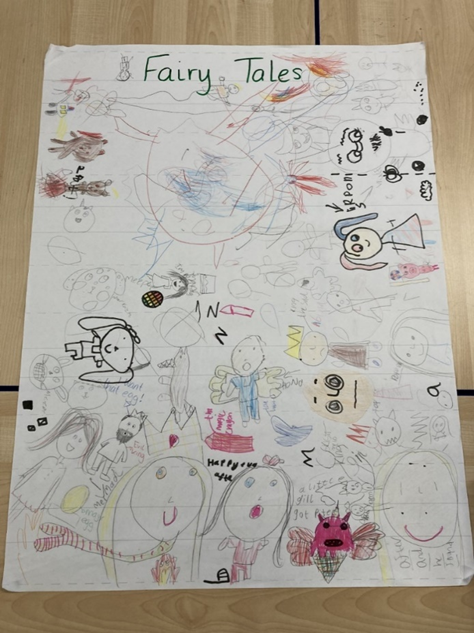
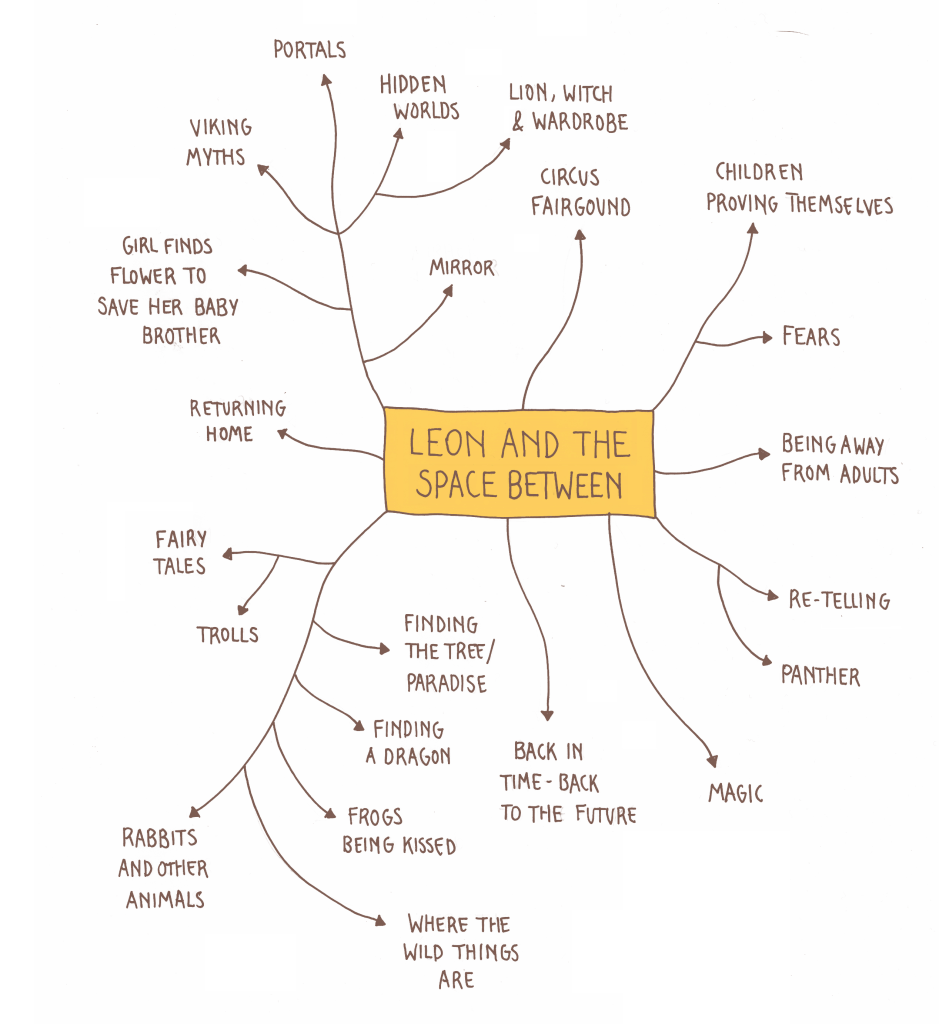
To spark children’s creativity, invite them to brainstorm their own ideas with their friends on flipchart paper. We call this having an Ideas Party. As a writer-teacher, you can spend time with each group and take part in the party too! On the flipchart paper, write the phrase: ‘I could write about…’ Children are welcome to draw or write their potential ideas onto the paper. Example:
Being a lobster being interviewed
The seal we found on the beach
How the waves sounded
A mermaid story
Here are some examples of Ideas Parties undertaken in Nursery, KS1 and KS2.
Here’s an example of children having an Ideas Party in response to reading ‘Leon & The Place Between’ by Angela McAllister
3. Foster a sense of ownership
Once students have brainstormed, emphasise that their unique perspectives are valuable. You might say: ‘Our prompt was the same, but your ideas have made it so special! I can’t wait to read all the different pieces of writing…’. This helps students feel confident in pursuing their own ideas, even if they differ from their teacher’s (or the scheme’s) expected idea.
4. Celebrate the results by taking a ‘Writing Register’
Take time to showcase the variety of responses by taking a Writing Register. This is where you write up your class’ names and ask them for a working title for their piece. Start with your most confident children until everyone has given you a title for their project. Like Reed, celebrate the diversity of thought by saying something like: “Isn’t it wonderful that from the same prompt, we have so many different ideas!”
An example of a completed Writing Register for a short-story project. The initial prompt shared by the teacher was ‘celebration’
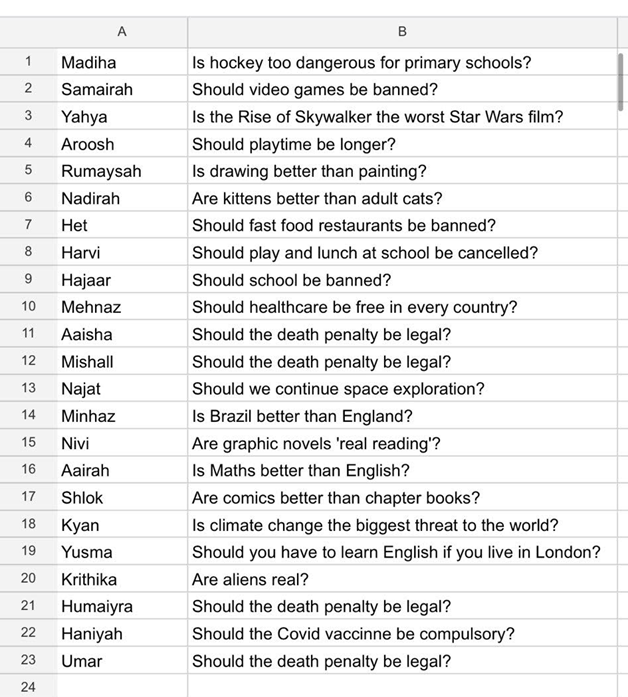
An example of a completed Writing Register for a discussion project.
5. Encourage independence in future projects
This method of blending structure with independence can be applied to any genre or writing project. By giving students the option to use, reinterpret, or reject your prompt in their own way, you empower them to think creatively while still addressing the purpose for the writing project.
Why this matters
When we allow students to explore their own perspectives, we teach them that their voices matter [LINK]. A simple writing assignment becomes an opportunity for discovery, self-expression, and creative thinking. As Reed’s class demonstrated, even a shared experience like a school trip can inspire wildly different but equally wonderful writing ideas. The beauty of such an approach is that children who want to follow their teacher’s idea can do so while others can politely reject their teacher’s idea while offering up their own promising alternative.
By embracing this approach, you’re not just teaching students how to write – you’re teaching them to see the world through their own unique lens. And that is the heart of true writerly apprenticeship.
***
For more, download our publication: No More: ‘I Don’t Know What To Write About’ [LINK]. Our publications are free for our members. To become a member, click here.
“Hi Ross & Phil. We were wondering – should we transcribe underneath children’s writing so we know what it says? Thanks so much!”
Underwriting involves transcribing a child’s writing using conventional spelling. This can be done either directly under or above the child’s writing, or sometimes at the bottom of the page. When done right, it can be a simple yet powerful tool to support young writers on their journey towards becoming a successful writer.
What is underwriting?
When underwriting, teachers will either write:
The whole sentence, phrase or choose a specific word.
Words that are very close to the conventional ‘adult spelling’, giving you an opportunity to celebrate how close the child approximated the word.
High-frequency words that the child is likely and expected to know.
Words that are so far away from the conventional spelling that they are difficult to interpret.
Why underwrite?
Underwriting should always be about emphasising and celebrating what the child did know about adult writing.
When done correctly, underwriting offers numerous benefits:
Providing a conventional model: Gives children who like it a reference for the conventional spelling which they may refer to later.
Responding to a specific request: Supporting children who specifically ask for help in understanding and remembering what their writing says.
Verbal feedback: It offers opportunities for individualised responsive instruction during verbal feedback.
Celebrating growth: It celebrates children’s approximations, what they did know about the ‘adult spelling’ of the word and therefore gives children confidence and a sense of achievement.
Does underwriting make children scared to write and reduce ownership?
A justified concern with underwriting is how, when it is done badly, it quickly makes children scared to write for themselves. It can also be seen as an act of graffiti on a child’s writing – a daily reminder that they can’t actually write and that someone has to come and do it for them. However, when done thoughtfully, underwriting is a teaching tool, not a correction mechanism. Best practice for underwriting includes:
Undertaken with the child’s consent and with them present.
Celebrates and builds on what the child did know about the ‘adult spelling’.
The teacher uses a pencil and small writing, usually at the bottom of the page.
Never done before the child has made their own attempts at the word, phrase or sentence first.
Not done with every child, all the time, and on every piece of writing they ever produce.
Go over in green pen (or underline) all the sounds the child did hear and write down in the word.
A tool for progress and celebration
Some children enjoy seeing how their writing compares to ‘adult writing’. However, others can get really upset and feel undermined. For some, it can be the equivalent of making a lovely drawing for their teacher – only for the teacher to get a red marker pen out and draw all over it to make it ‘correct’. If this happens day after day, some children can soon lose their motivation and confidence to write independently. With that said, if the purpose of underwriting is clearly explained, children often appreciate the thoughtful and interesting feedback it provides.
***
For more, download our publication: Getting Children Up & Running As Writers In EYFS & KS1 [LINK]. Our publications are free for our members. To become a member, click here.
I was lucky enough to sit in on a writing lesson one Monday morning in Reception at one of our Writing for Pleasure schools. During the lesson, a new-found friend of mine turned to me on the carpet, with a big grin on his face, and announced: “This is when we play writing!” I’ve never forgotten that moment.
As I sat there, I thought: you’re about to engage in one of the most cognitively demanding activities you’ll encounter in school – and yet, for you, it feels like child’s play. This moment was a clear testament to the excellent teaching I was seeing. It showed how a structured, daily writing approach could seamlessly align with the joy and spontaneity of play. Instruction, structure and play no longer needed to be seen as being in opposition with each other.
The Power of Play In Early Writing Development
Play is the natural language of young children, and writing thrives within this playful culture. Children benefit from engaging in self-initiated spontaneous writing and from a structured writing approach like Writing For Pleasure. Far from being a distraction, play supports children’s early writing skills children need to develop for future academic success. A daily opportunity ‘to play’ writing is essential for young children’s overall development:
Social skills and self-regulation: Collaboratively writing and book-making with your teacher(s) and friends helps children learn to navigate relationships, share, and manage their emotions.
Problem-solving abilities: Through daily book-making children get to ‘play on paper’, experiment, test ideas, and develop their critical thinking skills.
Oral language: Daily writing and book-making involves using a variety of different talk (see this article for more) which builds up children’s vocabulary and communication skills.
Creativity: Book-making encourages children’s Imaginative play on paper and nurtures their original thinking and innovations.
Knowledge and skills: Daily book-making offers opportunities to explore taught concepts and practice important writing skills in an engaging and meaningful way.
Teacher Scaffolding: Enhancing Children’s Writing Play
When teachers scaffold children’s writing play, through their modelling and instruction, they elevate its impact, particularly in supporting children’s writing skills. As Judith Schickedanz puts it: “We will not have done our best for young children if we deny them the path to learning they seek through play. But, we also will not have done our best if we fail to provide instruction.” As Writing For Pleasure teachers in the EYFS can testify, play and writing instruction coexist seamlessly, creating a rich, supportive community of writers where children and adults:
Write during structured book-making time and while playing in the writing centre (and other areas of provision).
Engage with cross-curricular writing activities that integrate writing and book-making with science, PSHE lessons, and other subjects.
Build writing skills through meaningful book-making projects that connect to children’s interests and prior knowledge.
A daily opportunity to ‘play at writing’ is not a luxury – it is a vital component of early childhood education. This practice supports children’s holistic development while offering an engaging and effective way to nurture their early reading and writing skills. Through thoughtful instruction and scaffolding, teachers can cultivate a community of writers that balances the joy of play with the academic rigor essential for lifelong writing success. By keeping writing – and being a young writer -playful, teachers help children develop the skills, confidence, and curiosity they need to thrive.
***
For more, download our publications: Getting Children Up & Running As Writers In EYFS & KS1 [LINK]or our EYFS writing plans [LINK]. Our publications and unit plans are free for our members. To become a member, click here.
“You’re the most important writer-teacher a child ever meets because you’re their first one. The messages and lessons you teach them about writing, and what it means to be a writer, will stay with them forever”
Many children who start Nursery or Reception are already less experienced writers compared to their peers. As a result, they can struggle to keep pace with their classmates when it comes to key writing skills. Research highlights that students most at risk for writing challenges are those with limited experiences with:
Oral language
Phonological awareness
Alphabet knowledge
Early print concepts
This issue is a widespread concern that educators across the globe face. The challenge is clear: early and effective interventions in Reception are critical for supporting children to succeed. Simply waiting for children to ‘catch up’ is not a viable solution.
Identifying At-Risk Students
To support at-risk learners, teachers must be well-informed about the writing skills children should develop by the end of Reception. Knowing these benchmarks allows educators to identify students who need additional support early on.
Key Writing Skills For Reception
Children start developing their writing skills from birth, with progress dependent on their exposure to literacy experiences and concepts. By the end of Reception, students should:
1. Understand That Written Language Can Represent Their Oral Language
Understand concepts about print, such as how sounds and words work on the page, how texts flow, and the purpose of making books/writing.
Recognise book features, including titles, writing, illustrations and author names.
2. Develop Phonological Awareness
Segment spoken words into smaller units (e.g. syllables and sounds).
Use their phonological awareness to begin encoding the words they want to write down onto paper (or screen).
3. Recognise And Write Alphabet Letters
Identify letters and their corresponding sounds.
Print letters (with support from sound mats), write ‘informed spellings’ and write out high-frequency words, including their name.
4. Find Purpose & Pleasure In Making Writing
See themselves as writers and makers of picturebooks.
Write and make books for meaningful purposes.
5. Enjoy Reading Books As A Writer Of Books
Actively study stories and informational books, before making their own.
Explore books independently, with friends, and with their teacher – fostering a love for reading.
Cultivating A Strong Foundation
For students to succeed, schools must provide a robust writing programme that caters to all their learners, particularly those who may traditionally struggle. Effective early writing programmes should focus on the five points listed above.
Interventions should aim to build on what is already occurring in your writing programme. For example:
Provide additional opportunities for children to develop their oral language skills through book-making.
Strengthen children’s phonological awareness by providing them with additional opportunities to make books alongside a teacher and their friends. Additional instruction during these sessions should focus on modelling encoding strategies and how to use sound mats to write down the words you say.
Foster a sense of purpose and enjoyment for writing by giving children additional opportunities to write and make books alongside their teacher and friends, creating a positive attitude towards being a writer.
The Importance Of Early Success
Research underscores the significance of entering Key Stage One with a solid foundation in writing. As Snow (2017) emphasises, students who develop positive attitudes and essential knowledge about writing in the EYFS are better equipped to succeed at Primary School. By focusing on early interventions and evidence-based teaching practices, educators can help support their at-risk students, setting them on a path to lifelong literacy success.
Conclusion
As their first ever writing teachers, we play a pivotal role in identifying and supporting at-risk learners in Nursery and Reception. By developing foundational writing skills and providing targeted interventions, we can ensure that all children have the opportunity to thrive. With early support, at-risk children can transition into Key Stage One ready to continue learning, growing, and succeeding alongside their peers.
***
For more, download our publications: Getting Children Up & Running As Writers In EYFS & KS1 [LINK]and Supporting Children With SEND To Be Great Writers [LINK]. These publications are free for our members. To become a member, click here.
Early and comprehensive intervention is key for children at risk of writing failure. Children who are ‘at-risk’ often have difficulties with both transcription (encoding, spelling, letter formation, handwriting) and text generation (translating their ideas into words). Interventions should therefore target both these areas.
Here are some practices that we recommend for helping children who are at risk of writing failure:
Intensive intervention: At-risk pupils may need intensive intervention (through Writing Club) to help them catch up to their peers. Our Writing ClubIntervention involves one-on-one support and small group instruction that targets children’s needs. Children should be attending Writing Club to address their very specific identified needs. For example, students with low fluency will benefit from focused instruction at the sentence-level, while those struggling with cohesion might need more support in how writers plan and organise their ideas.
Handwriting and spelling intervention: At-risk pupils may benefit from additional instruction and practice in handwriting and spelling. For older pupils, this may need to include explicitly modelling encoding strategies [LINK].
An evidence-based approach to whole-class teaching: Given the broad writing difficulties often exhibited by at-risk pupils, an evidence-based approach to unit planning and writing instruction is recommended. Class writing projects should include instruction in all the components of the writing process, including: reading as writers, generating ideas, planning, translating ideas into words, developing sentences, paragraphs and texts. This invariably involves explicitly modelling and teaching students how to generate ideas, plan, draft, revise, and proof-read their writing [LINK].
Executive function skills: Support children’s self-regulation, planning, and organisation of the writing process by providing them with a more developmentally appropriate writing process – for example PicturebookAnd Chapter Book Making.
Transcription skills: Schools should have a clear policy and instructional routine for teaching spelling and handwriting. For more guidance, see our Handwriting & Spelling Provision Checklist.
Put simply, we can’t emphasise enough (1) the importance of evidence-based writing teaching being delivered across the school and (2) early identification and intervention for children who are at risk of writing failure. If disparities in writing proficiency are already present in Reception and Year One, they are likely to persist without effective intervention and the use of evidence-based practices. Addressing these issues early on can help children develop the necessary skills to be successful and happy writers.
***
For more, download our publication: Supporting Children With SEND To Be Great Writers [LINK]. Our publications are free for our members. To become a member, click here.
Sometimes called micro-fiction or sudden fiction, flash fiction isn’t just a very short story, it’s a flash moment – part of a much larger untold story, where much is left unexplained. They are typically no longer than 1000 words, but can be as short as 100 words (when it’s called a drabble) or even 20–50 words (a dribble). Flash fiction challenges children to move forward in their narrative writing from Years 3-5 where they are often asked to write a single short story. For this project, they are essentially creating a whole anthology of micro stories! In the process, they become more discerning with words and learn to infuse their pieces with aspects of poetry and literary technique. Indeed, flash fiction can sometimes be seen as an extension of free-verse poetry.
Children tend to enjoy making their flash fiction anthologies, as it encourages them to come away from the habit of writing at length and to think more carefully about how they can say the things they wish to say. Flash fiction shows children that their narrative writing in the past may have sometimes ‘lost its way’ by becoming rambling and disorganised. The hope with this writing project is that it has a lasting positive effect on their future story writing. Writers have to be disciplined at the revision stage, deleting rather than adding, and being honest with themselves as to whether that particular adjective or adverb is really vital to the piece. Flash-fiction will become a genre enjoyed by the children in your class and is a pleasure to hear read aloud.
Finally, this project couldn’t be better suited for collecting evidence for the greater-depth writing standard.