
This article looks to describe what young writers are doing as they make writing (Young & Ferguson 2022). It will also share things teachers can do to make writing easier for children.
When a child settles down to write, they will: conceptualise – generate ideas – translate – transcribe – reconceptualise.

Conceptualise
Consciously or subconsciously, a young writer will consider the purpose and audience for their writing. Teachers can support children with this. For example, teachers and children, together, can establish a publishing goal for a class writing project (Young & Ferguson 2024).
Generate ideas
Next, the young writer will generate ideas of what it is they would like to share with their reader(s). Teachers can help support children by teaching them idea generation techniques that writers actually use [LINK].
Translate
This is where the young writer has to convert the ideas they have in their head into possible phrases and sentences. Teachers can support this process in two ways:
- Teachers can ask children to draw their ideas first.
- Teachers can invite children to talk about (and otherwise ‘tell’) their drawings with them and their friends.
With the youngest of writers, we believe this is best done through picturebook or chapter book making [LINK]. Teachers can encourage children to make books where they produce a drawing and a phrase (or a series of sentences or a paragraph) about their drawing on each page [LINK]. This also a good strategy for older struggling writers too [LINK].
With more experienced writers, teachers can support children by teaching them other drawing-based planning strategies and techniques [LINK]. They should also undertake regular sentence-level instruction [LINK] and teach grammar functionally [LINK].
Transcribe
Transcription includes attending to their letter formation, handwriting (or typing), encoding and spelling. At this point, children must physically make their marks on paper or screen. It’s important that these transcriptional skills become automated and fluent as soon as possible [LINK]. Therefore, children need a daily and extended opportunity to engage in meaningful writing.
For the youngest of writers, this will mean a daily, extended and meaningful opportunity to engage in mark making and emergent writing [LINK].
Reconceptualise
This is actually something children are doing all the time. They will regularly stop, think, rethink, draw, redraw, share, discuss, re-read and perform their developing compositions.

(Young & Ferguson 2022)
They regularly talk about their drawings and writing with their friends and teacher. Teachers can support children’s reconceptualisation processes by ensuring that they have regular moments during writing time to stop and share what they have crafted so far that day. For example, by giving children class sharing and Author’s Chair time [LINK]. They can also provide children with explicit revision instruction and revision checklists (Young & Ferguson 2024). They should also engage in systematic and daily pupil-conferencing with their pupils [LINK].
***
We can personify the production strategies children use to craft text as if they were being undertaken by different people. In reality, of course, these are done by the individual writer. These people would include:
- The proposer. The proposer prepares ideas in the mind (and on paper through drawings) and offers them to the translator.

- The translator. The translator takes those images and organises them into phrases and sentences.
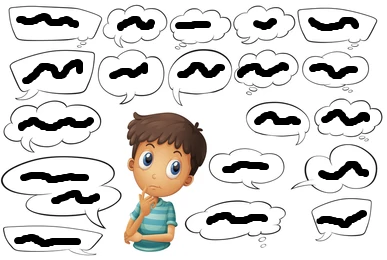
- The transcriber. The transcriber’s job is to take those phrases and sentences from the mind and put them down onto paper or screen.

- The evaluator. The evaluator reads and reviews the text as it is being crafted. They will also share the text regularly with others to gauge their reactions. Finally, they act as a motivator for the rest of the gang too!

It’s important to remember that a piece of writing will move between these four people all the time. For example, the evaluator might have to go and talk to the proposer. The translator and transcriber are likely to be in back and forth conversation too.
***
If you found this article interesting, you may like to read: The Science Of Teaching Primary Writing and Motivating Writing Teaching.