
In many primary classrooms, children are routinely asked to sit down and write: to think of an idea, turn it into a series of sentences and transcribe those sentences accurately and legibly, all in one uninterrupted act. This is what writing researchers call parallel processing [LINK]. The simultaneous activation of all the different production strategies involved in writing at once. For skilled adult writers, this is possible because many of those production strategies have become fluent for us through the years. For younger writers, whose transcription is still effortful, and whose writing experiences are still limited, it is not. Asking young children to write this way does not ‘stretch them’ towards a higher standard. It just caps the standard they can reach.
Understanding what to do instead is the subject of this article.
⚠️ Why parallel processing is the wrong starting point for young writers
To understand why parallel processing is developmentally inappropriate for young writers, we first need to understand what writing actually requires the brain to do.
Drawing on the work of Graham, Olive and others (see LINK), we might suggest that writing involves three distinct levels of mental processing which trickle down into each other.
- Conceptual processing. This is where writing ideas are born! This is where writers decide what they want to say, who they want to say it to, and retrieve relevant content knowledge from their memory, before shaping their thinking into some kind of plan.

This then informs their:
- Linguistic processing. This is where sentences take shape. This is where the brain converts their plan into words and sentences. This includes selecting the right words, building syntactic structures, and working out the spelling of the words they wish to write down.
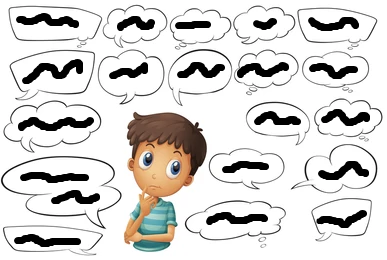
This then informs their:
- Motor processing. This is where the sentences are transcribed onto the page.
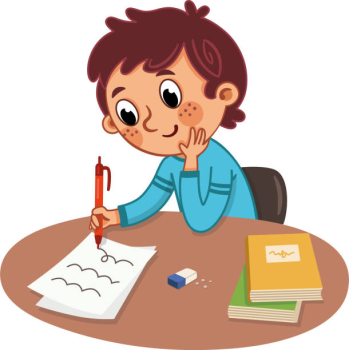
Once the words are on the page, this can inform further conceptualisation or reconceptualising.
All three levels of processing draw on the same shared cognitive resource: working memory. Our brain’s limited and temporary workspace (LINK). In parallel processing, all three levels are being activated simultaneously. The writer is thinking about what to say, constructing the language to say it, and physically producing it on the page, all at the same moment. For young writers, all this simultaneous processing will invariably overload their working memory, causing hardship for children and heartache for teachers!
For young writers, transcribing can be extremely effortful, slow and attention-consuming. It has not yet been automated through sufficient instruction and practice. This means that the motor level of processing places enormous demands on working memory. These demands leave very little capacity available for the conceptual and linguistic work of composition.
The result? When we ask young children to write in parallel, the result is usually pretty predictable: ideas become impoverished, sentences simplified, word choices narrowed and texts become less ambitious than the child’s actual thinking and creativity. The child may transcribe some words onto the page but those words will not reflect what the child is capable of thinking, imagining, or saying. We think that’s a shame.
This is the cost of asking young writers to undertake parallel processing.
✅ Why a sequential process is more developmentally appropriate
If parallel processing overtaxes young writers, what should we be doing instead? The answer is sequential processing. This is where we ask children to handle the different levels of writing one at a time, in order, rather than all at once. The diagram below shows the difference.
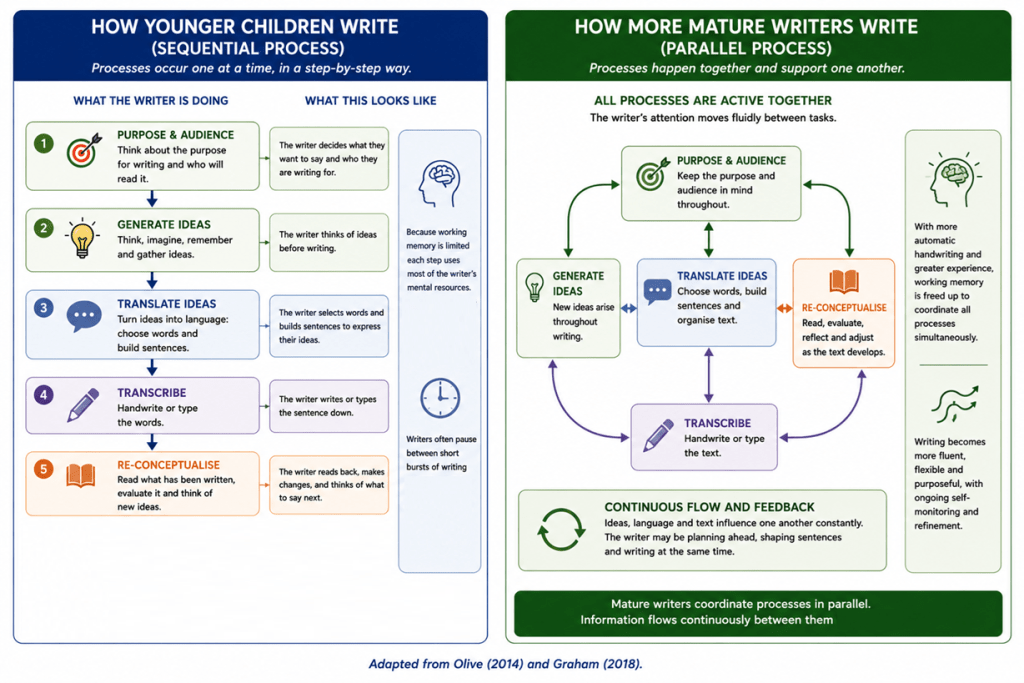
In sequential processing, the young writer handles the conceptual work first: generating ideas, deciding what to say and creating a plan. Then they handle the linguistic work of constructing sentences. Then, and only then, do they turn to transcription: the motor work of getting those sentences onto the page. Each level of processing receives the child’s full cognitive attention in turn, rather than having to compete with the others.
When children are free to do their compositional thinking before picking up their pen, that thinking can be as ambitious, detailed and imaginative as the child is capable of. There is no handwriting pressure narrowing their ideas or needing to simplify their language. When they then turn to transcription, their working memory can devote itself almost entirely to the motor demands of transcribing, because the compositional decisions have already been made and put down on paper via drawings or a plan. Every part of the process is given the cognitive time and space it needs. Every part is therefore able to operate at a higher level.
📚 Our book-making approach: The perfect scaffold for the sequential process
Knowing that sequential processing is developmentally appropriate is one thing. Building it systematically into classroom practice is another. Our book-making approach offers a complete, structured framework for doing exactly this. One that maps directly onto the three levels of processing and gives each one the dedicated cognitive space it needs.
Our book-making approach works through a deliberate four-stage sequence, each stage preparing the ground for the one that follows.
STAGE ONE: ‘Idea parties’ and making front covers

Once a book-making project has been introduced, children generate their ideas for the project through talk and by having an ‘ideas party’. The teacher facilitates these discussions in which children decide what their books will be about: the characters, the events, the information they want to share and the overall shape of their story or information text. This is high-level conceptual work. You’re setting the communicative purpose and establishing the audience for the books. This is composition at its most expansive, unencumbered by any transcriptional demand whatsoever. Lovely.
Once children have settled on their book idea, they make their front covers. They choose a title and draw a front cover. This is not a decorative activity! It is planning. The child declares, in a form that is visible, what their book is about and what kind of writer they are being. The conceptual framework of the book is being established. The child knows their subject. Their working memory can now begin to establish their plan…
STAGE TWO: Drawing their ideas on each page
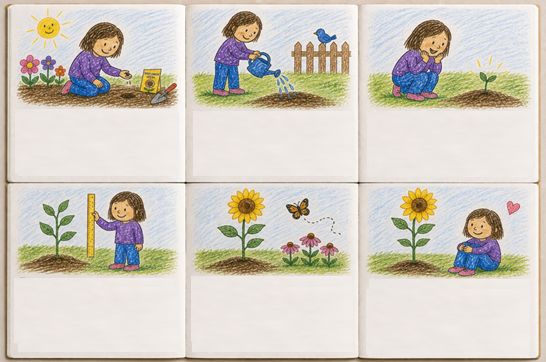
With the big idea settled, and the front cover made, children move through their book page by page, drawing what will happen or what will be discussed on each. By the time this stage is complete, the child has produced a complete, sequenced and visual compositional plan.
The cognitive significance of this is substantial. Drawing externalises the child’s conceptual thinking, taking it out of working memory and placing it on the page in a visible form (LINK). Ideas that would otherwise need to be held in working memory are now safely on the page. The children can look at them, point to them and return to them at any point. Their mental desk has been cleared of this conceptual load.
This means that everything that follows, oral rehearsal and transcription, can proceed without the child simultaneously trying to remember what they wanted to write about. The drawing at the top of the page holds the answer. Working memory is free for the work that comes next…
STAGE THREE: Oral rehearsal
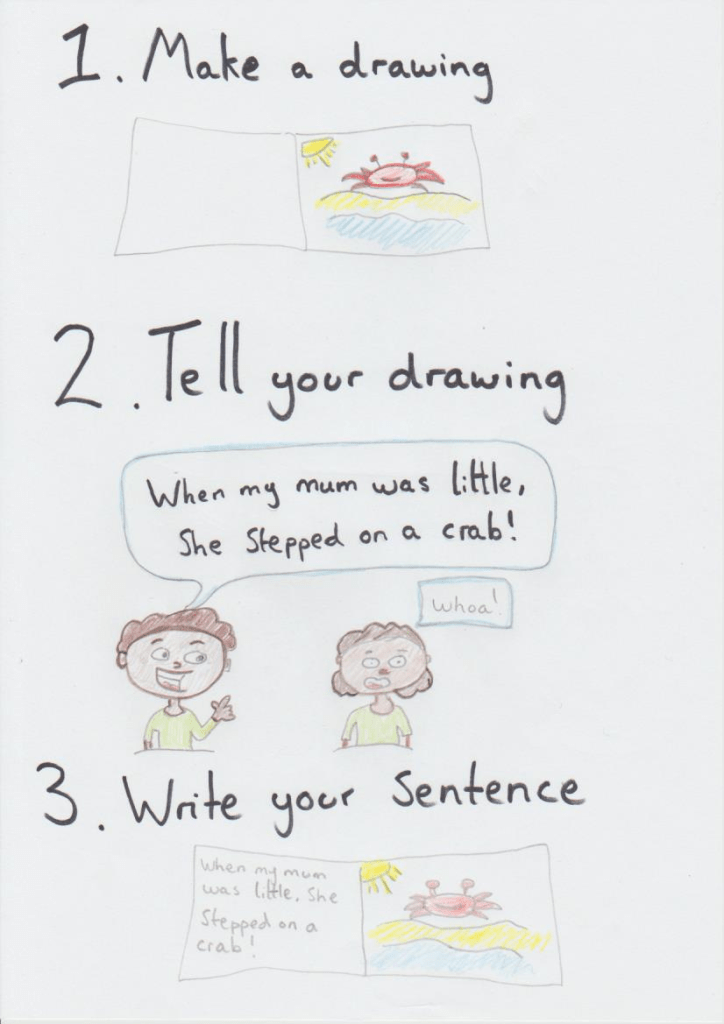
With their drawings in front of them, children spend time developing the sentences for their pages. First, they do this at the text level. ‘Telling’ the whole of their story or information book.
Next, pointing to a drawing, they construct and rehearse the sentence(s) they will write on that particular page, trying out different word choices and adjusting the structure through feedback before any transcription begins.
Because the conceptual content is already secured on the page, the child can see exactly what they want to say. Oral rehearsal can then focus almost entirely on the linguistic level of processing: how to say it. The teacher can push for precise word choices, more sophisticated sentence structures, and well-chosen connecting language because neither child nor teacher is spending cognitive energy recovering or establishing the underlying writing idea. Their drawing does this heavy lifting..
When oral rehearsal follows drawing, the sequential cycle becomes: draw it, say it, then write it. The child arrives at transcription with two resolved resources already in place (the visual plan and the rehearsed language) and so working memory is free to concentrate on the motor demands of handwriting.
STAGE FOUR: Transcription

When the child picks up their pen, every major compositional decision has already been made. Transcription arrives with a single job: to encode familiar, already-owned language into written form.
The result is consistently striking to teachers who first use this approach. The ideas are strong (because they were developed without any transcriptional pressure). The language is rich (because it was crafted without the motor demands of handwriting). And the transcription itself, freed from the burden of carrying the entire writing process alone, is more fluent, more confident, and more accurate than it would otherwise be.
Teachers can also decide the transcriptional demand of this final stage to match each child’s current level of handwriting automaticity.
At the simplest level, children write a single word, phrase or sentence per page. As children’s confidence and automaticity grow, they tend to write two sentences per page, then a short paragraph. In each case, the compositional foundation remains the same. It’s only the transcriptional load that changes.
The examples below show how we can adjust our transcription expectations as children’s writing fluency develops (in earnest). As children’s fluency increases, we can increase the amount of thinking they are to transcribe in one sitting.
LEVEL ONE (Nursery – Reception): A mixture of emergent writing, single words or short phrases on each page

At Nursery and at the start of Reception, most children will use emergent writing or kid writing, as a temporary scaffold, to create their texts. However, once phonics, handwriting and spelling instruction is introduced, they’ll transition quickly onto writing single words or short phrases.
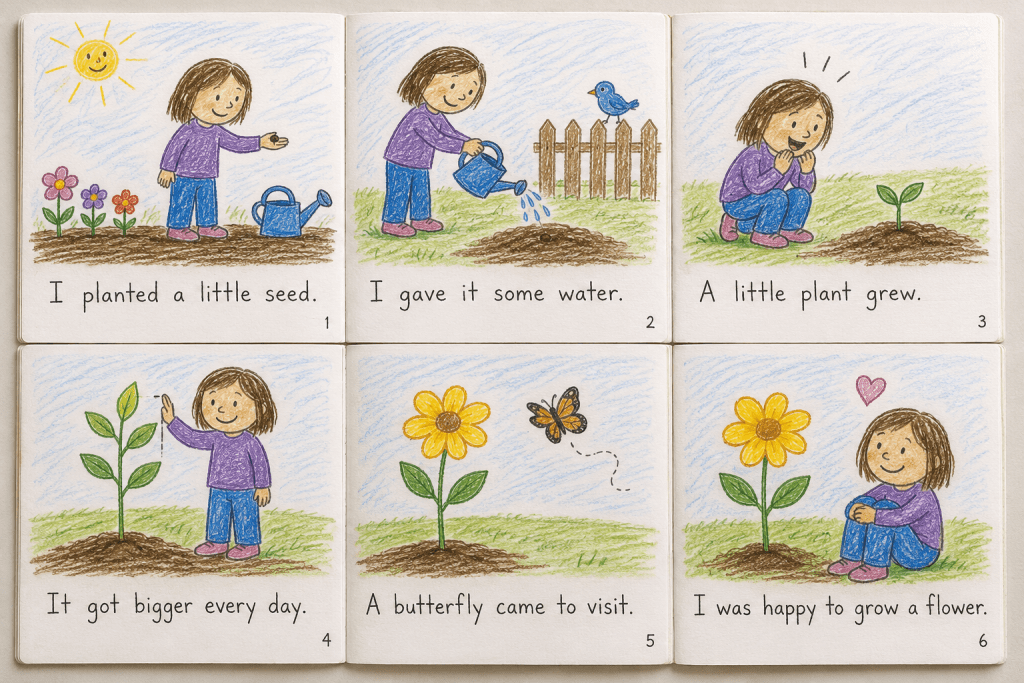
LEVEL TWO (Reception – Year One): A single sentence per page
At level two, a child can be expected to commit to a single sentence to each page of their picturebook (sometimes they’ll just be having such a great day they’ll want to do more). The cognitive demand of transcription is kept low so that a child who is still building their handwriting and spelling automaticity can create a whole text and feel the success and satisfaction that comes with that.
Our expectation is that children in Reception/Year One would learn to craft books like this. By the way, for children new to English, LEVEL ONE or LEVEL TWO is a really great place to start (LINK)
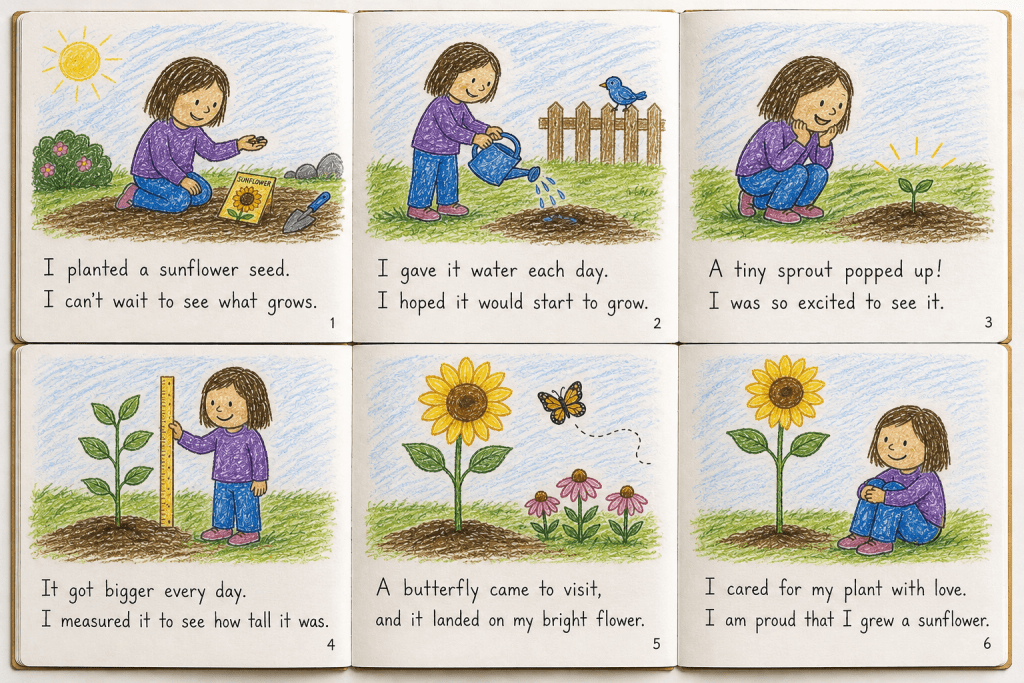
LEVEL THREE (Year One – Year Two): Multiple sentences per page
This is a small step up in transcriptional load. When children are ready, they can be asked to transcribe more of the content they have already settled on through their talk, drawing and oral rehearsals. Often, you’ll know that they’re ready because, despite asking only for a single sentence, they’ll ignore you and want to write multiple sentences on each page anyway! We find this is typical in year one and into year two.
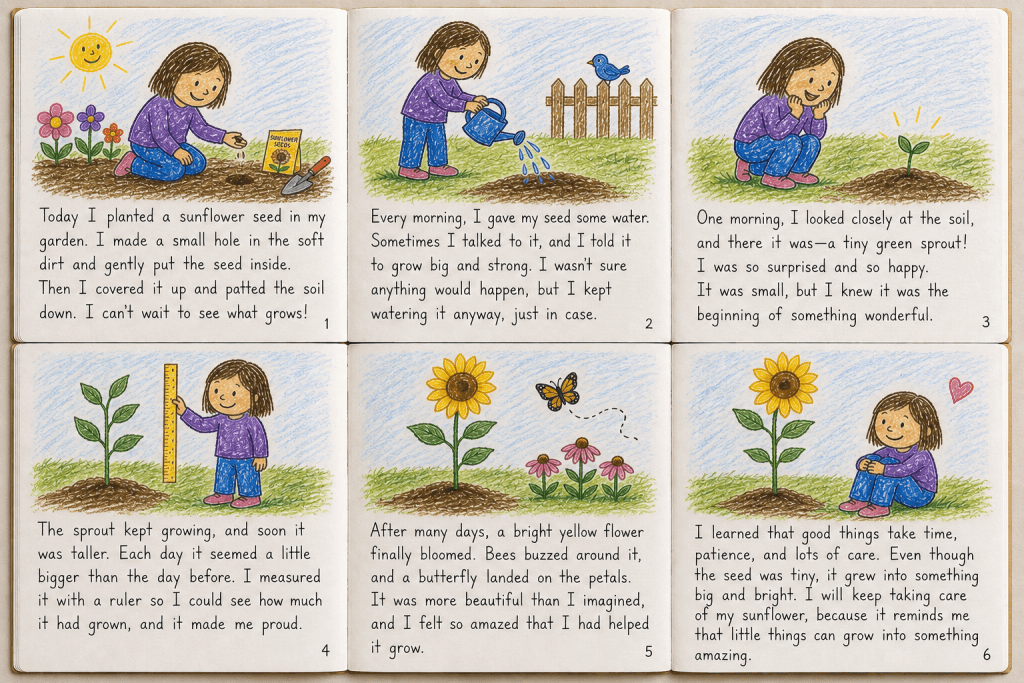
LEVEL FOUR (Year Two – Year Three Onwards): A paragraph per page
At LEVEL FOUR, each page becomes a short paragraph of three or four sentences. This is a substantial increase in transcriptional output. Critically, though, the approach remains reassuringly consistent. The expectation is that children draft a page a day.
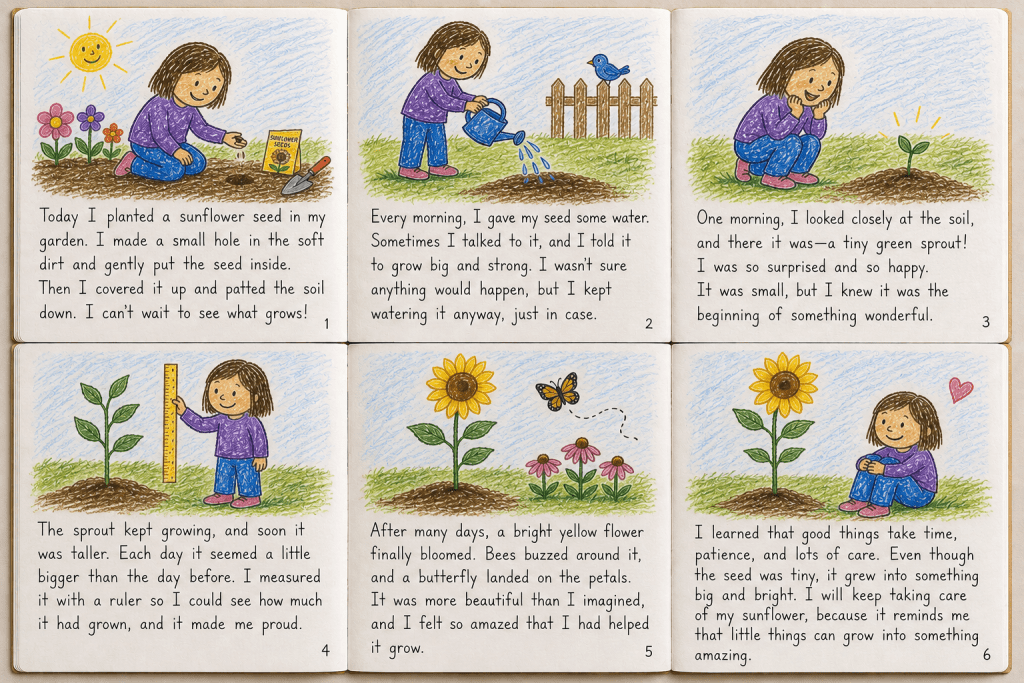
Seen side by side, the four levels make the composition-first argument visible. What changes is the transcriptional demand the teacher asks the child to manage in a single sitting. A teacher can move a class, a group, or an individual child between these levels at any time. Adaptive teaching becomes a matter of adjusting children’s transcriptional load, not redesigning the entire writing task!
📈 Building children towards parallel processing over time
The book-making approach as described above is an explicit, carefully scaffolded version of sequential processing. The compositional work is complete before transcription begins. This is the perfect place for young or inexperienced writers to start.
But sequential processing is not the destination. Over time, as children become more experienced, the goal is for them to move towards the more parallel, fluent processing of skilled writers. The book-making approach supports this developmental journey naturally because the demands it places on children can be increased incrementally in line with their growing capacities.
There are several ways in which we can begin to increase those demands:
- Increase the length of transcriptional bursts. As children move from one sentence per page to two sentences to a paragraph, they are sustaining their handwriting for longer while holding more language in mind. A step towards the more extended transcription periods of parallel writers.
- Condensing the oral rehearsal stage. As children become more experienced, you can gradually reduce the amount of explicit oral rehearsal scaffolding, inviting children to move more fluidly between their drawings and their writing. They will begin to integrate the linguistic and motor stages more closely.
- Encouraging anticipatory thinking and spontaneity during transcription. More experienced writers may find that, as they transcribe one page, they are already beginning to think about the language for the next. This is the earliest sign of parallel processing. You will also notice that they begin to change their mind half way through transcribing a page or else want to return to previous pages to revise them and make them better. They also feel a need to adjust their illustrations so that they better reflect what they have finally written. This is all good stuff!
- Encourage children to develop their own favoured writing process through personal writing projects. Give children access to blank picture and chapter books as well as writing journals so that they can begin to develop their own writing process away from the demands of official class writing projects [LINK].
✍️ The importance of specific handwriting and spelling instruction
Book-making sessions work best when they sit alongside regular, explicit and well-taught handwriting and spelling lessons. These lessons need to be timetabled in their own right [LINK]. Handwriting and spelling require their own short, regular, explicit sessions, separate from book-making time, where letter formation, spelling patterns, and orthographic knowledge can be taught directly and practised deliberately. Importantly, what children learn in these sessions does not stay contained within them. Instead, they use and apply all that rich learning straight into their books. Seen this way, these two kinds of lessons are feeding the same outcome from two directions.
- Explicit transcription teaching builds the automaticity and fluency that book-making sessions depend on.
- Book-making sessions give the real and motivating context in which children actually want to improve their transcriptional skills!
Key takeaways for the classroom
- Recognise that asking young writers to use parallel processing is developmentally inappropriate. When handwriting is not yet automatic, the motor demands of transcription consume most of a child’s available working memory, leaving little capacity for the concurrent demands of idea generation and language construction.
- Understand that sequential processing is a developmentally appropriate approach for young writers. Handling the compositional work before the transcriptional work (one level of processing at a time) allows each level to be done to the highest quality.
- Use the book-making approach to scaffold the sequential process explicitly. Oral idea generation and front cover making settle the big conceptual picture. Page-by-page drawings externalises the whole composition before any language work begins. Oral rehearsal establishes the language for each page. Transcription then handles only the motor work of encoding. Each stage prepares the ground for the next.
- Take drawing seriously as a cognitive tool. When children draw their book page by page before writing, they remove their conceptual content from working memory, placing it on the page in a stable, visible form that supports every subsequent stage. In our view, this is the single most powerful reduction in cognitive load available to a young writer.
- Align transcriptional demands to each child’s current stage of handwriting and encoding automaticity. One sentence per page, two sentences per page, or a paragraph per page, our book-making approach allows teachers to increase transcriptional demand incrementally.
- Increase demands gradually, when children are ready. As handwriting automatises, children can sustain longer writing bursts, require less oral rehearsal and can begin to think ahead during transcription. These are signs of emerging parallel processing. Introduce more demanding versions of book-making in response to these signs.
- Teach handwriting with automaticity as the goal. Daily handwriting instruction and practice that focuses on speed, ease and accuracy progressively releases working memory for parallel processing.