
by Steve Graham
Original article: LINK
Research spanning almost a century shows that directly teaching children how to write by hand makes their writing easier to read and helps them write more smoothly. For children who find handwriting especially tricky, structured lessons on handwriting really help. And the good news is, teaching handwriting doesn’t have to take up lots of time at school. Even just a little bit of time each week, like 10-20 minutes a day, can make a big difference.
Print or cursive?
While it’s common to teach both manuscript and cursive, some argue that only one style should be taught, either manuscript or cursive. Others suggest using italics instead. There’s no clear answer from research about which style is best. However, the author suggests starting with manuscript for five reasons:
- Familiarity: Many children come to school already knowing some manuscript letters, taught by their parents or nursery teachers.
- Efficiency: Learning a different script requires relearning mastered letters, potentially causing frustration and delays. Evidence suggests that manuscript may be easier to learn than cursive, aiding quicker mastery.
- Speed & Legibility: Traditional manuscript can be written as quickly as cursive and may even be more legible, aiding in effective communication.
- Reading Development: Early use of manuscript may enhance reading skills as most reading materials are presented in this style, facilitating smoother transition to reading fluency.
- Own style: Regardless of the script taught, children, in the end, naturally develop their own handwriting style over time, usually combining elements of manuscript and joined together.
Letter forms
A key part of handwriting instruction is showing children the best way to form each letter. Research has found that the most effective way to teach letter formation is by showing kids a model of the letter with numbered arrows, so they know the order and direction of each stroke. Then, they try to write the letter from memory. Interestingly, asking children to talk through the steps of forming a letter while they are writing it doesn’t work well. It seems to use up their brain’s resources too much.
Some teachers wonder how much time children should spend practising each letter. It’s not a good idea to make them practice the same letter over and over in one go. Instead, after introducing a new letter, children should practice it carefully for a short time with some brief teacher feedback. They should check how well they did (by circling their best attempts). Letters can be reviewed and practised again in future lessons as needed.
Difficult letters
A study identified the letters that were particularly difficult for children as being: q, j, z, u, n, w and k. These seven letters account for 48 percent of the omissions, miscues, and illegible attempts students make when writing. When illegible scripts were considered, the following five letters accounted for 54 percent of miscues: q, z, u, a, and j. Teachers should therefore pay special attention to these letters during instruction, as they may pose special problems for young writers.
Pencil grip
The way you hold your pencil and position your paper when writing can affect how comfortable you feel and how well you write.
It’s best for children to hold their pencil using the tripod method, where you use your thumb and index finger to grip the pencil and let it rest on your middle finger about an inch away from the tip. This makes writing easier and more comfortable.
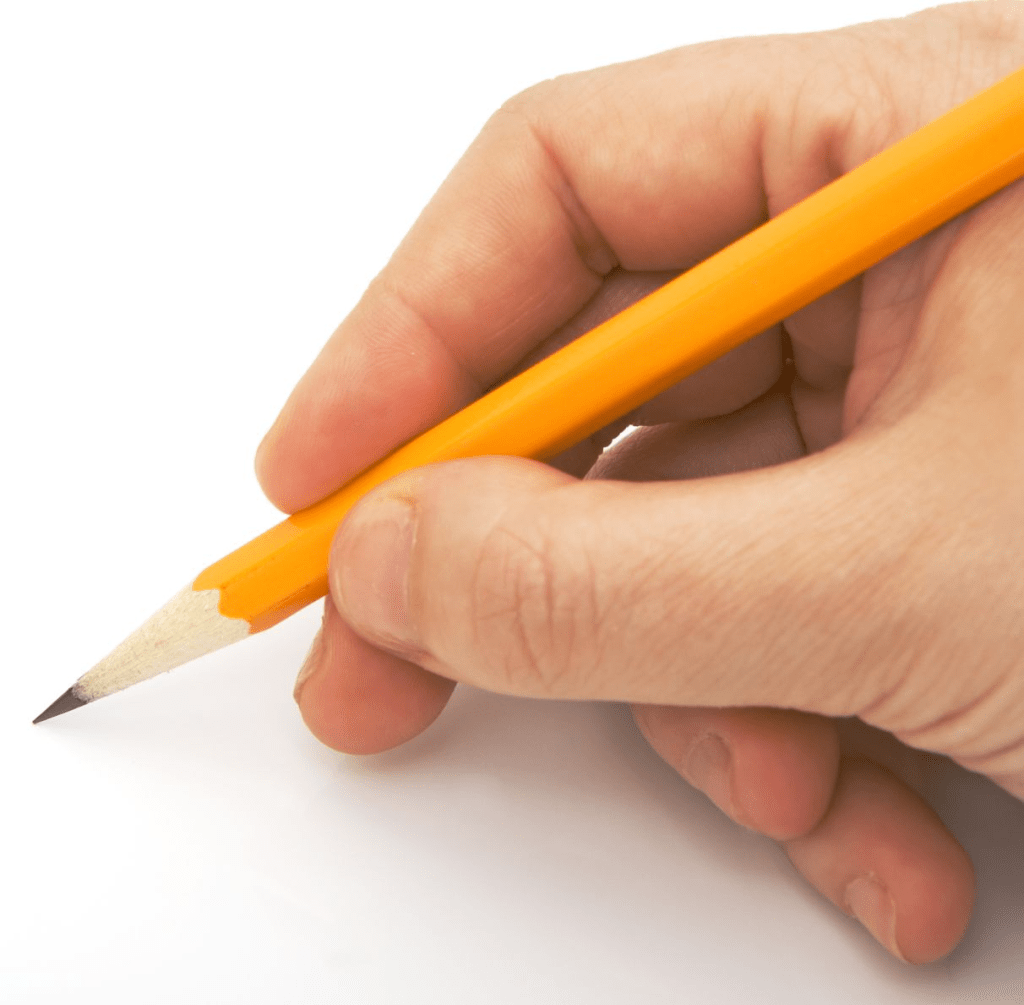
But here’s the thing – even if children are taught the tripod grip, many naturally end up adjusting how they hold their pencil as they grow up. These changes don’t necessarily make their writing worse. If the child can write quickly and happily, and their handwriting is easy to read, then this is fine.
Paper position
Another important thing is how they position their paper. If they’re right-handed, it’s best to have their paper right in front of them with the left side towards the middle of your body. This helps your letters slant the right way. When children begin to switch to cursive writing, they might tilt the paper a bit to the left.
Left-handers
Left-handed writers should tilt their paper slightly to the right and hold their pencil a bit further back to avoid awkward hand positions. If left-handers position their paper like right-handers, they might develop a strange grip that makes their writing harder to read and they may write slower.
Neatness
Making sure children look comfortable when they are writing is an important thing to check. You can encourage children to sit up straight and lean slightly forward while they write as this can help them keep their handwriting neat. Ask them to give it a try and see if they think it makes a difference. It’s also important for teachers to explain to students when neat handwriting really matters. Basically, if they are planning to share their writing with others, it’s important that they ensure it’s easy for their audience to read.
Conclusion
When it comes to handwriting, it’s important to be practical. We want children to be able to write quickly and happily, using a handwriting style that others can read easily. That’s always what we are aiming for.