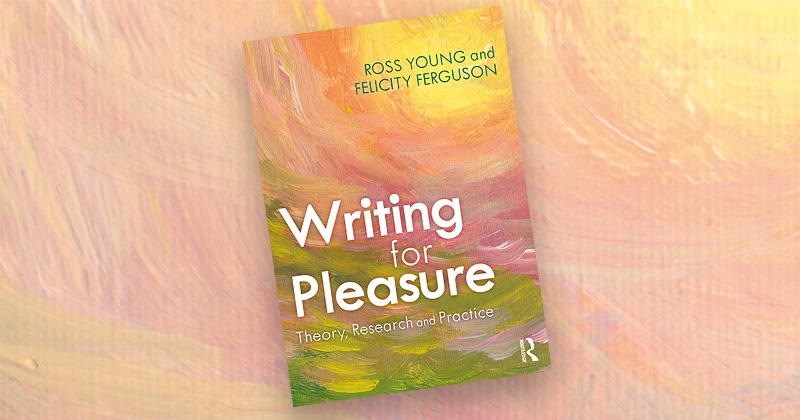
In the chapter Literacy For Pleasure – Connect Reading & Writing, from our book Writing For Pleasure: Theory, Research & Practice, we explore the pedagogical benefits of encouraging children to use writing as a tool for thinking and learning across various subjects.
Traditional methods of assessing understanding through rote reproduction of information are only modestly effective in enhancing content retention [LINK]. Instead, integrating writing tasks that promote reflection and engagement with subject-specific genres (such as history and science) can significantly improve learning outcomes. For example:
- Making All about … books [LINK] and information books [LINK]
- Information texts [LINK]
- Science reports [LINK]
- Explanation texts [LINK]
- Discussion texts [LINK]
- Historical account [LINK]
Drawing on the insights of Flannery O’Connor, who once remarked that she wrote because she didn’t know what she thought until she read what it was she had to say, this chapter underscores the importance of personal response writing. Research indicates that such practices help students integrate new information with their existing knowledge and experiences, thus enhancing retention and understanding.
The chapter also discusses the shift from ‘knowledge-telling’ to ‘knowledge-crafting,’ where students mix new knowledge with personal insights, resulting in richer, more meaningful texts. This approach not only aids retention but also improves the quality of the writing produced. Additionally, when students consider their audience, they contribute to ‘communal knowledge’ creation, fostering a sense of collective response to learning.
Finally, the chapter emphasises the value of social collective responses and producing culturally sustaining texts. Collaborative writing projects allow diverse voices to emerge, challenging uniform interpretations of texts [LINK]. Examples from various studies illustrate how children can create culturally relevant and socially responsive narratives, reimagining stereotypes and addressing local community concerns [LINK]. This approach not only enhances individual expression but also promotes inclusivity and representation in the educational texts that children create for themselves and for others.
To find out more, download our book Writing For Pleasure here.