Abstract
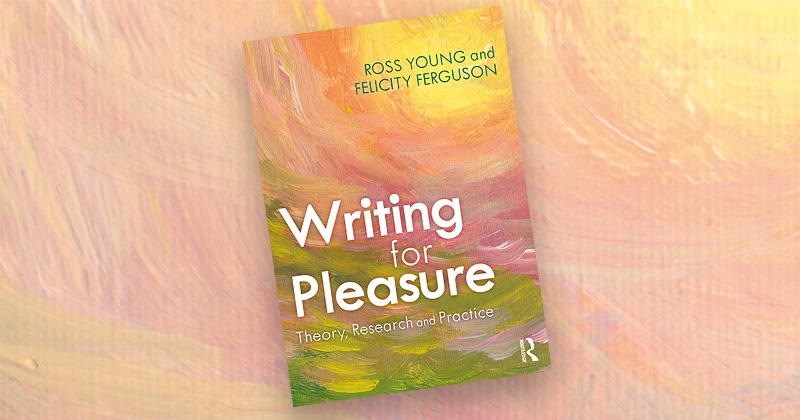
In the chapter Literacy For Pleasure – Connect Reading & Writing, from our book Writing For Pleasure: Theory, Research & Practice, we explore the concept of intertextuality and its significant role in reading and writing for pleasure. Intertextuality—encompassing terms like creative play, cross-fertilisation and remixing —refers to the process by which writers draw upon and transform texts they have encountered, integrating elements from their reading experiences into their own writing [LINK]. Intertextuality is a natural, creative process writers go through – where their reading experiences and textual interactions inform their own writing, effectively turning their reading history into a mosaic of writing ideas and writer identities [LINK].
The chapter emphasises how intertextuality fosters engagement and motivation in young readers and writers by allowing them to reinterpret and reframe familiar plots, characters, and settings from their reading and experiences. Our work highlights the sophisticated ways in which even the youngest of children can utilise intertextuality to create new genres and narratives [LINK, LINK and LINK]. Intertextuality enhances children’s writing for pleasure by encouraging them to draw inspiration from their reading.
However, effective teaching strategies for intertextuality are crucial. Educators must:
- Be well-versed in high-quality texts [LINK]
- Create engaging classroom libraries
- Facilitate rich book-talk [LINK]
if they are to support students in making meaningful connections between their reading and writing [LINK and LINK]. Our chapter provides practical prompts for encouraging children’s intertextual thinking, such as reflecting on how a text relates to their own personal experiences or to their other readings, and suggests that allowing students to explore these connections can deepen their understanding of a text and enhance their writing [LINK, LINK and LINK).
Ultimately, the chapter argues that for intertextuality to be at its most effective, educators must explicitly teach students the strategies professional writers use to reinterpret and respond to texts. Despite its potential, such instruction is often lacking in current educational practices. By integrating intertextuality into the reading classroom and into the writing process [LINK], students can be motivated to engage more deeply with texts, improving both their writing and reading skills.
To find out more, download our book Writing For Pleasure here.